
Best practice in milking courses available
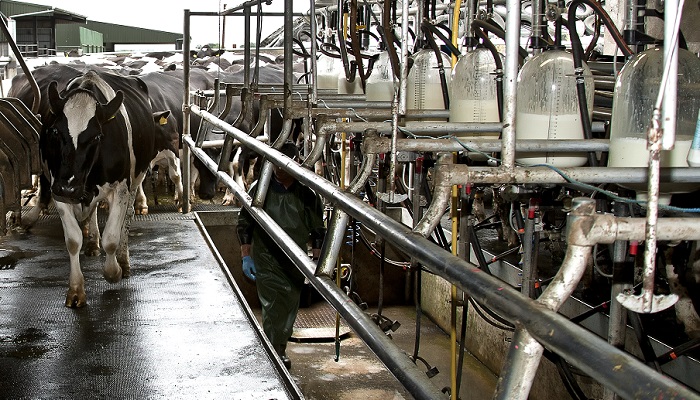
Are you looking to improve your milking skills? Then the Best Practice in Milking Course may be of interest to you.
Taking place in two locations, with the first commencing on October 22, this course allows participants to develop their skills as a milker to ensure all cows are milked effectively and efficiently.
Centred on 18 key learning objectives, listed below, participants who complete the course will be awarded a QQI level 6 Minor Award in Milking Process Routine on successful completion of the course and individual assessment.
The purpose of this award is to equip the learner with the knowledge, skill and competence to autonomously perform and manage the dairy herd milking process; integrating key milking techniques with required milk quality, food safety, dairy herd health and dairy cow welfare for commercial Irish dairy herds.
On completion of the course, learners will be able to:
- Evaluate the factors that affect milk composition in the cow, milk quality and food safety in the context of internationally recognised standards, Irish milk processor quality assurance and milk quality standards required under legislation.
- Assess best practice for managing sickness and abnormal behaviour in dairy cows in the herd and communications required for third parties.
- Appraise best practice bio-security measures necessary to maintain a disease-free herd.
- Assess situations where disease in milking animals pose risk to milk production, quality, operator and consumer health.
- Assess current legislative and health and safety issues associated with milk production.
- Appraise components, operation, maintenance requirements and new developments of common milking parlour types.
- Report clearly on the implementation of any instruction and communications received in relation to the milking process and specific control measures where necessary.
- Utilise appropriate preparatory and post milking procedures in regard to the environment and equipment for the entire milking process.
- Assess herd for health and heat pre milking and take appropriate action.
- Utilise best practice in regard to operator hygiene.
- Utilise recognised best practice procedures in regard to key cow pre and post milking procedures including teat preparation, hygiene, and disinfection and checking for mastitis.
- Utilise recognised best practice procedures in respect of: cluster attachment, milking of the cow, and cluster removal whilst ensuring safe and efficient operation.
- Monitor the milking process and the operation of the milking machine, bulk tank backing gate and cow flow taking regard of efficiency and cow calmness, taking corrective action as appropriate.
- Sample milk using appropriate techniques including taking a sterile sample for culture.
- Utilise recognised best practice procedures to deal with a cow with mastitis.
- Supervise the manual or automatic milking machine washing and rinsing procedure.
- Demonstrate knowledge of essential milk bulk tank operational checks and maintenance.
- Manage the implementation of risk assessment and hazard control at each milking process step as appropriate.
When and where?
The cost of participating in this course is €300 and details on registration are available below. Before enrolling, participants are required to be over 16, have 100 hours of milking experience, have a good command of the English language, and each learner who attends this course must also have access to a milking parlour of their choice for the practical assessment part of the course.
Locations:
- Best Practice in Milking Process Techniques, Teagasc Moorepark Advisory Building, Fermoy, Co. Cork. Eircode: P61 C996 – 22-23 October.
- Best Practice in Milking Process Techniques, FRS Training, Derryvale, Roscrea, Co. Tipperary – 29-30 October.
To register to attend the Best Practice in Milking Courses, visit the FRS Training website.
More from Teagasc Daily: Why a good milking routine matters