
Preparing for drying off
The time is approaching when cows will start to be dried off on farms. All farmers need to plan carefully for a successful drying off of the herd.
There is a significant proportion of herds with chronic somatic cell count (SCC) issues (16% of herd >300 SCC, Table 1). The situation in these herds needs to be tackled as a priority. If you are in this category, speak to your vet and your Teagasc advisor about options.
Table 1: Herd SCC for milk recording herds on week of September 29, 2025 (national data)
| Herd SCC | <200 | 201-300 | 301-400 | >401 |
| Percentage of herds | 56 | 28 | 10 | 6 |
However, all farmers need to plan carefully for a successful drying off of the herd. It is essential to identify the mastitis bacteria present in your herd to facilitate effective treatment at dry-off. To do this:
- Complete a milk recording to identify cows with high SCC.
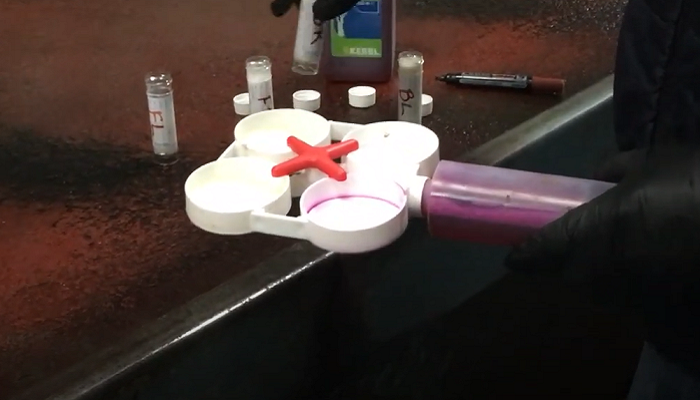
- Use the California Milk Test (CMT) to identify the quarter or quarters that are the source of the high SCC.
- Sample these quarters to identify the bacteria on your farm. If you have samples taken from cows that have had cases of mastitis during lactation, these can also be submitted along with the current samples.
The correct sampling technique is important in achieving satisfactory results:
- Clean, disinfect and dry teats,
- Use disposable gloves and sterile sampling bottles,
- Keep the sample bottle capped until ready to take the sample,
- Draw the milk into the sample bottle holding the bottle at a 45-degree angle to avoid any dirt from the cow’s udder entering the bottle; and,
- Refrigerate at 4oC and deliver to your vet for submission to the lab.
Using the results in consultation with your vet, choose the appropriate antibiotic tube for use on cows that require antibiotic treatment. Cows that do not require antibiotics should get an internal teat sealer only.
The above was prepared by Dr. Joe Patton, Head of Dairy Knowledge Transfer and first published in the Teagasc Dairy Advisory Newsletter for October (PDF).
More information on Selective Dry Cow Therapy
Pablo Silva Boloña, Teagasc Research Officer, whose work focuses on milk quality, dairy cow mastitis and selective dry cow therapy, joined James Dunne on the below episode of the Dairy Edge podcast.
He explained selective dry therapy and why it is being implemented on Irish dairy farms, plus he highlighted the important management steps to ensure its successful implementation at farm level.
Listen to the Dairy Edge podcast below:
More from Teagasc Daily: Dairy costs: What sets the bottom and top performing farms apart