
25 November 2024
Managing body condition in late lactation
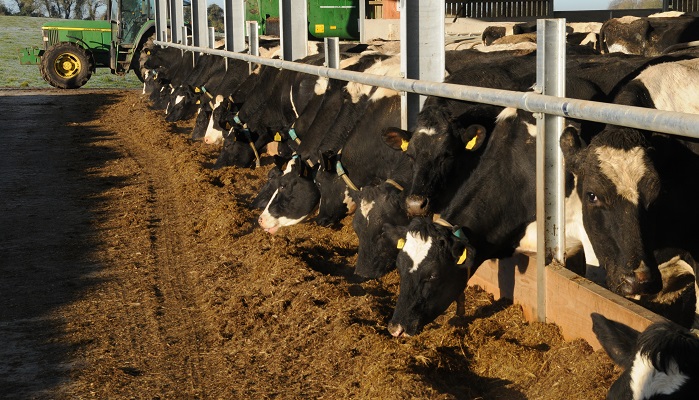
James Dunne, Dairy Specialist at Teagasc, reminds farmers to act early to have cows in the correct body condition score next spring.
Herd average body condition score (BCS) is not particularly useful for herd management – focus instead on using BCS of individual animals and make decisions on a cow-by-cow basis.
Body condition score is a very good indicator of long-term energy balance (i.e. the difference between feed energy and that used for milk and maintenance). Secondary factors such as genetics, internal parasites and lameness have indirect effects, however the primary tools for BCS management in late lactation are dry period length and feed intake / quality.
At the standard 60 to 75 days dry, cows at BCS 2.75 at drying off and eating reasonable quality (68-70 DMD) silage will be at target BCS calving down. Allow 90 days dry for first lactation animals. Where BCS and/or silage quality are below target, extending the dry period should also be considered. Poor-quality silage has a double effect of poor dry matter intakes and low energy content. Energy supplements may be needed to achieve target BCS. Over target (fat) cows may need their silage restricted, depending on silage quality.
Act early to have cows in correct BCS next spring:
- Assess quality and quantity of feed available;
- Record the BCS of each cow in the herd in early November;
- Identify the calving date and subsequently dry off date for each cow;
- Assign each cow to a management plan to meet target BCS of 3.25 at calving;
- Batch cows according to BCS over the winter period.
Also read: 31 day requirement for soiled water storage to come into effect
Also read: Considerations for drying off all cows this December