
10 February 2023
Part 1: A look at the interim scheme options – Forestry Programme 2023-2027
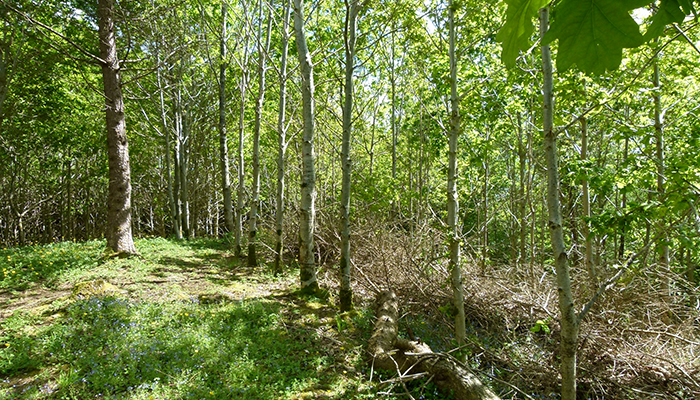
During November 2022, a proposed investment of €1.3bn in Irish forestry was announced, representing the largest ever investment by an Irish Government in tree planting.
Tom Houlihan, Teagasc Forestry Specialist, explains that the proposed new programme is very ambitious and contains a proposed range of forest types to facilitate new forest creation and also interventions to help facilitate sustainable and resilient existing forests in this article.
The proposed new Forestry Programme 2023-2027 is set come into force in 2023, as soon as State Aid approval by the European Commission has been received. According to the Department of Agriculture, Food and the Marine (DAFM), this process is ongoing and all stakeholders will be updated as State Aid application moves closer to completion. Pending approval of the new programme, DAFM has put in place interim schemes for afforestation and forest roads, available to holders of valid technical approvals.
If you already have a technical approval:
Applicants who hold a valid technical approval for afforestation or forest roads on 31 December 2022, but have not commenced work, and do not wish to wait until the launch of the finalised Forestry Programme 2023-2027 may wish to consider an Interim Afforestation Scheme (via General De Minimis) or an Interim Forest Road Scheme (via General De Minimis), as appropriate, which offer new funding rates (See Table 1 for Interim Afforestation Scheme rates). Scheme details (including De Minimis terms and conditions) should be consulted on the Department’s website www.gov.ie/forestry. The following should also be noted:
- All beneficiaries of premiums under the Forestry Programme 2014-2020 (which was subsequently extended to 2022) are not affected and will continue to receive their payments under that Programme;
- Licensing applications for afforestation and roads that are not subject to grant aid will continue to be accepted;
- There are no changes to felling licences and any valid felling licence may proceed as before.
If you, as an applicant with a valid approval, wish to await the finalisation and launch of the Forestry Programme 2023-2027, no further action is required at this stage.
The proposed new Forestry Programme 2023-2027 is the main implementation mechanism for the new Forest Strategy (2023-2030), which reflects the ambitions contained in the recently published ‘Shared National Vision for Trees, Woods and Forests’ in Ireland until 2050. Higher grant rates for forest establishment are also proposed. Forest premium rates are proposed to be increased by between 46 and 66%, depending on forest type. A premium duration of 20 years is set to apply for approved applicants who meet farmer qualification criteria. The new programme will be 100% exchequer funded.
Table 1 shows the eligible forest types and relevant supports available under the current Interim Afforestation Scheme (via General De Minimis). Additional new forest types will be available under the new forestry programme.
Table 1: Eligible forest types and relevant supports under the Interim Afforestation Scheme (Via General De Minimis)
| Forest type | Proposed grant/ha* | Proposed annual premium/ha | Proposed number of premiums for farmers | |
|---|---|---|---|---|
| FT1 | Native woodland | €6,744 | €1,103 | 20 |
| FT2 | Forest on Public Lands** | €10,544 | n/a | n/a |
| FT6 | Broadleaf mainly oak | €6,744 | €1,037 | 20 |
| FT7 | Other Broadleaf | €4,314 | €973 | 20 |
| FT8 | Agroforestry | €8,555 | €975 | 10 |
| FT11 | Mixed High Forest Conifer, 20% Broadleaves | €4,452 | €863 | 20 |
| FT12 | Mixed High Forest Conifer with mainly spruce, 20% Broadleaves | €3,858 | €746 | 20 |
*Additional supports for fencing also apply. **Grant includes Trails, Seats and Signage Facilities payment.
The decision to plant is a long-term land use change and consideration of all implications is recommended, including its potential to fit in very well with other farming enterprises and to provide financial, environmental and social benefits. In part two, Tom will look at the potential financial returns from two of the forest typpes in Table 1 under the Interim Afforestation Scheme.