
30 September 2024
The benefits of the Teagasc Green Cert in improving farm performance
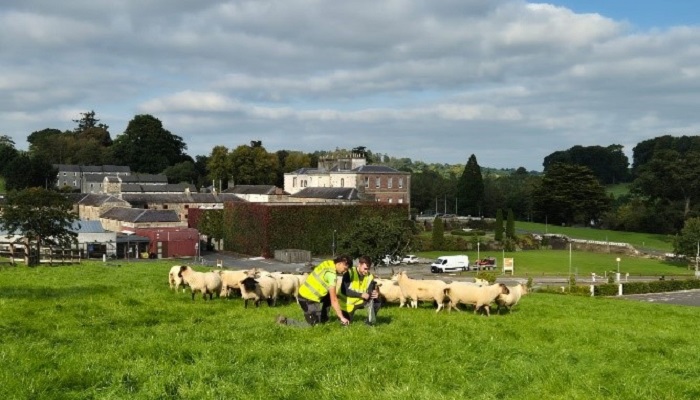
Training is often viewed as a financial investment in a business, writes Fergal Bradley, Education Officer at Teagasc Ballyhaise Agricultural College, and this is no different in farming.
Modern farming practices require a high level of knowledge and skill from both farmers and farm families. Keeping up to date and making well informed decisions is key to increasing farm profits and driving farm efficiencies. Accessing information and the ability to integrate such on farm is vital to sustain high performance. Teagasc Green Cert courses offer participants a range of resources and knowledge to implement on farm to increase their farm profits.
A wide variety of modules are offered through the Green Cert to ensure students are well equipped with the skills and knowledge to implement on their farm. The Green Cert comprises of a Level 5 and Level 6 certificate. It is important to achieve the Level 6, as it is this certificate that meets the requirements to gain access to the various national schemes and tax reliefs.
Ballyhaise Agricultural College offers a wide variety of courses for students:
- Full time 2 year agricultural courses:
- YEAR 1: Level 5 Certificate in Agriculture
- YEAR 2: Choice of Level 6 in Agricultural Mechanisation, Advanced Drystock or Advanced Dairy
- Part-Time Education course
- Distance Education course
- Farm Technician Apprenticeship
Practicality and skills knowledge
The Level 5 Certificate in Agriculture typically comprises of a 50:50 ratio of practical skills and theory. This allows students to gain an excellent blend of theory and practical skills, which is essential for the daily operation of the farm.
Important topics include: animal husbandry and management; grass management; farm business; soil health; and farm safety. Included within these are skills such as: grouping animals for sale, weight and value analysis to ensure farmers get the best returns from their animals at market; alongside grass measuring; nutrient management; and other farm technologies to ensure low cost inputs and high output.
Practicals such as soil sampling and the evaluation of animal breeding data allows students to acquire the latest information to not only make good management decisions but be compliant in the various agricultural schemes that farmers can avail of. Practical skills are integrated with theory to ensure students are competent in each area. Students also have access to a range of agricultural simulators, such as tractor and calving simulators. This ensures students gain as much practical experience, in a safe environment, before carrying out these tasks on their farm.
Management and knowledge application
The Level 6 component of the Green Cert uses knowledge gained in Level 5 to implement good business decisions in areas such as breeding, financial management, and sustainability. This allows students to apply their knowledge to real life farming, and business situations to ensure they can: 1) Hedge against upcoming business threats; and 2) Ensure a sustainable income. Students use financial systems such as the Teagasc eProfit monitor to analyse farm financial data, grass measuring software, and breeding information services as part of their course. Therefore, allowing them to make informed decisions for their farm business.
Throughout the Green Cert, students are brought to a wide range of high-performing farms across all enterprises and a variety of agricultural events. This helps students to benchmark and evaluate various practices in different locations across the country. Students can analyse and implement this information and choose what’s best for their farm enterprises.
Impact on farm
Once the Green Cert is completed, technical efficiency is improved, therefore use of resources is increased. This, in turn, allows farmers to apply knowledge more efficiently to improve profits. This impacts farm performance in the following areas:
- Awareness and access to new markets for farm produce;
- Creation of a sustainable future for the next generation;
- Increased rural and community development;
- Improved farm output in quality and quantity;
- Improved access and application of farm technology;
- Succession and inheritance planning;
- Awareness of farm practices to ensure environmental sustainability;
- Application of knowledge through the utilisation of various agricultural extension services;
- Access and awareness to farm diversification opportunities;
- Physical and mental well-being.
Access and support
Here at Teagasc Ballyhaise Agricultural College, the campus comprises of education, research and advisory services, which are used to help educate students. This allows students to have the latest information from research and national policy, and have the ability to then implement this information on farm, using our advisory and education services. Students are encouraged to avail of all Teagasc services.
Upcoming open day
Teagasc Ballyhaise Agricultural College will host its autumn open day on Friday 4th of October 2024 from 9:30am-1pm.
Find out more about Teagasc Ballyhaise Agricultural College here.