
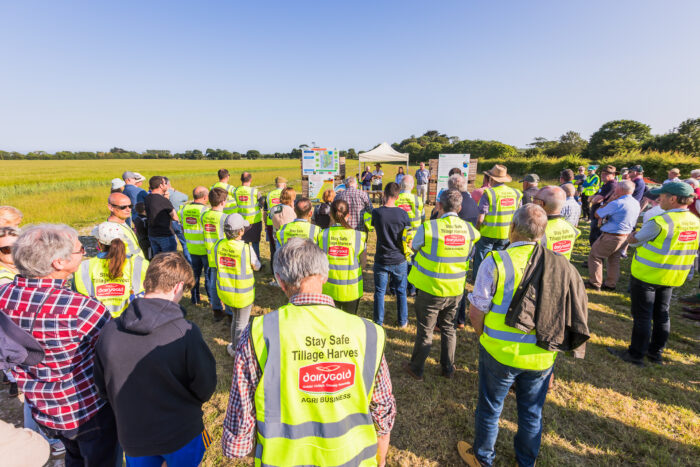
Farmers, advisors and agri-business professionals gathered at the Allen family’s commercial tillage farm at the iconic Ballymaloe House Hotel for an insightful joint Signpost/Dairygold tillage event, which focused on sustainable farming practices, soil health and innovative crop management.
Hosted by Darren Allen on June 18th and supported by a lineup of Teagasc specialists and Dairygold representatives, the event offered attendees a hands-on learning experience, showcasing how the Allens adapt their farming system to meet the challenges of profitability, environmental stewardship and farm resilience.
Setting the scene: Welcome and farm overview
The event kicked off with a warm welcome from host farmer Darren Allen, along with Liam Leahy from Dairygold Agri Business and John Mahon, Signpost Programme Tillage Advisor. A detailed profile of the farm, outlining the crop rotation, soil fertility and the Allen’s major focus on plant and soil health and reducing input costs was outlined.
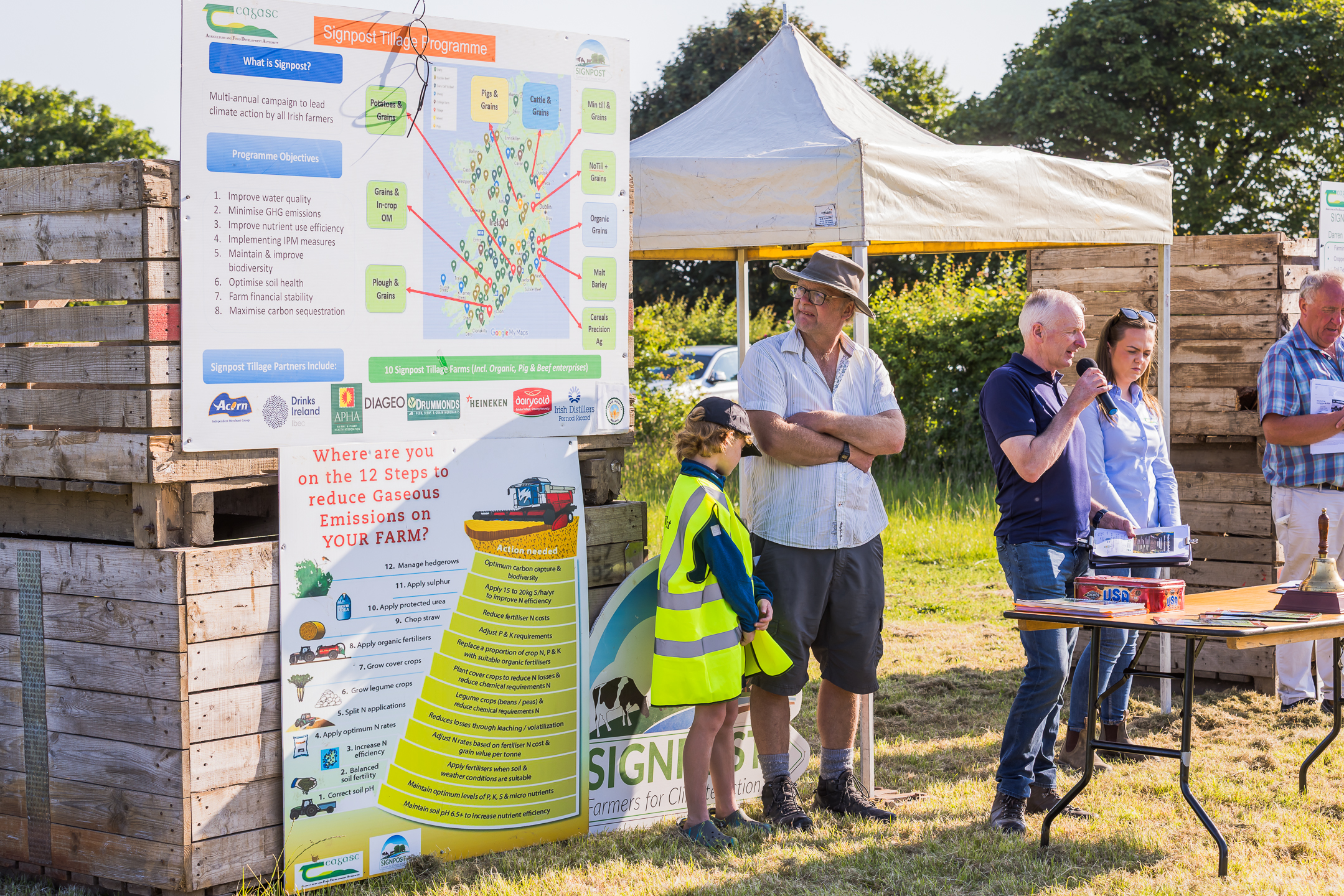
Local Teagasc Tillage Advisor, Laura Whelan interviewed Darren about his journey toward a more regenerative agricultural approach, sharing cost data to date from two comparative spring malting barley crops; one established conventionally and the other direct drilled using regenerative methods. Both fields were visited during the event, with a full margin analysis to be completed post-harvest.
Also showcased was the farm’s strong commitment to integrating nature-friendly features such as trees, hedgerows, riparian zones and wildlife habitats.
This introduction set the tone for the evening, highlighting the farm’s low-lying geography with heavy soils and a stream running through the property, emphasising the importance of soil health and water quality management in maintaining a sustainable and profitable operation.
Diving into soil health and crop establishment
The first technical session, led by Veronica Nyhan, Teagasc Soil Specialist, invited participants to assess the farm’s soil structure and biology firsthand. Veronica explained how healthy soils underpin crop productivity and farm sustainability, discussing indicators such as soil organic matter, microbial activity and compaction.
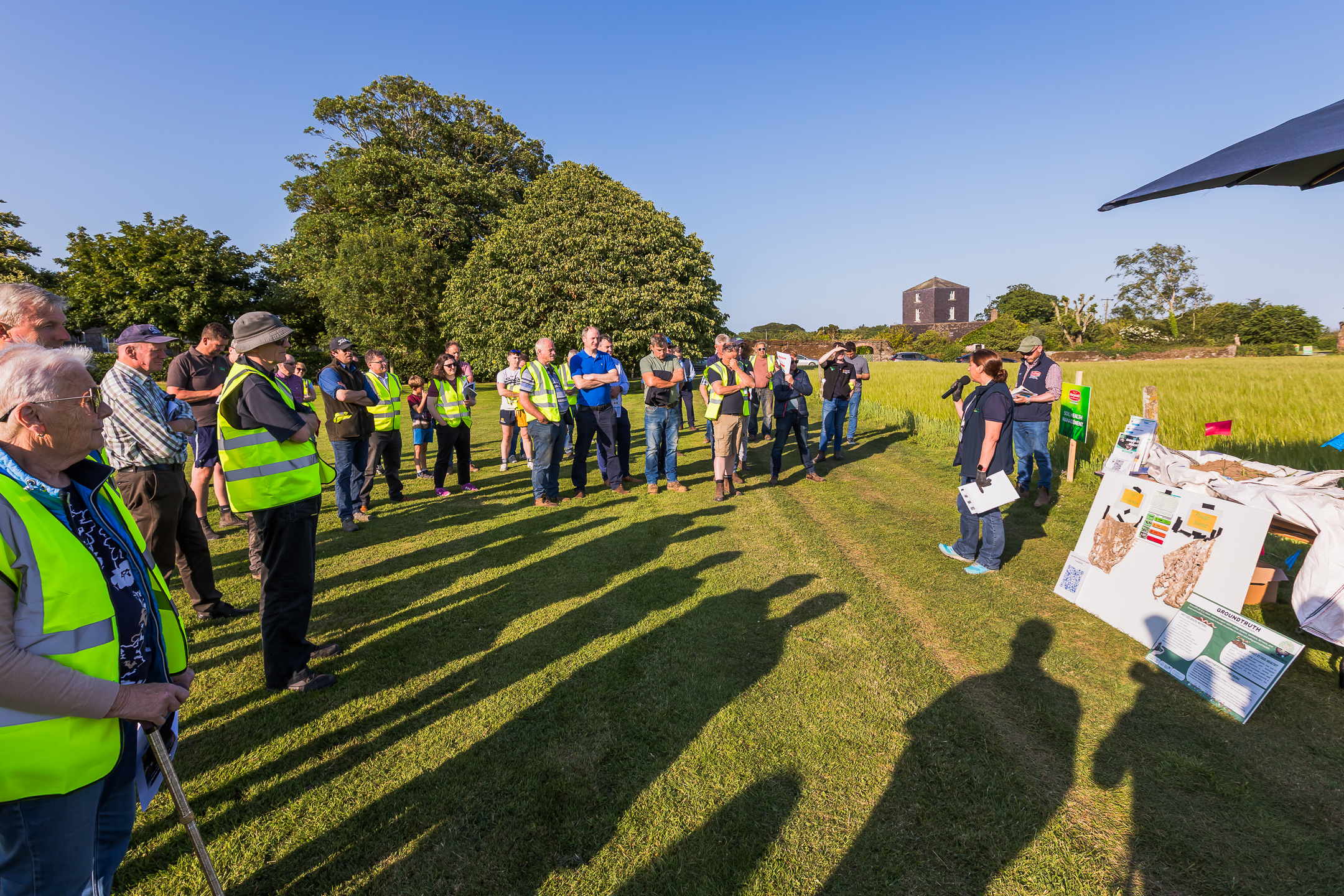
Veronica Nyhan, Teagasc Soil Specialist, pictured addressing crowds at the event
Veronica also demonstrated the biological activity of the two highlighted fields through a novel method involving cotton underwear that had been buried in the soil six weeks prior as part of the national ‘GroundTruth’ soil project. The cotton acted as a source of food for the microbes, and the degradation level of the cotton reflected the microbial activity in each field.
Liam Stack, Dairygold Agri Business Ruminant Technical Manager, explained the importance of soil sampling and provided comprehensive guidance on how to read and analyse soil results to maximise their value and reduce fertiliser costs.
Crop establishment and crop nutrition alternatives
Following this, Michael McCarthy (pictured below), Teagasc Tillage Advisor, shared insights on alternative crop establishment methods. A key highlight was a direct comparison of spring malting barley established via traditional plough and one-pass methods versus a direct drill system. Attendees observed the practical benefits of reduced soil disturbance, improved soil structure and potential labour and fuel savings associated with direct drilling – demonstrating how innovation can enhance soil health potentially without compromising yields.
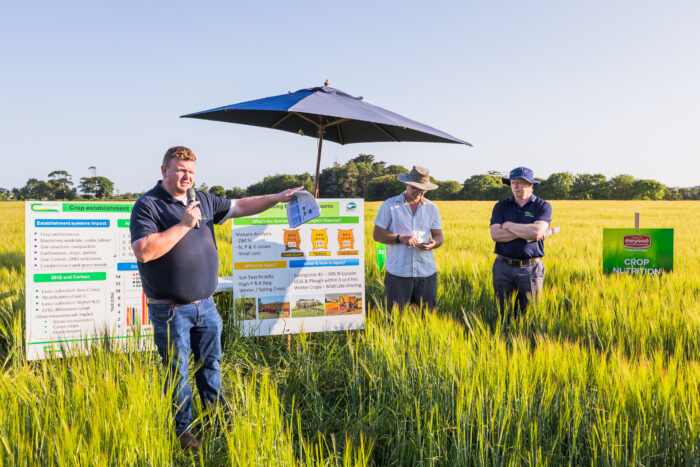
Mark Plunkett, Teagasc Nutrition Specialist, then interviewed Darren to discuss the farm’s experimentation with alternative crop nutrition strategies. Over recent seasons, the Allens have trialled various non-conventional fertiliser sources and blends, comparing their performance against traditional synthetic fertilisers. Mark presented data on the use of organic manures on crops, notably the Allens use of locally sourced pig and cattle slurries applied in-crop in springtime to autumn-sown crops. He highlighted the significant improvements in nitrogen use efficiency which can be gained compared to autumn application. This lowers the farm’s overall input costs by replacing synthetic chemical fertiliser, while potentially reducing the environmental impact – a key consideration for farms operating on heavier soils prone to nutrient runoff and leaching.
Water quality management in a sensitive farming landscape
Given the farm’s low-lying geography and the stream bisecting the land, water quality was a major theme of the event. Eimear Connery, Teagasc Water Sustainability Advisor, provided an in-depth overview of the farm’s integrated approach to protecting watercourses. Attendees learned about buffer zones alongside waterways, precision application techniques for fertilisers and pesticides, and other management measures that safeguard water quality without sacrificing productivity.
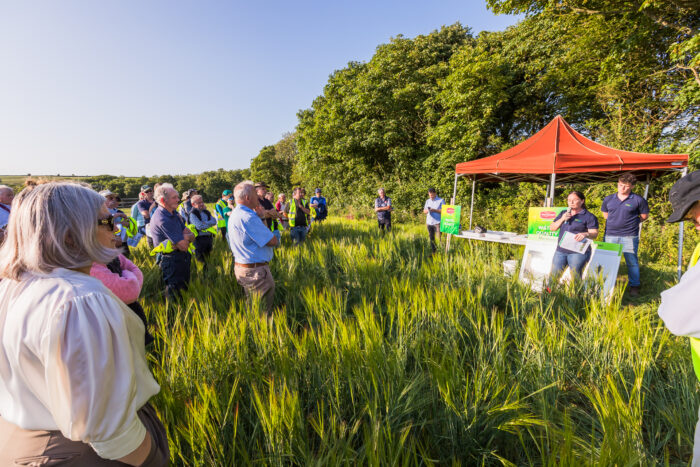
Eimear emphasised the broader environmental benefits of these practices alongside catch crops, which align with regulatory requirements and contribute to the farm’s long-term viability, highlighted through the newly introduced Farming for Water EIP, which offers financial incentives for implementing water quality measures on farm – especially important in sensitive catchment areas.
Spotlight on intercropping
The farm walk concluded with a fascinating session on intercropping legumes, presented by Ciaran Collins, Teagasc Crop Specialist, and Coleman Purcell, Dairygold Feed Nutritionist. The Allen family is part of a commercial-scale trial, growing a mixed crop of high-value, high-protein peas and beans.
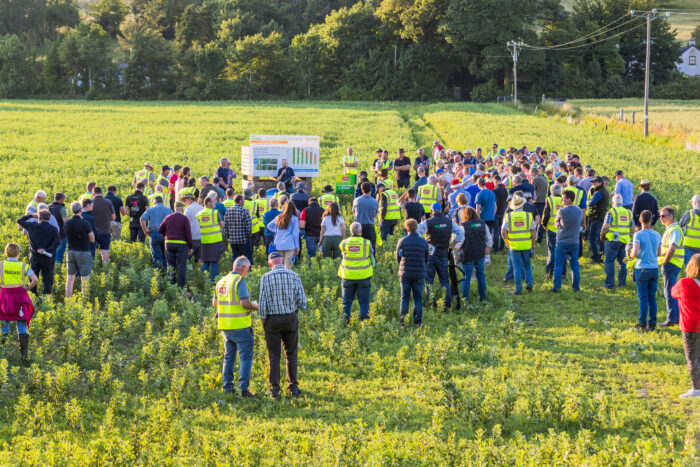
Ciaran explained the challenge of pea lodging and how intercropping with beans, using varieties which mature at a similar time, provides natural support or scaffolding. This reduces lodging and improves harvest efficiency. This innovative approach not only boosts yield stability but also enhances feed quality for livestock, an important factor for the Dairygold feed supply chain.
Coleman added insights into how this intercropped legume mix fits into a sustainable feed strategy, reducing reliance on imported protein sources and supporting local feed supply chains along with their local tillage farmers.
Socialising and sharing knowledge
The evening wrapped up with attendees getting the opportunity to network and discuss learnings over light refreshments and finger food generously sponsored by Dairygold.
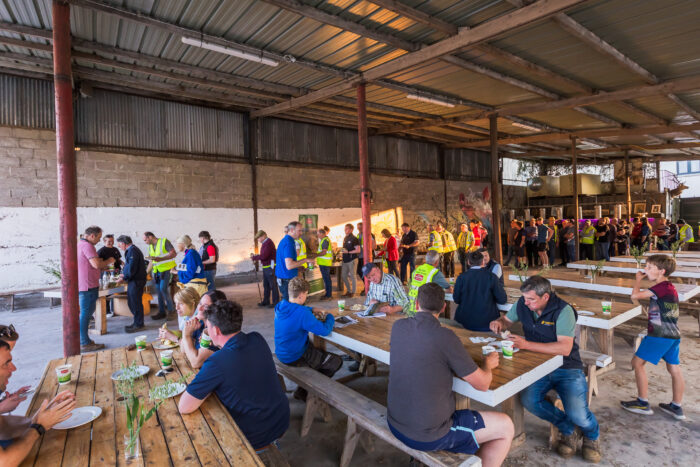
The relaxed setting fostered lively conversation about how the practices observed could be adapted and implemented on other farms, sparking ideas around soil health monitoring, reduced tillage, crop nutrition innovations and water stewardship.
The above article was prepared by Signpost Tillage Advisor, John Mahon. For more on sustainable farming, visit the Teagasc Signpost Programme webpage here.