
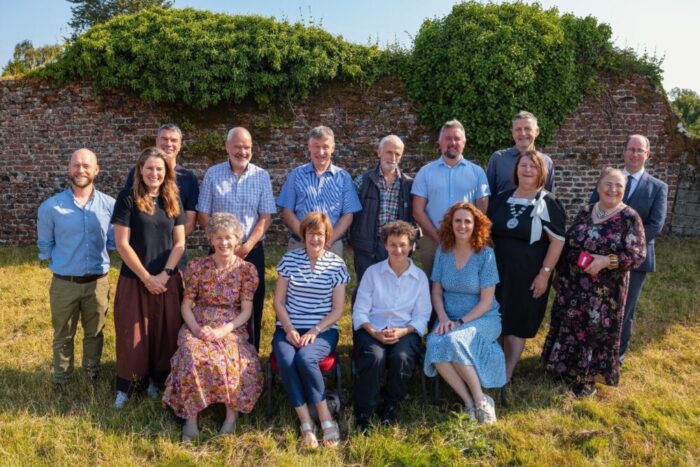
As part of National Heritage Week, a Farming for Nature Celebration took place in Myshall, County Carlow, on August 16th, 2025. Claudia Barry, Teagasc Biodiversity Research Technician and Dr. Saorla Kavanagh, Teagasc Farmland Biodiversity Research Officer, tell us more.
The event was organised by Carlow County Council’s Biodiversity Officer, Shane Casey, under the Carlow Biodiversity Action Plan. Its aim was to highlight local farmers who are making outstanding efforts to protect and enhance nature on their farms.
Four Carlow farming families, which have been shortlisted for the National Farming for Nature Ambassador Awards in 2026, were celebrated at the event. Their nomination followed a collaboration between Carlow County Council, Carlow IFA, Carlow ICA, Teagasc, ACRES, NPWS, and other partner organisations.
Meet the Shortlisted Families and the actions they are taking
Richard and Geraldine Brennan, Leighlinbridge, introduced by Saorla Kavanagh, Teagasc FarmBioNet
Richard and Geraldine Brennan’s farm is partly organic tillage with the rest in conversion. They are growing organic husky oats and are currently using red clover to build soil fertility as an alternative to synthetic chemical fertilisers. The Brennans have reinstated a wildlife pond on previously drained land. They also maintain flowering margins around tillage fields and also leave one row of crop at the margins to provide shelter, nesting and food resources for wildlife. Richard is a National Network member of the FarmBioNet project, which promotes the exchange of traditional and evidence-based actions that promote biodiversity on farms in a practical and low-cost way. Richard especially values the peer-to-peer learning that comes from meeting and chatting with farmers.
See Richard and Geraldine’s efforts in action on Carlow County Council’s Facebook here.
Eric and Catherine Osborne, Rathanna, introduced by Mary Dunphy, Carlow ICA President
Farming suckler cattle and sheep, the Osbornes have restored over a quarter of their land as rough grazing and species rich grassland, allowing wildflowers to flourish before being grazed in autumn.
Through a ‘Hare’s Corner’ plan for nature, Devil’s-bit scabious was discovered, the host plant for the Marsh Fritillary butterfly, which thrives on their farm.
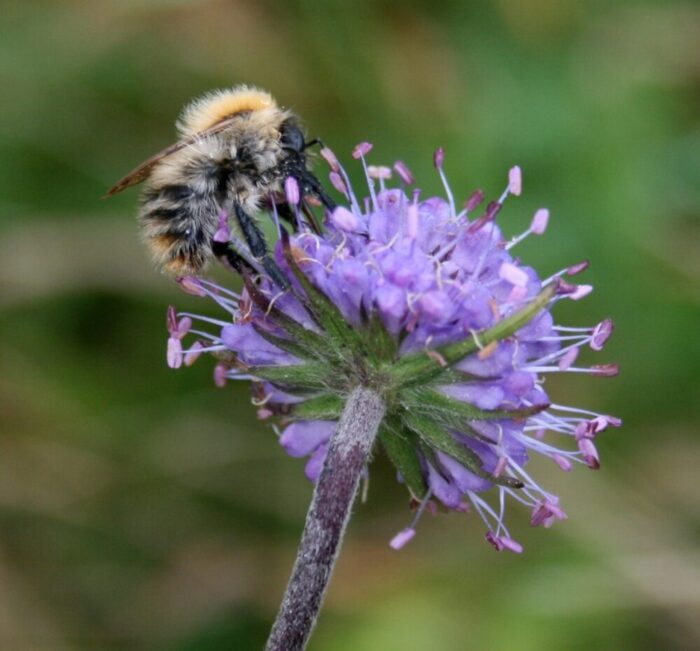
Figure 1: Common Carder Bee (Bombus pascuorum) on Devil’s-Bit Scabious (Credit: Saorla Kavanagh)
The butterfly is Ireland’s only protected invertebrate. The Osbornes have also established a wildlife pond and maintain interconnected areas of wet and dry woodland that serve as nature corridors. Their farm is regularly used by ACRES and other groups as a demonstration site for species-rich grassland management.
See Eric and Catherine’s efforts in action on Carlow County Council’s Facebook page here.
Leonie Baldwin and Andrew Lloyd, Knockroe, introduced by Brian Dunne, Acres
Hill sheep farmers Leonie and Andrew have been managing traditional meadows on their farm for decades, from the original REPS scheme, through to the current ACRES programme. Yellow rattle is among the many flowering species found in the traditional meadows.
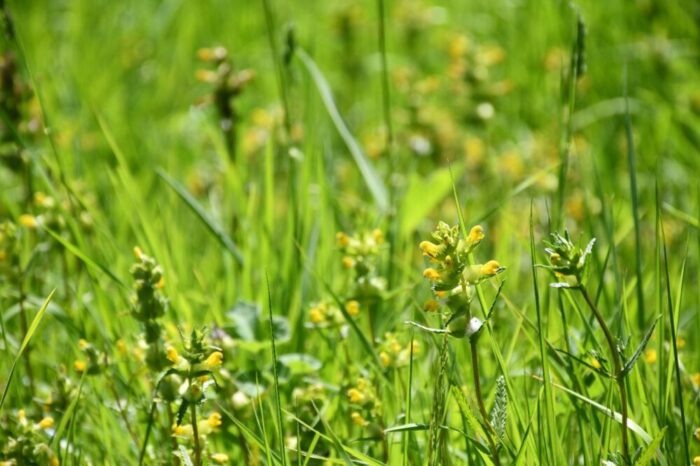
Figure 3: Yellow Rattle in Wildflower-Rich Hay Meadow (Credit: Claudia Barry)
Their farm has 2kms of dry-stone walls, which serve as microhabitats for invertebrates, birds and small mammals and act as valuable wildlife corridors across the farm. They also remove vegetation from a percentage of the stone walls to create a variety of habitats for different species. Though maintaining these stone walls a ring stone was discovered, with the decorations on the stone dating back over 5,000 years ago.
See Leonie and Andrew’s efforts in action on Carlow County Council’s Facebook page here.
Michael and Margaret Purcell, Lacken, introduced by Marian Dalton, Carlow IFA
Michael is a beef farmer and chair of Carlow IFA. Shelter belts were planted on the farm as part of a Forestry Department scheme in the 1950s. The wide planting of this belt allows sunlight to reach the ground, encouraging a higher diversity of flora and fauna. Michael maintains traditional stone walls on the farm and has implemented hedge laying as part of the ACRES scheme to increase shelter and stock proofing in a traditional way. A quarter of an acre was of land was designated as a wildlife habitat as part of the REPS scheme in 1998 and is now a haven for wildlife.
See Michael and Margaret’s efforts in action on Carlow County Council’s Facebook page here.
Recognising Farmer’s Role in Conservation
Commenting on the success of the celebration, Shane Casey, Carlow Biodiversity Officer, said: “Our Farming for Nature Celebration is aimed at recognising and celebrating Carlow farmers and their contribution to local biodiversity. Farmers have always been, and will continue to be, on the frontline of nature conservation and restoration, and it’s important to acknowledge and support this role.”
This celebration showcased the commitment of these four families but also highlighted the vital role Irish farmers play in protecting the country’s national heritage. By combining traditional practices with innovative approaches to land management, these farmers are demonstrating that farming and nature can thrive together.
The awards will take place at the Burren Winterage Festival from the 24th-26th of October, where Farming For Nature celebrates and recognises Irish Farmers who are working to promote biodiversity on their farms and to celebrate Irish natural heritage.
Practical ways to promote biodiversity on your farm
The Farming for Nature Handbook is a practical resource for farmers looking to boost biodiversity and build resilience. From meadow management to soil health, it’s full of real-world, biodiversity-friendly farming practices that work with the land – not against it. For more information about Farming for Nature and the handbook you can visit famingfornature.ie.
Find out more about FarmBioNet and sign up for the newsletter here.
More from Teagasc Daily: Biodiversity and productivity can go hand in hand
More from Teagasc Daily: FarmBioNet workshop brings farmers together to share biodiversity knowledge