
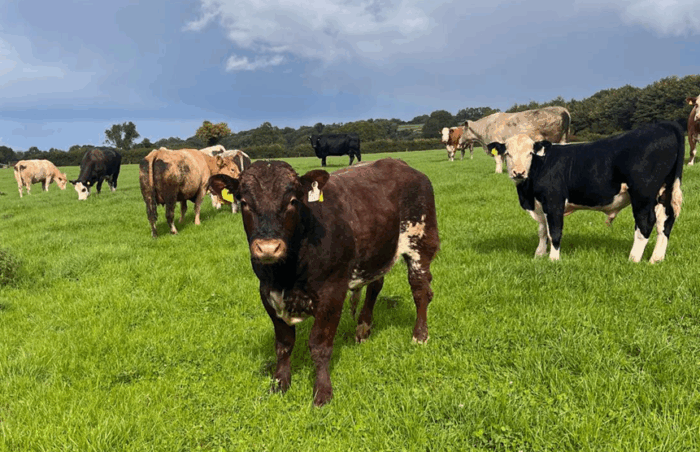
In what’s shaping up to be a great year for suckler farmers, Manager of the Future Beef Programme, Martina Harrington visits James Madigan’s farm in Co. Kilkenny where a continued focus on doing the simple things well every day is delivering results.
2025 has been one of those years that makes you proud to be in sucklers. An early spring set things up perfectly; grass growth was excellent, and despite a short summer drought, autumn regrowth has capped off what many are calling a great season for beef finishers.
With beef prices holding steady and home-bred cattle performing well, farmers like James (Jimmy) Madigan of Derrynahinch, Ballyhale, Co. Kilkenny are leading by example – proving that detail, discipline and a clear system still pay off.
A former Teagasc / Irish Farmers Journal BETTER Farm participant, Jimmy farms with his wife Anne-Marie and their four children – Hannah Mariah (14), Jim (12), Kate (10) and Eddie (4). Together, they’ve built a resilient, profitable and environmentally conscious system that’s admired both locally and abroad.
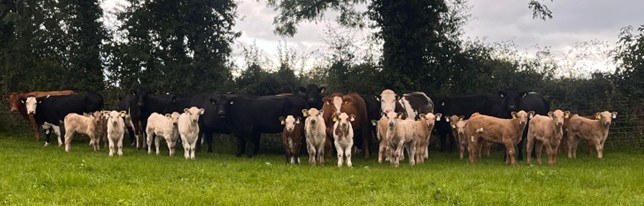
Figure 1: A group of August-born calves and their dams on Jimmy Madigan’s farm in September 2025
A productive, balanced system
The 86.6ha farm includes around 80ha of grassland, 9ha of hardwood forestry and a small block of winter barley. The grassland stocking rate is 148kg N/ha (139 kg N/ha overall).
Jimmy manages 88 suckler cows, split between 40 autumn and 48 spring calvers.
All male progeny are finished as under-16-month bulls, while heifers not retained for breeding are finished at around 22 months. Additional bulls are purchased, maintaining a steady flow of cattle for finishing. A small flock of 30 spring-lambing ewes complements the system.
Performance for 2025 speaks volumes:
- Home-bred bulls: 400 kg carcass (U-, 2+) at 16.5 months
- Purchased bulls: 389 kg carcass (U-, 3-) at 15.6 months
- Heifers: 334 kg carcass (R=, 3-) at 22.2
“It’s about consistency,” Jimmy explains. “When breeding, grass and health all align, you get cattle that perform every single day.”
Table 1: ICBF beef finishing profile of home-bred bulls finished in 2025 on Jimmy Madigan’s farm
| Herd Average: Key Performance Indicators | |
| Factory price | €2,878 |
| Price/kg | €7.18 |
| Lifetime €/day | €5.79 |
| Herd Average: Finishing performance | |
| Carcass weight | 400kg |
| Carcass grade | U- |
| Carcass fat | 2+ |
| Age at finish (months) | 16.5 |
Breeding for balance
Breeding and suckler cow performance are central to profitability at Derrynahinch. The herd boasts an impressive Eurostar index of €124 – well above the national top 10% benchmark of €119 (as of October 2025).
The herd’s genetic profile is built around carcass weight fertility and milk. Average cow carcass weight is +15kg, daughter milk is +8.3kg and the daughter calving interval is -1.43 days – proof of both productivity and fertility.
The breeding policy combines AI and natural service. Traditionally, first-cross Limousin and Belgian Blue cows from dairy herds were the foundation. Now, Jimmy combines buying in with using a mix of AI sires and a Limousin bull to build stronger carcass traits without losing fertility or milk.
“It’s all about balance – fertility, milk, and carcass. You can’t afford to lose one chasing the other,” Jimmy explained.
Results of note include: a calving interval of 367 days, 74% calved in the first 6 weeks with only 2.4% mortality at 28 days leading to 0.97 calves per cow per year, compared to a national average of 0.85. That equates to roughly 10 more live calves every year from the 88-cow herd.
What is not bred to replacement sires are bred to terminal Charolais bulls, some of which Jimmy breeds himself. The latest pedigree birth on the farm was Bunnyshill Billybob, landing on the ground at 85kgs, sired by Bud Orpheus, he has a carcass weight of 42kg, conformation of 2.05 and a calving difficulty of 8.0% on mature cows, giving him an overall terminal index of €171.
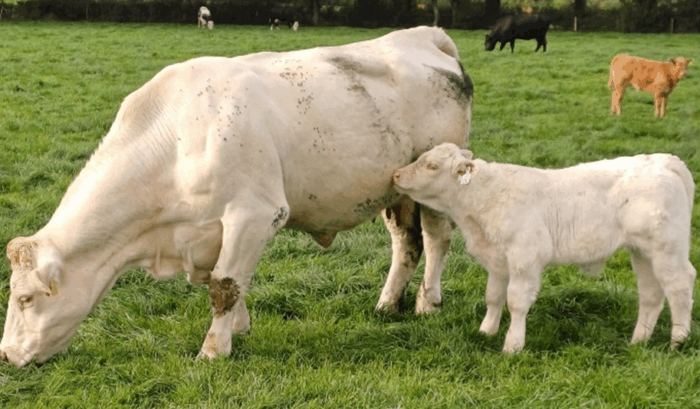
Figure 2: Bunnyshill Billybob with his dam Bunnyshill Pearly, sired by Bivouac
The sire to the majority of the calves born this year is Bunnyshill Sky VR 46, born in 2021, he has a carcass figure of 42.2kg, conformation of 1.95 and a calving difficulty on mature cows of 2.2% giving him a terminal index of €213.
Grassland management: Making every day count
As said earlier, the bulls are finished under 16 months and heifers at 22 months. To achieve high carcass weights at this age, the animals must be performing at peak every day of their lives. This is where grassland management come into its own.
The key areas Jimmy focuses on are:
- Reseeding 10–15% of the farm annually
- Adding 2 kg white + 2 kg red clover per acre to all mixes
- Tight paddock grazing – no more than three days per paddock
The focus on grassland management serves two purposes – maximising the performance of cattle while grazing, but also to make top quality silage. Typical silage quality is 76% dry matter digestibility (DMD) and 14% crude protein. To get 76% DMD silage, it must be cut early – mid May is the aim for Jimmy. To achieve this, soil fertility must be optimum, this is an area Jimmy has focused on.
“To hit 76 DMD, you’ve got to cut early in mid-May – that’s always the goal,” Jimmy said.
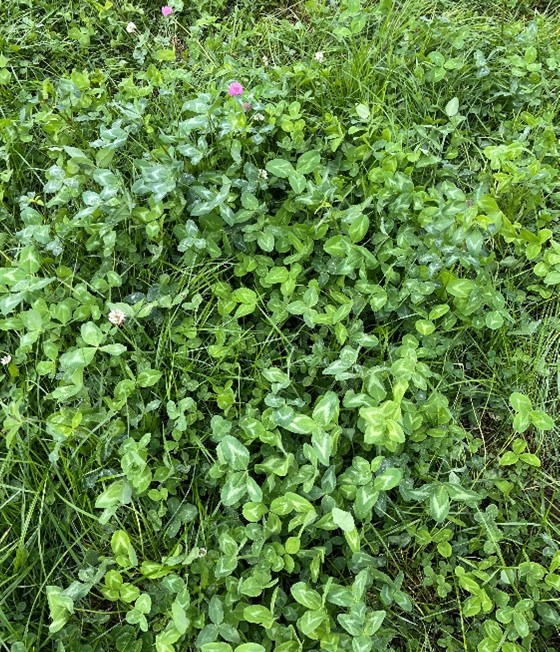
Figure 3: A typical reseed in Madigan’s, containing 2kg of red clover and 2kg of white clover
Investing in soil fertility
Soil fertility has been a key focus area for 2025. Comprehensive soil testing and a Nutrient Management Plan identified fields with low pH, phosphorus and potassium levels.
Jimmy addressed this by spreading 2 tonnes of lime per acre on land below pH 6.2, and adopting a balanced fertiliser strategy using 13-6-20, 18-6-12 and protected urea. Silage fields are rotated annually to prevent nutrient depletion.
The payoff: earlier spring growth, heavier first cuts and good autumn regrowth – all vital for maintaining the under-16-month bull system.
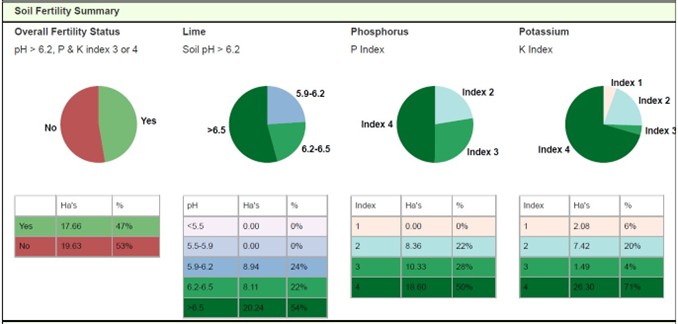
Figure 4: Soil fertility summary from Jimmy Madigan’s Nutrient Management Plan
Health: Prevention first
A robust herd health plan is at the heart of Derrynahinch’s success. Vaccination, dosing and nutrition are timed precisely to maximise protection and minimise stress.
Cows receive:
- Rotavirus, Coronavirus, E.Coli and Cryptosporidium vaccines (split across groups)
- IBR booster one month pre-calving
- High-quality pre-calver minerals for five weeks before calving
Calves receive:
- Rispoval and intranasal IBR at birth
- Tribovax 10 primary course (2 vaccines)
- Two Bovipast vaccines (four weeks apart), IBR with the second
Dosing strategy:
- Dectomax injection in June
- Noromectin pour-on at housing
- Spot-on for lice as needed
The farm remains fluke-free, with cows treated for lice only using a spot-on. Occasionally, a cow showing looseness is treated with Levafas Diamond, which controls adult rumen fluke on his vet’s advice.
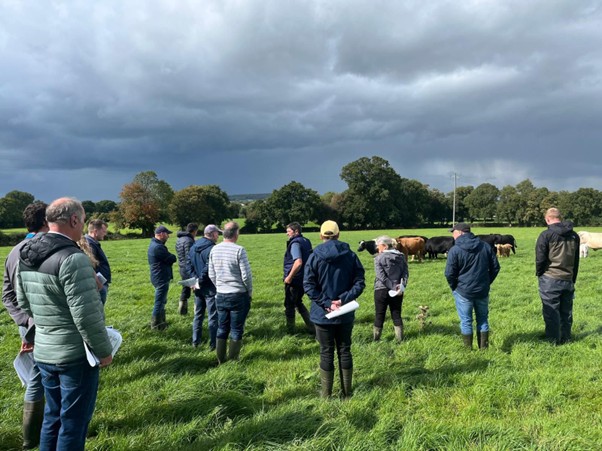
Figure 5: Teagasc South East Beef Advisors on Jimmy Madigan’s farm in September 2025
Finishing bulls
Jimmy’s young bull finishing system is fine-tuned for consistent, efficient growth.
Feeding routine:
- Bulls are built up to 3kg of meal before housing
- Increased by 1kg per week to a peak of 8–9kg/day
- Fed alongside 76+DMD silage
- Using Bretts Beef Elite ration for consistent performance
Bulls are housed in open, well-ventilated sheds, nine per pen, with 2.7m² per animal. Silage is fed fresh daily, with meal split morning and evening. They have access to fresh, clean water with drinkers checked every day for soiling.
Bulls are weighed regularly to ensure performance, with a record of the average pen weight recorded on the girders of the shed. This attention to detail ensures bulls hit heavy carcass weights under 16 months while achieving the desired level of carcass grading.
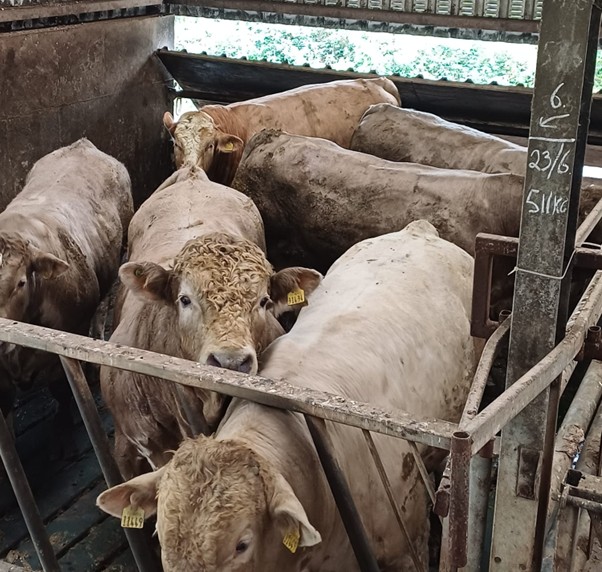
Figure 6: Pen of finishing bulls on James Madigan’s farm, estimated weight of 740kg at 14 months.
Derrynahinch continues to exemplify what’s possible when technical performance, animal welfare and environmental awareness go hand in hand. Jimmy is part of the ClimateFarmDemo project, focusing on increasing profitability while reducing environmental impact. He regularly welcomes groups – from Irish discussion groups to international visitors – keen to learn from his system.
“It’s about doing the simple things well, and doing them every day,” Jimmy said.
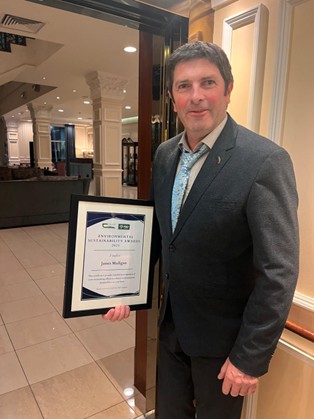
In recognition of his commitment, Jimmy was a finalist in the Teagasc FBD Sustainability Awards, highlighting not just production, but also stewardship and continuous improvement.
With cattle thriving, grass underfoot, and prices holding strong – there’s no doubt about it: 2025 truly is a great year to be a suckler farmer.
More from Teagasc Daily: Winter dosing – a guide from the Future Beef team
More from Teagasc Daily: Save tax and plan smart on drystock farms
Martina Harrington is Manager of the Teagasc Future Beef Programme, find out more about the Future Beef Programme here.