
Shorter days, lower temperatures and managing animals indoors are some of the many extra challenges on farms in late autumn and winter. Efforts made now will make for an easier, safer winter, Health and Safety Specialist at Teagasc, Francis Bligh writes.
While we hope we will not see a storm like Éowyn for many years it is important to take stock and think about what we can do now to help protect our farm and property against future storms. Securing sheeting, timbers or removing dangerous trees can really help to reduce potential damage.
This was routine on farms in times gone that we must put back onto our to-do lists. Even modern buildings will need repair, and it is important to do this work in a calm relaxed environment far in advance of any impending storm.
Always consider your own ability, time, competence and the availability of appropriate equipment to do this work safely. If in doubt hire competent, experienced people with appropriate equipment and insurance.
Weather
When winter weather sets in, it is important to try to have safe, clear routes around farm buildings. A fall can have devastating consequences. Keep and use a stock of gritting material and salt to prevent slipping. Be sure to divert water away from routes that are used regularly to keep them dry and clean.
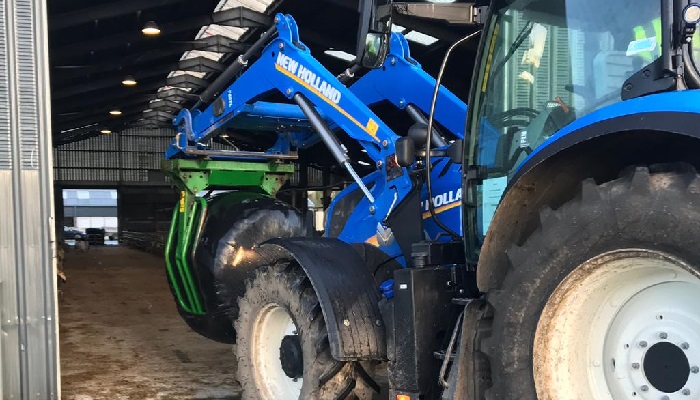
Tractors and machinery
Take time to carry out a thorough mechanical check of vehicles especially handbrakes. If issues are identified put a plan in place to have them fixed. Keep windows clean to improve visibility and reduce glare. It is also important to check and use lights and beacons.
The National Farm Safety Measure 2025 was introduced by the Department of Agriculture Food and the Marine to incentivise the purchase and use of PTO shaft covers, which protect farmers and machinery operators from serious and fatal injuries.
The measure provides a financial contribution to participating farmers for a maximum of four PTO shaft covers. The grant aid is at a rate of 60% subject to a maximum eligible cost of €100 per PTO shaft cover. PTO shaft covers must meet the requirements of the European Standards EN 12965:2019 and the CE mark must be clearly visible on the PTO shaft cover.
Participants must submit an Expression of Interest to the Department before purchasing the PTO shaft cover. The Measure will be open for Expressions of Interest until Friday 7th November 2025. Claims for payment must be submitted by Friday 7 November 2025.
Livestock
There may be some repairs needed to farm lighting, floors, barriers and gates in and around farm buildings. Employ a registered electrician to check and repair electrical circuits. If you need an extra calving pen, now is a good time to make a plan to get that work done.
Fire safety
Have modern fire extinguishers where potentially needed. Fit battery isolator switches on farm vehicles and keep sheds with flammable materials, livestock and farm vehicles separate. Get electrical wiring checked regularly.
Targeted Agricultural Modernisation Scheme
There is a wide range of farm safety equipment, facilities and farm buildings that are grant aided under the Department of Agriculture, Food and the Marine (DAFM) Targeted Agricultural Modernisation scheme (TAMS).
Talk to your advisor about any ideas or plans that you might have as there may be grant aid available. To claim a TAMS grant, it is mandatory that all applicants have completed, prior to the submission of their claim for payment, the half-day farm safety code of practice or the FETAC Level (Green Cert). Your claim for payment will not be processed until evidence of completion of the course is provided. Teagasc is currently taking bookings for half-day farm safety courses. Contact your local Teagasc office for details.
More from Teagasc Daily: Webinar offers key insights on TAMS 3 grants for drystock farmers
Be aware of increased risk where children are present
A recent study of Irish farmers, conducted by Teagasc, indicates that presence of children/youth (1-24 years old) in the farm household and 5-15 year-olds, in particular, is associated with an increased farm workplace injury risk. The study was conducted as part of the National Farm Survey (NFS) operated by Teagasc.
The study found almost 40% (39.6%) of family farms indicated having children/youth (aged 1-24) in their family households. However, considerable variation existed in the level of children/youth in farm households with dairy farms having a much higher proportion having children/youth compared to other enterprises. Why might children increase risk on farms? The possible reasons why this risk may happen on farms with children/ youth are:
- Presence of younger parents who are involved in farm development and farming that is more intensive or off-farm employment. Thus, the risk may be based on the parental stage in life and farm development activities and/ or workload.
- Childcare, particularly in the 5-15-age category, may require time, which accordingly causes increased work time demands on adult family members.
- An enterprise associated with high workload, long working hours and associated stressors and having children could cause higher non-task-based work hours spent by parents, which thus increases the risk of injury occurrence.
Strategies to counter the increased risk of injury
Time for family
Time for family must be prioritised. Farm work routines must provide sufficient free time for the demands of family life.
Childcare
Decisions on childcare are very important. The time demands of a busy farm may not allow for adding the demands of childcare responsibilities. Families must be honest about what is possible and make arrangements that prioritise safety.
Contractors
Contractors have the ability to carry out many farm tasks quickly and efficiently. While there will be an associated cost, they can help to free up time. Tasks like fertiliser spreading, topping and slurry can be very time consuming. Consider getting the work done by a contractor.
Use of labour
Hiring labour may be necessary depending on the time demands of the farm and on the need to make time available for family. Good work routines and practices and fair remuneration will help attract and retain good staff.
Efficient facilities and work practices
Working with advisors, attending training and linking with other farmers will help with the development of efficient facilities and work practices.
For more information on the Irish Government’s ‘Be Winter-Ready’ Information Campaign talk to your advisor or check out the Be Winter Ready website.