
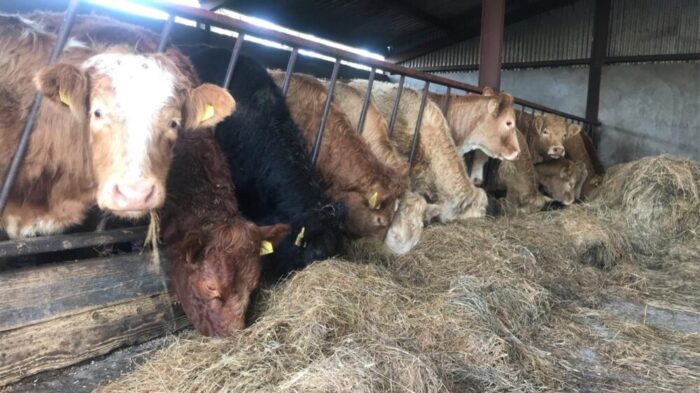
With beef prices reaching record highs, Drystock Advisor in Teagasc Mayo, James Fitzgerald shares key advice to maximise winter gain and deliver better returns for beef farmers over the winter housing period.
Make the shed work
Space allowance
Overcrowding reduces thrive. As a guide, cattle on slats under 275kg need 1.2–1.5 m2/head; 275kgs+ need 2.0–2.5 m2/head. Remember to calculate out space allowance based on the weight you expect the stock to be at the end of the housing period, not the beginning. Otherwise overcrowding as the winter progresses is inevitable.
Feeding space
Feeding weanlings with concentrates or restricted silage, allow 400-500mm/head so all cattle can feed at once. For ad‑lib roughage, 225–300 mm/head can suffice. Store cattle and suckler cows need 100mm and 200mm extra per head respectively. Barriers along the back of pens, where possible, can greatly help to alleviate a shortage of feeding space.
Ventilation
Good airflow removes bacteria, viruses and moisture. Inlets should be at least double outlets. Simple fixes like adding a continuous 0.3 m gap along the eaves or increasing ridge outlets can improve air movement. Fresh air is a natural disinfectant; poor ventilation is a major contributor to pneumonia outbreaks.
Ready the yard
Check all gates, latches and feed barriers are working properly. Prevent roof/yard water from entering tanks. Do not overstock sheds relative to the slurry storage capacity; aim for a buffer of a few weeks beyond statutory storage to avoid spreading slurry in poor conditions.
For more, Beef Specialist at Teagasc, Niall Kerins joined Catherine Egan on a recent episode of the Beef Edge podcast to discuss winter housing. Listen in below:
Test silage and balance diets
- Sample correctly 5-6 weeks after ensiling using a core sampler.
- Take multiple cores across the pit or a W‑pattern on the face and exclude air from sample. Test bale batches separately.
- Match stock to silage quality. High DMD (72%+) silage reduces meal need for weanlings and finishers; moderate-quality (c. 66–70% DMD) suits dry cows. A major saving on ration fed to weanlings and finishing stock is possible where first‑cut silage is 71–76% DMD, provided performance is monitored.
For more insights, James Strain, nutritionist with Inishowen Co-op, joined Catherine Egan on this episode of the Beef Edge podcast to winter nutrition. Listen in below:
Health at housing
Dosing strategy
Treat internal and external parasites based on need and farm history. Stomach/lungworm are picked at grass and housing is an opportunity to clear burdens. Use faecal egg counts and treatment plans available from your local vet or Teagasc advisor to guide decisions and remember many flukicides only target adult fluke, immature stages may require a different product or timing.
Lice and mange
Lice and mange are common in housed cattle. Plan treatments and repeat as necessary. Clipping backs and tails helps reduce sweating and makes it harder for lice to travel and multiply.
Vaccinations
Where pneumonia has been an issue, boosters for RSV, PI3 and Mannheimia (Pasteurella) haemolytica two weeks pre‑housing can help. IBR vaccination should follow protocol and intervals. Ensuring that young stock are regularly dosed for lung worm throughout the first grazing season leaves their lungs clear, healthy and able to cope with environmental pressures.
For further insights, Natascha Meunier from Animal Health Ireland features on this episode of the Beef Edge podcast to discuss health at housing. Listen in below:
Weighing
Weigh cattle at housing to assess grazing performance and to set winter targets. Weigh again mid‑winter to check progress and adjust the feeding plan if animal performance is below target.