
Animal Health
- Dosing plans
- Latest weights show lower performance than expected
- Lying and feeding space
The bulls were dosed with Rumenil to treat them for adult liver fluke and for rumen fluke. A FEC sample was taken from them in early November which showed a low stomach worm burden and they did not need treatment. There was also no coughing which would indicate lungworm since their previous dose in September.
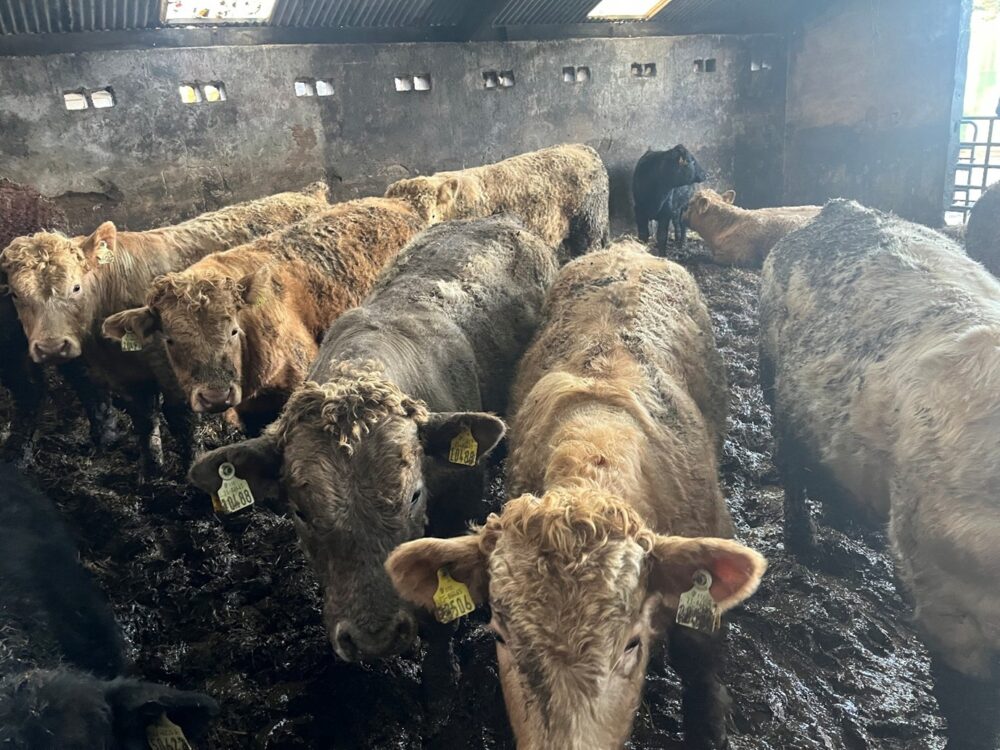
Figure 1: The 2025 born suckler bulls
However when Shane weighed them on 28th November he was disappointed as they had only gained 0.75kg/day on average since 16th October, despite being fed 4.5kg of ration/head/day. He took another FEC sample which returned a negative result for liver fluke and rumen fluke, which has been an issue last year. The bulls were housed approx. 6 weeks ago until this date. After consulting with his vet, Shane decided to treat them with Levafas Diamond which treats them for adult liver fluke (over 10 weeks), rumen fluke, lung worms and stomach worms. He also administered a mineral treatment on veterinary advice.
The previous weight gains show that the 15 suckler bulls gained 1.33kg/day from birth until 23rd August, and then dropped back to 0.87 kg/day between 23rd August and 16th October. Shane will weigh them again in the coming month to continue monitoring performance.
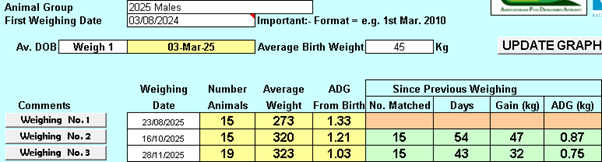
Figure 2: Weights of 2025 born bulls
The heifers were grazing different fields to the bulls and they will be FEC sampled and weighed this month.
Shane also analysed the feeding and lying space for each group of stock.
The 15 suckler bulls and 4 dairy beef bulls are housed in a straw bedded shed. They require 4m2 per animal of lying space and 0.5m feeding space for the silage/ration mix. The shed is 123m2 which means in theory it can house 30 bull weanlings. However they will not lie in the 1-2m along the feed passage which gets mucked up from them feeding so this needs to be accounted for, and reduce the shed capacity to 24 bulls.
The feed passage is 17.62m long and can accommodate 32 weanlings at 0.5m/head. However there are only 27 spaces available. Therefore the most limiting factor in the shed is lying space which means the total capacity is for 24 bulls and Shane has 19.
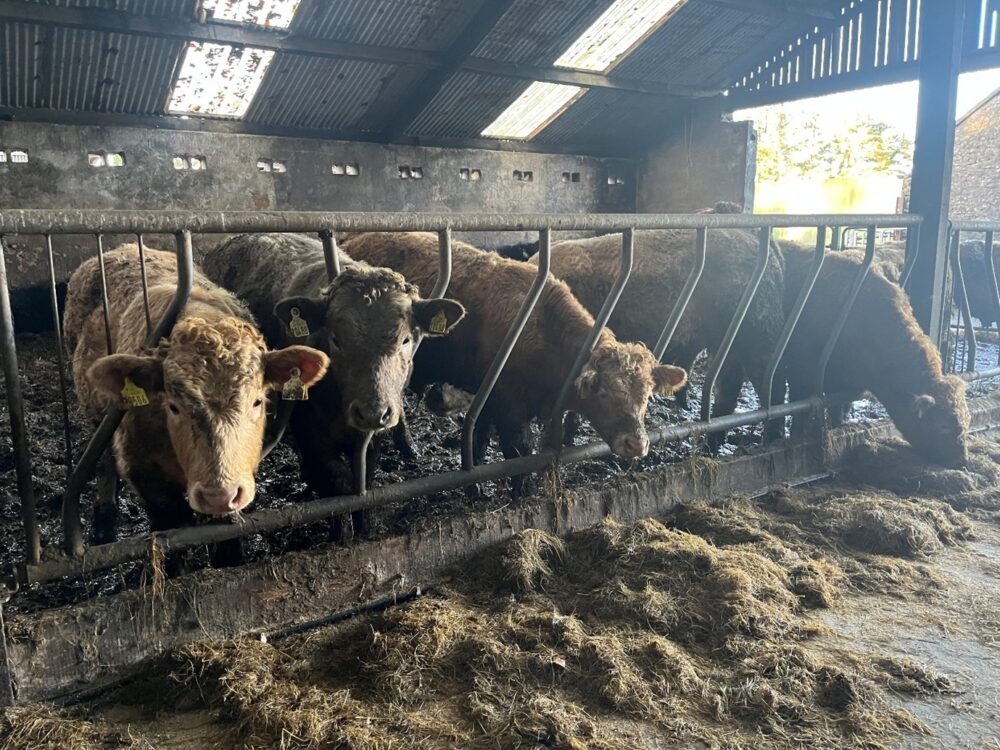
Figure 3: The straw bedded shed can house 24 bulls
Meanwhile the heifers are housed in an older slatted shed that has 17.7m2 of lying space/pen. They require 1.7m2 of lying space on slats which means each pen can hold 10 weanlings. They need 0.45m of feeding space when getting ration which again amounts to 10 weanlings per pen, plus there are 11 feed spaces present in the barrier. Shane has 41 heifers housed across the 4 pens in the shed which is slightly above capacity for their lying and feeding space requirement.
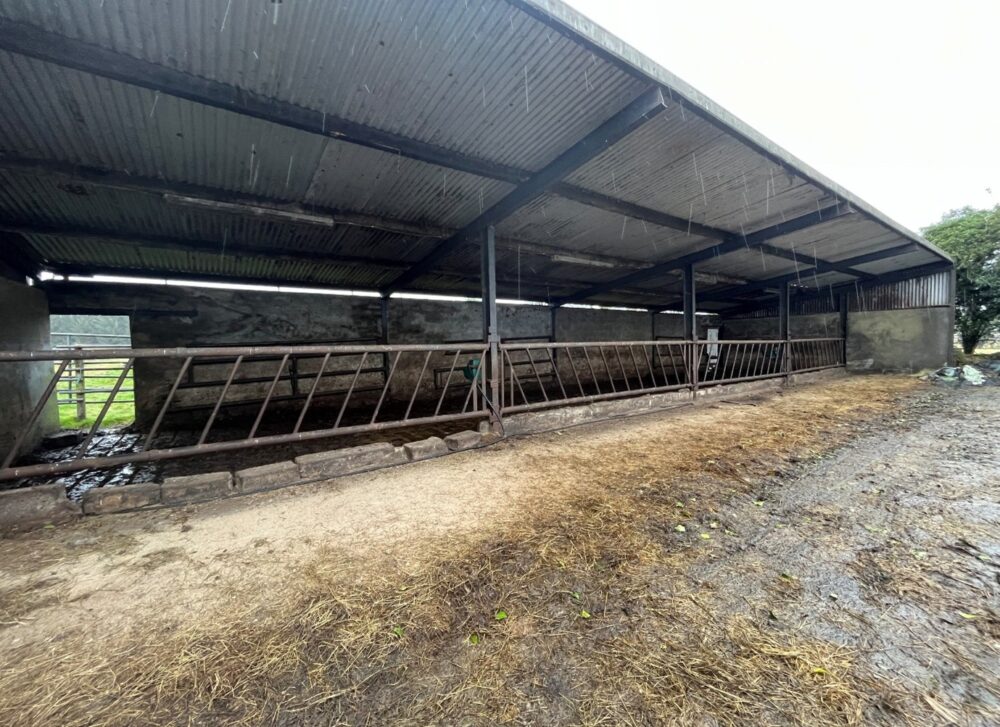
Figure 4: Slatted shed for housing the heifers
The dry cows are being fed the 66-67% DMD silage to maintain body condition score over the winter. The in-calf heifers are on the first cut silage which is 76.52% DMD and will be moved onto 66-67% DMD silage over the next month to avoid getting over fat.
The bulls are eating the second cut red clover which tested at 74.1% DMD and Shane was happy with. However it is quite wet at 19.2% dry matter, but the diet feeder is helping to mix ration and increase this. The crude protein is 14.4% which is good.
They are eating this silage along with 0.5kg of soya bean meal and 4kg of a 12% crude protein ration. This bring the overall diet to a UFL value of 0.96 with 16.4% crude protein which is high while they are in the growing stages. As the bulls come closer the 12 months of age and the target weight of 500kg at that time, they will be built up after Christmas to 8kg of ration per day. Shane will drop the protein in the diet by removing the soya bean meal to allow for them to put on fat cover in the final months before sale.
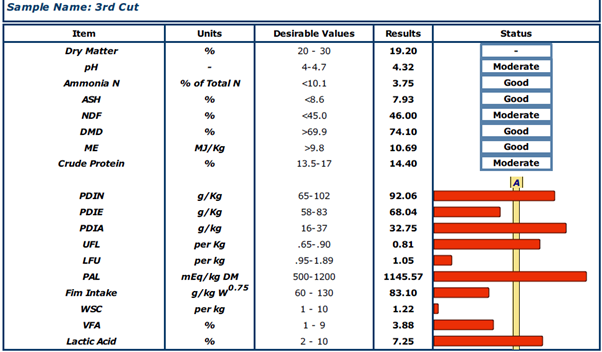
Figure 5: Third cut red clover silage