
Peat me halfway
The horticultural industry has to start considering alternatives to using peat as a growth medium. Research at Teagasc Ashtown is investigating potential biomass alternatives.
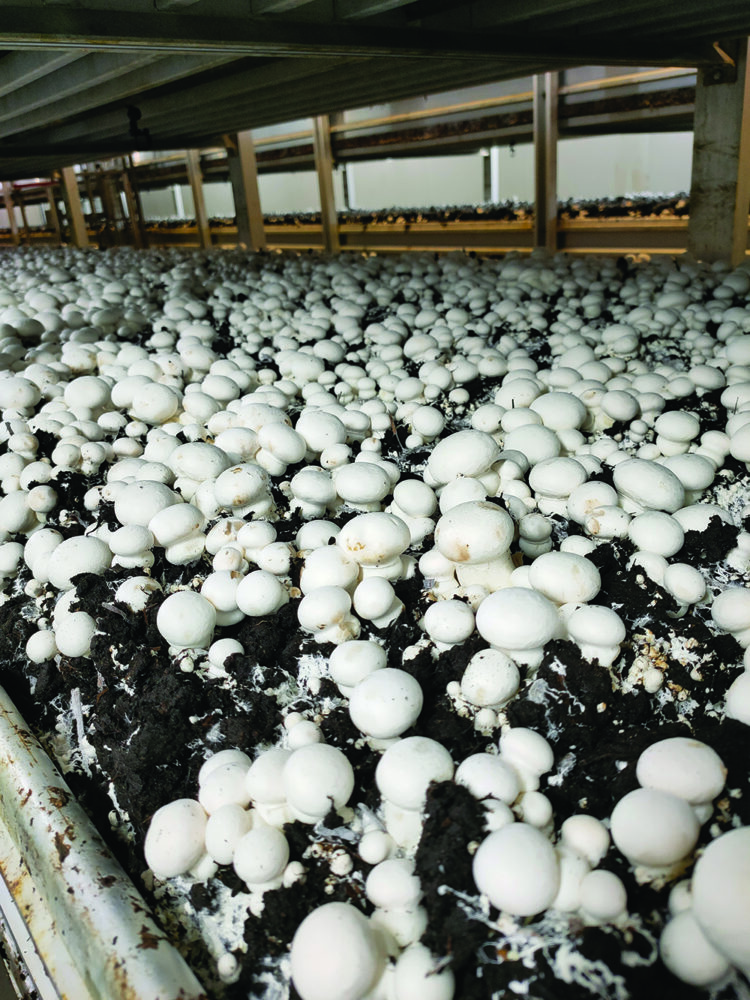
As Irish peat extraction restrictions tighten, peat-free growth media may be a necessary alternative for mushroom production. Photo credit: Teagasc
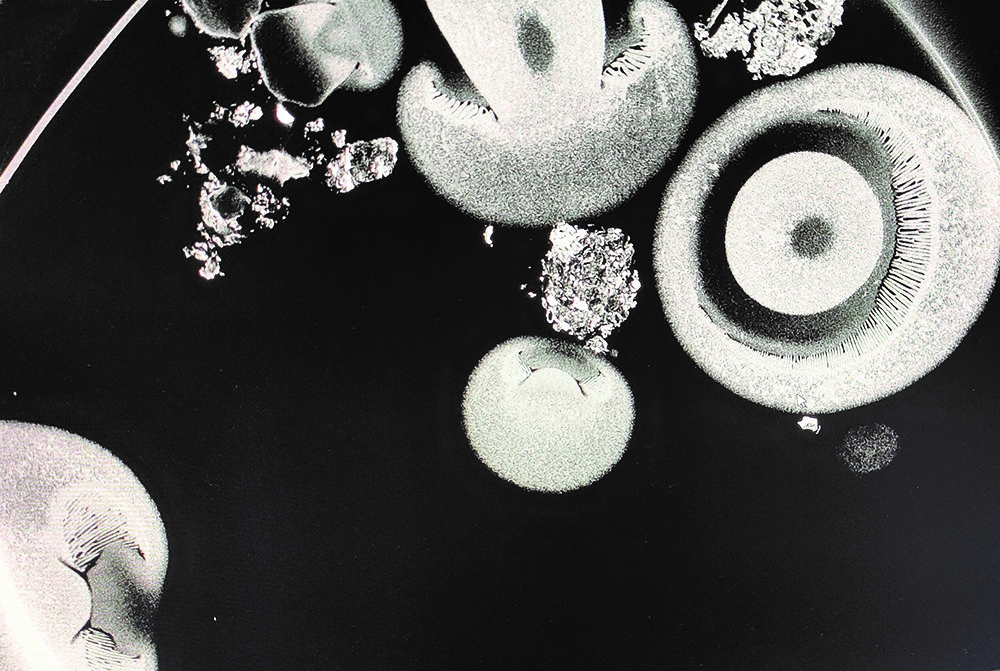
X-ray Computed Tomography (X-ray CT) was employed as a novel method of characterising the physical properties of conventional peat and alternative bark-based casings
The use of peat as a growth medium in the horticulture sector came into sharp focus in 2021, following a series of high court decisions around planning permission and licensing for peat extraction.
A working group was commissioned to examine the potential of alternatives to peat for the horticultural industry. Teagasc funded the research project S-Transit to support a sustainable transition to peat-free production in the mushroom sector, and was awarded further funding in the Beyond Peat project to investigate peat alternatives for all of Irish horticulture.
Essential for growth
The mushroom industry is facing pressure to reduce the use of peat, which is the main component of casing in the production of white button mushrooms (Agaricus bisporus). In mushroom production, the casing is placed on top of compost, with its function being to provide available water to the fungal mycelium.
This is essential for mushroom growth, explains Teagasc Walsh Scholar Gabrielle Young. “Reducing peat use or doing away with it altogether would have a significant impact on mushroom production.”
Teagasc research started out by identifying, characterising and evaluating the literature on alternative casing materials for the cultivation of white button mushrooms.
Despite numerous alternatives presented in the literature, the researchers found insufficient characterisation of materials, issues with the consistency of materials, and a lack of consensus of the performance of alternative materials. This information was published as a systematic review article synthesising the state of knowledge.
“The yield of mushrooms grown on alternative materials is often inferior to peat,” notes Gabrielle. “However, there has not been much research that has considered how physical, chemical or biological properties influence performance, nor how this information could be applied to improve alternative casings.”
Barking up the right tree
A recent publication by the Beyond Peat project at Teagasc highlighted that the majority of alternative biomass in Ireland is made up of woody biomass – in particular Sitka spruce pine.
Building on this finding, a series of growth experiments at near-commercial scale were conducted to evaluate performance of an alternative bark-based casing material derived from Sitka spruce.
The main findings were that mushroom production was possible with bark casing, although yield was lower. There were several issues associated with bark-based casing, including water stress and cropping delays, issues in batch consistency and contamination.
Lael Walsh, a Research Officer at Teagasc Ashtown, is the principal investigator for both the S-Transit and Beyond Peat projects. She highlighted that, from a commercial perspective, any of these issues would be deemed unacceptable.
“Ultimately, these findings highlight the need for research to support the growing media industry in transforming these materials into growth media, and for a collaborative focus on developing products that meet the agronomic needs of specific crops,” Lael says.
In addition to the growth trials, X-ray Computed Tomography (X-ray CT) was employed as a novel method of characterising the physical properties of conventional peat and alternative bark-based casings. This required the creation of a novel microcosm cultivation method to recreate mushroom production on a smaller scale, suitable for regular scanning over the mushroom growth cycle. Using this method, a time sequence of scans was taken at different stages of the mushroom production cycle, Gabrielle explains.
“Significant differences in the structure of bark-based and peat casing treatments were identified in terms of the porosity, pore surface area and pore size distribution. The bark-based casings performed differently to peat over the mushroom growing cycle which would affect the performance and suitability of bark-based materials to function as casing.”
An X-citing challenge
Saoirse Tracy, Director of the X-ray CT Facility at University College Dublin, says that X-ray CT has already been applied to other areas of soil and agricultural research.
“This project provided an exciting challenge to use it as a tool in mushroom science. X-ray CT could be especially useful in evaluating factors such as internal porosity and pore-structure of other potential casing materials, which are known to be predictors of mushroom performance.”
Michael Gaffney, Coordinator of the Beyond Peat project, notes that this work contributes to the understanding of how peat structurally differs from bark-based alternatives.
“This is important new knowledge as we progress towards reducing peat use in horticultural growing media. It provides new information on the performance of bark-based casing and gives insight into which structural changes may render alternative materials unsuitable as casing substitutes.”
The research so far has helped highlight some of the potential challenges and limitations of using alternative biomass as a replacement for peat as a growing medium. This provides researchers with a strong knowledge basis, pointing them in the right direction of focus areas for further attention and consideration.
Acknowledgements
The authors acknowledge the contributions towards this research by: Helen Grogan (retired), Eoghan Corbett, Donal Gernon and Brian McGuinness of Teagasc, and Olaf Schmidt and the staff at UCD.
Funding
This research was funded by the Teagasc Walsh Scholars Programme, grant number 2021021. It was also supported by the Beyond Peat project, funded by the Department of Agriculture, Food and the Marine, grant number 2021R499.
Contributors
Gabrielle Young, PhD Walsh Scholar, University College Dublin/Teagasc Ashtown.Saoirse Tracy, Assistant Professor, University College Dublin.
Lael Walsh, Research Officer, Teagasc Ashtown.
lael.walsh[at]teagasc.ie
Michael Gaffney, Principal Research Officer, Teagasc Ashtown