
Shaping the future of the bioeconomy
The bioeconomy holds huge potential for transformation across agri-food and other sectors. Teagasc, along with partners across the EU, examined the challenges to accessing this potential.
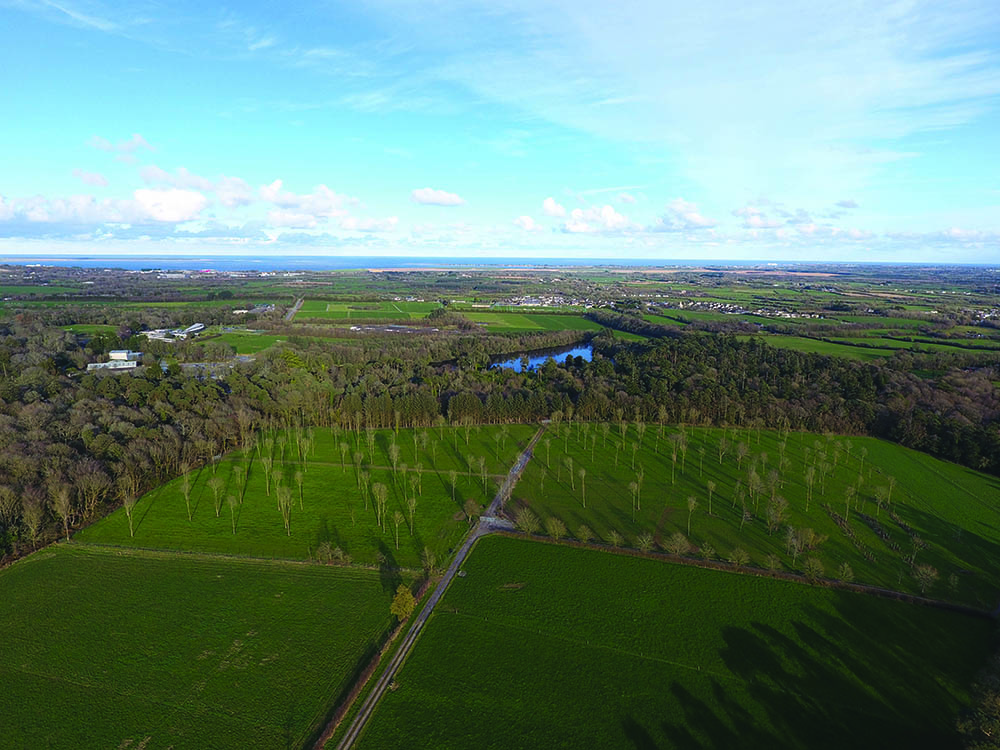
Photo credit: Teagasc
The bioeconomy represents a paradigm shift towards a sustainable future. It is about turning renewable natural resources into food, materials, chemicals, and energy. Maeve Henchion, Principal Research Officer at Teagasc Ashtown, explains that the bioeconomy’s potential extends beyond products.
“It can create high-quality employment in rural and coastal communities, open new markets for SMEs, and play a vital role in reducing greenhouse gas emissions and waste. However, the central challenge persists: how do we translate this potential into tangible impact?”
Between 2022 and 2025, Teagasc, with partners from nine European Union member states through the EU-funded ShapingBio project, investigated how to accelerate the bioeconomy across Europe.
Identifying key challenges
Research methods included stakeholder mapping, desk research, interviews with key actors, and 45 events that engaged around 2,000 participants. Through this intensive research, the project identified common challenges that prevent bioeconomy development. Broadly, the three main issues are around policy, funding and collaboration.
“Policy silos remain a barrier,” explains Noha Mahmoud, former Postdoctoral Researcher at Teagasc Ashtown.
“The bioeconomy spans multiple sectors, from agriculture and marine resources to energy and waste. Decisions made in one sector, such as energy subsidies or waste management regulations, can impact others, sometimes unintentionally, slowing progress.”
Funding and upscaling pose another significant challenge. Building new bio-based value chains – for example turning marine resources into cosmetics or producing bio-based plastics – requires significant investment. “Too often, innovations stall in the ‘valley of death’, trapped between successful pilot demonstrations and full-scale commercialisation,” Noha notes.
Lastly, collaboration gaps slow impact, she adds. “The bioeconomy is inherently collaborative, yet researchers, policymakers, industry, and communities often work in isolation, meaning that innovative ideas struggle to become practical solutions.”
Towards bioeconomy leadership
“Ireland has what it takes to lead Europe’s green transition from rich natural resources – like grasslands, forests, and marine life – to a strategic vision,” concludes Maeve.
This potential is being actively unlocked through a strong foundational framework in Ireland.
Key actions include the National Bioeconomy Policy Statement (2018), the Bioeconomy Action Plan (2023–2025), and the forthcoming bioeconomy strategy.
The establishment of the Bioeconomy Implementation and Development Group (BIDG), co-chaired by the Department of Agriculture, Food and the Marine and the Department of Climate, Energy and the Environment, is a crucial step for policy coordination.
Moreover, through the BIDG and the Irish Bioeconomy Forum, stakeholders from government, industry, and research are working to align strategies, turning vision into actionable progress.
Based on the learnings from ShapingBio, the partners proposed actions to support acceleration of the bioeconomy across Europe:
Stronger policy alignment: from strategy to implementation
- Policy efforts should focus on execution to turn bioeconomy vision into tangible outcomes. Italy’s National Bioeconomy Coordination Board serves as an example, aligning ministries, involving regional representatives, and facilitating multi-level dialogue to ensure policy coherence.
- From nationally and regionally funded projects, to EU programmes and initiatives like the Regional Innovation Valleys, leveraging existing resources ensures implementation is practical and well-supported.
- Continuous learning is essential, using platforms that exchange good practices and engage with networks such as the EU Bioeconomy Policy Forum, the Bio-Based Industries Consortium, Germany’s TransBIB network and the CAP Network.
De-risking innovation
- Bioeconomy start-ups face unique challenges requiring tailored supports. The Bioeconomy Innovation Platform in Sweden provides an example of a targeted national-level accelerator.
- Raising awareness of underutilised resources, joint calls, and partnerships, such as the Future Food Systems Partnership, provides opportunities for collaboration and funding. Platforms such as Horizon Europe NCP Platform for Cluster 6 consolidate information, seminars, workshops, and contacts in one place, streamlining access to EU funding and guidance.
- Europe’s network of more than 120 open-access pilot and demo facilities offers cost-effective infrastructure for scaling bio-based processes. These are accessible through the COPILOT platform.
Cross-sector and cross-border collaboration
- Promoting inter- and transdisciplinary approaches is vital to foster innovation that blends academic and non-academic perspectives. National funding organisations can build on models such as Horizon Europe’s multi-actor requirements (e.g. PREMIERE project) to incentivise multi-actor, co-development approaches.
- Knowledge-exchange platforms connect stakeholders, enabling
cross-sector learning. - Strengthening collaboration between academia and industry ensures research is not only innovative but market-relevant. This requires creating conditions that encourage applied research, technology transfer, and real-world problem-solving, so that breakthroughs move beyond research into practice. Lithuania’s Vikonda group worked with local farmers, integrating technology and partnering with global research institutions to develop nutrient-enriched organic products for premium markets, demonstrating how applied research, industry, and international collaboration can align to deliver high-value solutions.
Acknowledgements
This project was coordinated by the Fraunhofer Institute for Systems and Innovation Research.
Funding
ShapingBio was funded by Horizon Europe, Grant No. 101060252.
Contributors
Maeve Henchion, Principal Research Officer, Teagasc Ashtown
maeve.henchion[at]teagasc.ie
Noha Mahmoud, Postdoctoral Researcher (former), Teagasc Ashtown