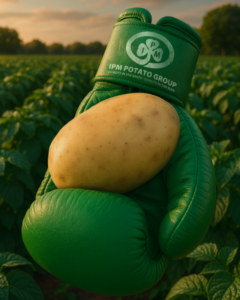

Challenge: Potatoes at Risk – the PCN Challenge
Potato Cyst Nematode (PCN), comprising Globodera rostochiensis and G. pallida, is one of the most economically damaging pests in potato production. It can persist in soil for decades, dramatically reducing yields and rendering land unsuitable for seed and ware potato production. With the withdrawal of many nematicides from the market, growers faced limited options for managing PCN, especially in infested soils.
This created an urgent need for a sustainable, genetic solution — one that could not only resist PCN but potentially reduce its presence in the soil.
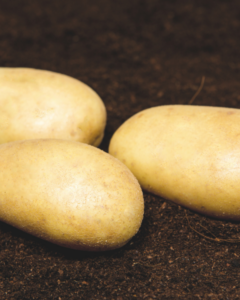

Solution: Introducing Buster
A PCN resistant variety, Buster, was developed through the Teagasc-IPM Potato Breeding Collaboration. It was developed using marker-assisted selection (MAS) – a genomic breeding technique that allows researchers stack multiple resistance genes efficiently.
Key features of Buster:
- Resistant to G. rostochiensis and “stacked” resistance from six different genes to G pallida
- Low nitrogen and irrigation requirements
- Good yields of bold, uniform long-oval tubers
- Excellent resistance to late blight (Phytophthora spp.)
Additional benefit:
- Trials show Buster can reduce PCN populations to near undetectable levels, effectively breaking the nematode lifecycle and allowing non-resistant varieties to be grown in previously infested soils.
Impact: A Sustainable Solution at Scale
Buster is the result of stacking six resistance genes – a feat that would have taken decades using conventional breeding, the use of MAS reduced development time to just 10 years. While Buster is at an early stage of commercialisation, stakeholders in the potato sector have been quick to identify the value of the variety due to its strong pest and disease resistance profile. The reduced input requirements and resistance to PCN make Buster a model variety for climate-smart agriculture.
Buster’s ability to cleanse PCN-infested soil opens new possibilities for crop rotation and potato production on previously unusable/unsuitable land. With fewer nematicides available, Buster offers a non-chemical solution to a persistent pest problem. Because over 50% of European potato land is affected by PCN, Buster has strong export potential and relevance for international markets.