

Breeding
- Breeding season lasted 6 weeks
- 73 out of 76 cattle bred
- 29% served twice & 1% served 3 times

The breeding season lasted 6 weeks in total for Ken from 27th October to 8th December. He bred 73 animals out of 76 selected, consisting of 17 heifers and 56 cows. One heifer has internal reproductive issues which prevents her from going in calf so she wasn’t bred on the repeat serve which leaves Ken with 72 possible females in calf. 21 were served twice (29%) and 1 animal was served 3 times (1%).
This was Ken’s first season using the Sensehub technology and he has been very happy with it. While he will scan to determine what heifers and cows are in calf, the system is giving him a pregnancy probability for each of them based on heat activity and the length of time since they were served. They will be scanned after 19th January, which will be 6 weeks from the last serve.
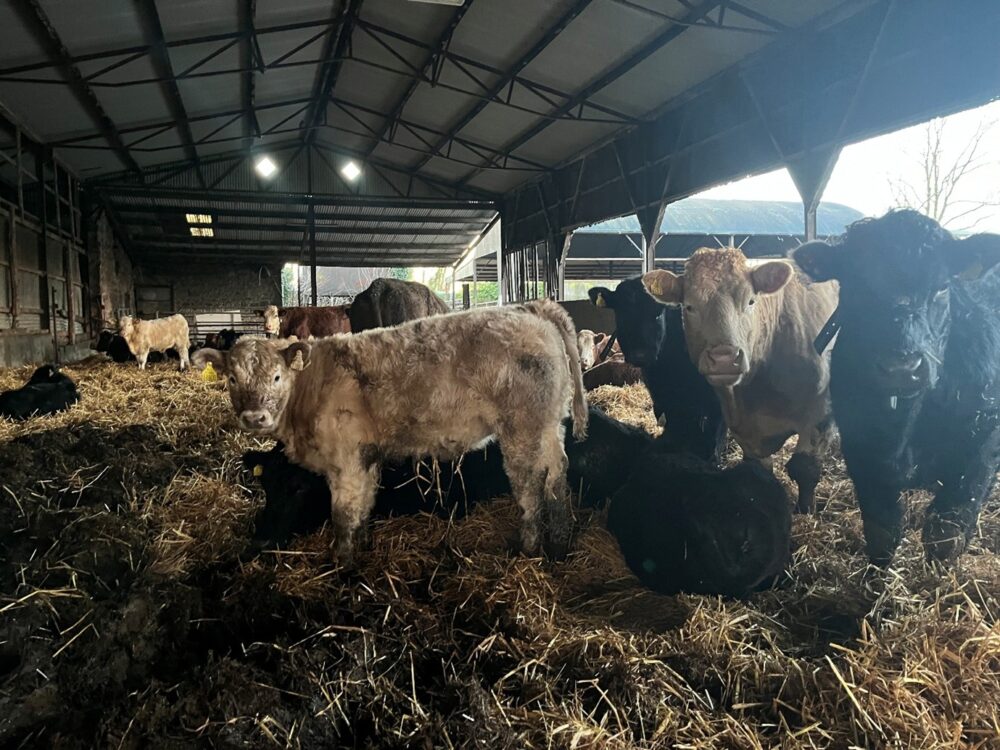
Figure 1: Some of the cows with their collars pictured with an autumn 2025 born calf
Ken took 2 silage samples before Christmas. One grass silage was cut on 1st June and was 64% DMD at 24.34% dry matter with 11% crude protein. The field was not grazed in spring as Ken was keen to get a bulky crop off it. However he estimates that he harvested similar yields, just at a lower quality so will be grazing it for spring 2026 as he is targeting 72% DMD or higher for his autumn cows and young stock.
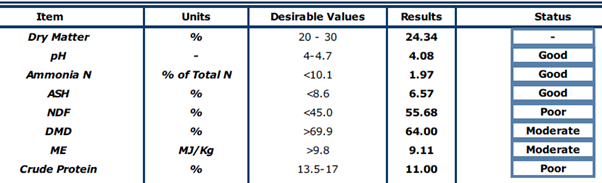
Figure 2: Grass silage sample result
The second sample tested was the 2nd cut red clover silage and Ken was delighted with the result. It was 75.6% DMD at 52.49% dry matter with 15.35% crude protein. This is being fed to the store cattle over winter.
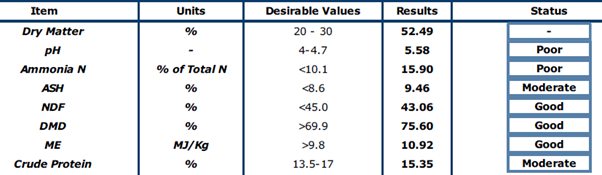
Figure 3: Second cut red clover silage result
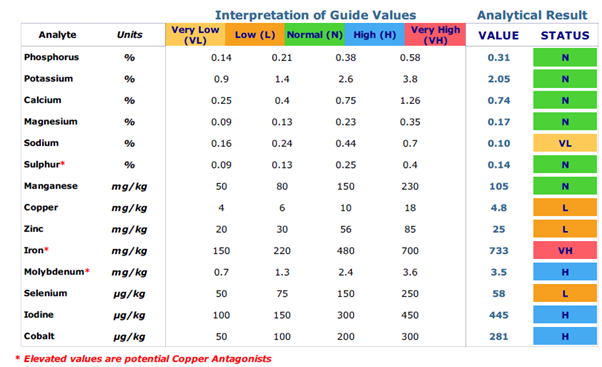
A mineral analysis was also carried out on the silage, as seen in the Figure below. While the macro minerals of phosphorus, potassium, calcium and magnesium were at normal levels, sodium came back as very low. Copper, zinc and selenium were also low and iron came back as very high. Ken’s land would typically be know for low copper and with the very high levels of iron there is a strong risk of copper lock up so Ken will consider supplementing the cattle with chelated (protected) copper.
 ]
]
As Ken did not grow any catch crop for grazing the stores this winter, they had to be housed one month earlier. That is putting pressure on his silage supply and he estimates that there is just enough feed in the yard to get by until late March. This might mean weaning the autumn calves earlier than usual and feeding straw to the cows when they are dry. The store cattle are typically turned out in March but as grass growth is slow in spring, Ken will be relying on good weather and grazing stubble ground to lengthen out the rotation. The calves currently have daily access to grass paddocks around the yard.
Fodder budget update:
Ken weighed the 2024 born cattle on 26th November. The bullocks (31) averaged 461kg live weight, after gaining 0.77kg/day at grass since 11th August and 0.92 kg/day since birth. The beef heifers (11) weighed 417kg after gaining 0.75 kg/day at grass since 11th August and a lifetime gain of 0.84 kg/day since birth.
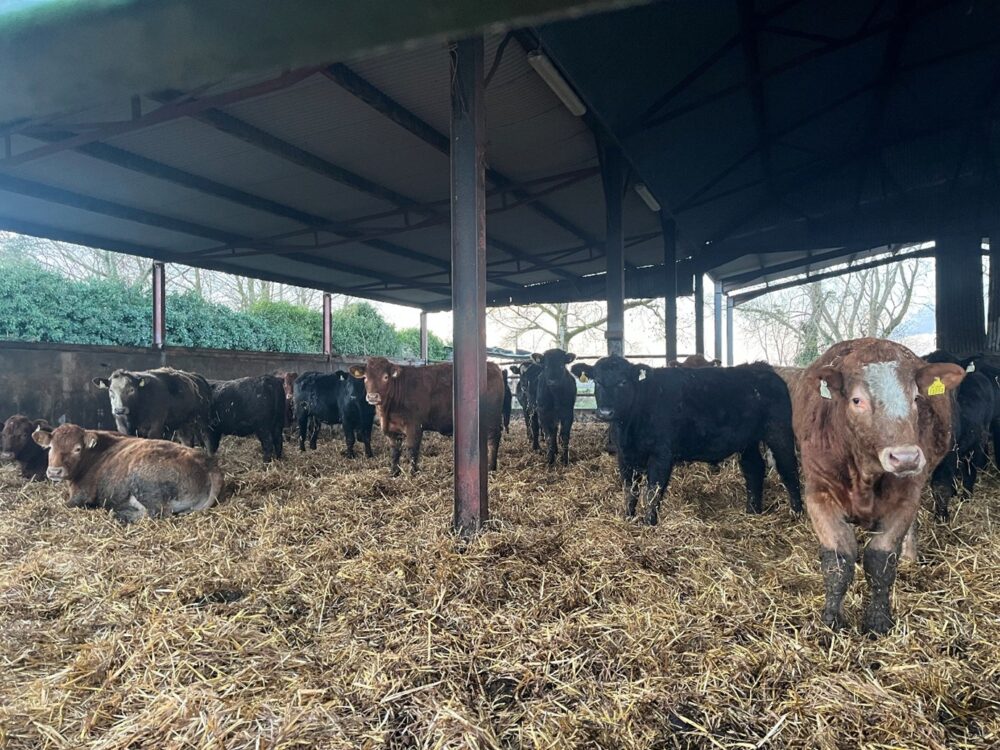
Figure 5: The 2024 born store cattle
The 2 spring 2024 born bullocks averaged 478kg on 26th November after gaining 0.57 kg/day since 11th August and the 2 heifers averaged 479kg after gaining 0.66 kg/day during the same time. Ken is planning to sell them in spring when they are fit for finishing.