
01 June 2025
Working together: Collaborative farming models for a sustainable future
Where potential successors are not in a position to take over, but the current generation want to step back from farming, what are the options?
Collaborative Farming Specialist, Ruth Fennell took a closer look at collaborative farming models at the recent Entry, Progression and Succession Pathways for Dairy Farm Businesses Open Day
Across Ireland, farming is more than just a livelihood – it’s a way of life, deeply rooted in family, land and community. For many, the family farm is a great source of pride passed down through generations, but the future can bring difficult questions:
- Who will carry it on?
- Can the next generation afford to stay?
- How do we ensure that the farm is well managed financially and physically without having to work or continue to be tied to the farm?
Where potential successors are not in a position to take over, but the current generation want to step back, what are the options?
Farming is now more challenging than ever. With rising costs, labour shortages, land access issues, increasing environmental pressures and a desire for a better work-life balance, many farmers are rethinking how they operate. Collaborative farming offers a practical solution, bringing together people, resources and ideas to build resilient agricultural businesses. Whether it’s sharing land, skills, or responsibilities, collaborative arrangements are not only practical – they are vital for the future of sustainable agriculture and rural viability.
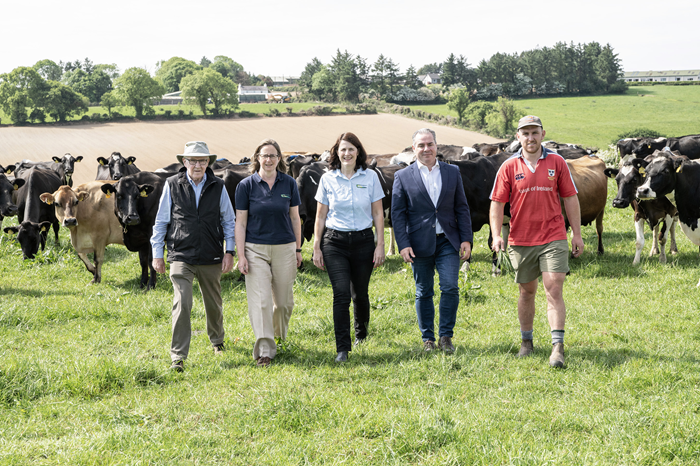
Pictured at a Teagasc in collaboration with Shinagh Estates and Carbery open day on Share Farming and Succession Pathways at Gurteen Farm, Shinagh Estates, Bandon, Co Cork are: Gus O’Brien, Shinagh Estates; Ruth Fennell, Teagasc Collaborative Farming Specialist; Gráinne Hurley, Teagasc Regional Manager Cork West; Jason Hawkins, Chief Executive, Carbery Group; and Kerry Desmond, host. Picture: O’Gorman Photography.
The benefits of collaborative arrangements
Collaborative arrangements are about creating an environment where different needs and strengths of the individuals come together. The potential benefits vary depending on who you are.
New/young farmers
For new and young farmers, especially those without their own land, getting started is often the biggest hurdle. Buying land is prohibitively expensive in today’s marketplace, and even leasing can require significant capital investment and knowledge that new entrants may not have yet acquired.
Collaborative arrangements, such as share farming and registered farm partnerships, allow these new entrants to work alongside experienced farmers, access land, and build their skills and capital without the burden of doing it alone. They gain mentorship, reduce financial risk and can gradually increase their stake in the business.
Landowners
Landowners who don’t wish to be involved in the day to day running of the farm can benefit significantly from collaborative models. By working with someone who has the energy and expertise to farm the land, they ensure the land remains productive while receiving an income or profit share.
Farmers planning to step back
For farmers who want to step back but remain connected to the farm, collaborative arrangements can offer numerous potential exit strategies. Many farmers find it hard to walk away from decades of work, and selling the farm is often not considered as an option. Collaborative arrangements with an identified successor or a new/ younger farmer allows a phased transition, where knowledge is passed on, the farm continues to thrive, and the original farmer can step back gradually.
Alleviating concerns around collaborative farming businesses
A lack of awareness or understanding of possible options may result in a reluctant attitude towards entering some collaborative arrangements. Concerns around personal security, profit sharing and maintaining autonomy are valid concerns but they are also very manageable with the right arrangement and thoughtful forward planning.
Legal agreements are an essential part of any potential collaborative arrangement. These should outline the terms of the agreement, responsibilities, profit and cost sharing, duration and exit strategies.
With distinct goals, good communication and a clearly defined agreement, all parties should have peace of mind that their interests are protected. It is vitally important that significant effort and thought is put into the drawing up of the exit strategy for the proposed arrangement so that if and when the agreement ends, the dissolving of the business is straightforward and without complication.
While some may fear reduced individual income, collaborative arrangements can lead to better financial outcomes. Collective decision-making brings more ideas and perspectives to the table.
Concerns about decision-making power are natural, especially for those who have been managing their farms independently for many years. However, depending on the agreement, collaborative arrangements don’t necessarily mean giving up all control; it means negotiating shared goals. Good partnerships are built on mutual respect, complementary skills and good communication. Setting boundaries and responsibilities early helps to ensure a good working relationship into the future.
Beyond individual benefits, collaborative farming arrangements have broader implications for rural sustainability. They can contribute to healthier rural economies and communities by keeping land in use, providing opportunities for existing farmers that are looking to expand or for those looking to take an initial step on their farming journey.
Collaborative models keep land productive, often in more environmentally sustainable ways, as younger farmers implement eco-friendly approaches and bring fresh energy to the table. One of the consequences of rural decline is the loss of skilled young people who move away with alternative employment opportunities now freely available. By creating entry points for the next generation of farmers, collaborative arrangements can help to retain and attract people to rural areas. Working together promotes continuous learning. Current farmers pass on their lived experience, while younger farmers contribute new innovation. This cross-generational collaboration can energise the farming operations.
Conclusion
Farming can be isolating, especially for those without additional labour coming onto the farm. Collaborative arrangements build relationships – not just within the partnership but across the wider community. Collaborative farming isn’t just an alternative model – it’s a promising way forward for agriculture in the 21st century. It addresses immediate concerns like land access and generation renewal, while also tackling larger structural issues like rural depopulation and sustainability. The key lies in thoughtful, well-planned agreements that balance trust, transparency, and shared vision.
The above was first published in the Entry, Progression and Succession Pathways for Dairy Farm Businesses Open Day book, which took place on Thursday, May 22.