
25 April 2025
Mapping the route to clover at Ballyhaise College
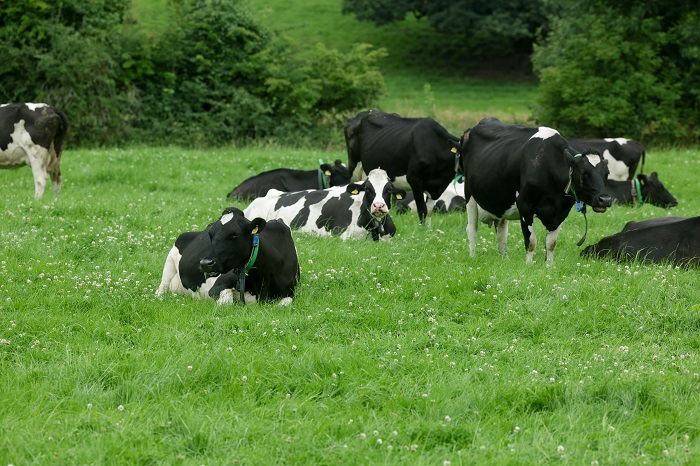
Along with its footings in agricultural education and land-based training courses, Ballyhaise College is home to one of Teagasc’s dairy research herds.
JohnJoe Collins tells us of the latest research, mapping the way for farmers in the border, midlands and west region (BMW) to incorporate white clover into their dairy systems.
Over the past five years, dairy production has experienced greater milk price volatility and increased input costs, alongside growing environmental pressures to reduce chemical nitrogen (N) fertiliser use.
These challenges have driven the need for more resilient, low-input, pasture-based systems. The incorporation of white clover into grazing perennial ryegrass swards offers a sustainable solution by fixing atmospheric N, therefore reducing fertiliser requirements, improving sward productivity and supporting animal performance.
Despite these advantages, the contribution of white clover to grazed swards on commercial dairy farms remains low with large variation in both establishment and persistency success.
The Ballyhaise study
The current study conducted on the dairy herd at Teagasc Ballyhaise Agricultural College evaluated the performance of white clover in perennial ryegrass swards (PRWC) on sward and animal performances within intensive grazing dairy systems on a wetland soil type during 2023 and 2024.
There were 144 cows involved during both years, which were evenly assigned to one of two sward type treatments (PR or PRWC). Perennial ryegrass swards received up to 220kg N/ha, whereas chemical N application was reduced to a maximum of 125kg N/ha for PRWC with further reductions from May each year based on prevailing sward white clover contents.
The inclusion of white in swards provided an additional +0.6t DM/ha compared to perennial ryegrass swards (12.3 and 11.7t DM/ha for PRWC and PR, respectively) which was achieved with a 44% reduction in chemical N fertiliser (108 and 193kg N/ha). Sward white content was similar for the duration of the study (19 and 18% for 2023 and 2024), however substantial variation was observed between paddocks. Approximately 25% of the PRWC area had below optimal white clover establishment, requiring higher N application.
Sward nutritive value parameters (ash, crude protein (CP), neutral detergent fibre (NDF) and acid detergent fibre (ADF) were all improved with PRWC swards during the two-year study period. These benefits were most notable during the challenging spring and early summer of 2024, when national pasture quality was below normal.
The potential of white clover
The findings from this study demonstrate the potential benefits of white clover in perennial ryegrass swards on wetland soils on sward production with significant reductions in chemical N fertiliser applications, while enhancing pasture quality and improving animal performance.
Longer-term evaluation on the persistence and productivity of white clover swards is essential on wetland soils to reduce the variation in white clover contribution between paddocks and years, which will build confidence among farmers to encourage greater adoption at commercial farm level.
Performance this spring
Following onto this spring, white clover contents are around average for this time of year. From a grass management perspective, weather conditions have been excellent this spring, leading to higher-than-normal growth rates and optimal grazing conditions.
In terms of production, milk yields are currently sitting at 29.15L/cow and 2.37kgms/cow. Cows are benefitting hugely from abundant spring grass with very little forage gone into the milking cow diet this spring. Having started the second round and heading for peak milk production, we are hoping to push on further.
Hands-on experience in modern, sustainable dairy farming
The integration of this research into teaching at Ballyhaise College is a key strength of the Level 6 Advanced Certificate in Dairy Herd Management. Students on the programme benefit from direct access to the spring-calving research herd, where they gain hands-on experience in all aspects of modern, sustainable dairy farming. This includes practical involvement in grazing management, herd fertility, milk recording, and pasture measurement – all underpinned by the latest research findings, such as the incorporation of white clover into pasture systems.
By learning in a real-world, research-led environment, students are uniquely placed to graduate with both the technical skills and the practical knowledge required to lead the next wave of innovation on Irish dairy farms. This unique integration of research and education ensures Ballyhaise continues to lead the way in shaping a more sustainable and resilient future for Irish dairy farming.
For more information and the courses available at Ballyhaise College, visit here.
More from Teagasc Daily: Making sustainability real – a Ballyhaise experience
More from Teagasc Daily: The benefits of the Teagasc Green Cert in improving farm performance