
16 December 2024
Fertiliser planning: Soil sampling is essential
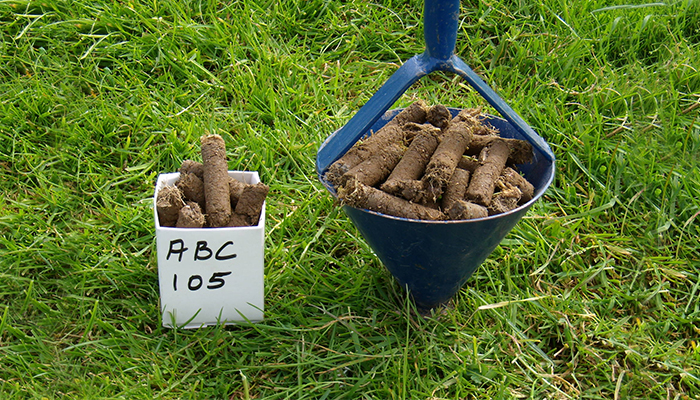
Reminding us that now is the ideal time of the year to soil sample your farm, Dairy Specialist at Teagasc, Mark Treacy explores its role in effective nutrient management and fertiliser planning for the year ahead.
The use of organic and artificial fertiliser is a key driver of grass production on Irish dairy farms. However, artificial fertiliser is a substantial cost, accounting for about 17% of variable costs and 10% of total costs on spring-calving dairy farms. After purchased feed, fertiliser is the next largest cost. Key to controlling fertiliser expenditure is the effective use of the organic fertilisers already available inside the farm gate, and targeting appropriate types and rates of artificial fertilisers to make up any shortfalls in requirements. In order to effectively, do this soil sampling is essential.
The taking of soil samples is the first step in effective nutrient management, the second step is completing a Nutrient Management Plan (NMP) for your farm. This process allows you to clearly identify the areas which have a requirement for nutrients and will calculate your chemical nitrogen and phosphorus allowances for the year ahead, providing recommendations of what quantities to apply and a suitable fertiliser shopping list. Importantly, farms with a grassland stocking rate of >130kg organic N per hectare are now required to have valid soil samples (<4 years old) if they wish to purchase chemical phosphorus fertiliser, or import organic manures.
Timing and technique
Now is the ideal time of year to soil sample your farm, as there will have been no nutrients recently applied, and therefore the results will give a good indication of the baseline nutrient levels in the soil. Sampling now will provide you with up-to-date information on where to target spring applications of slurry so as to get the maximum benefits from it.
Sampling technique is very important to ensure representative samples are taken. Take a sample for every 2 to 4 ha, walking in a ‘W’ pattern and keeping away from areas such as drinking troughs, ditches and gateways. It is also important to keep areas with different soil types or management history separate when sampling. A minimum of 20 cores should be collected from each sampling area. It is vital that full cores are taken to 10cm in depth to get an accurate analysis for pH, and available phosphorus (P) and potassium (K), as nutrient levels will vary with depth.
The results
The first area to examine when you receive your analysis results is soil pH. For grasslands on mineral soils, target a pH of 6.3+ as this will maximise the response you receive from applied nutrients, as well as increasing the availability of nutrients already contained in the soil. Grass/clover swards are particularly sensitive to low soil pH, and a target pH of 6.5+ is recommended. Where pH is sub optimum apply lime at the recommended rate as soon as possible, but not exceeding 3 tonnes per acre (7.5 t/ha) in one application. Where the recommended lime requirement exceeds this level, a second application in 18 months’ time should be used to make up the balance.
The next thing to identify is the areas of the farm low in phosphorus and/or potassium. Approximately 60% of the nutrient value of cattle slurry is from its potassium content, while a further 22% is from the phosphorus content. Therefore, where possible, slurry applications should be targeted at these areas. This is particularly important on farms with low or no chemical phosphorus allowances, as essentially this is the only source of phosphorus available to build soil phosphorus levels where they are low.