
27 November 2024
Making sustainability real – a Ballyhaise experience
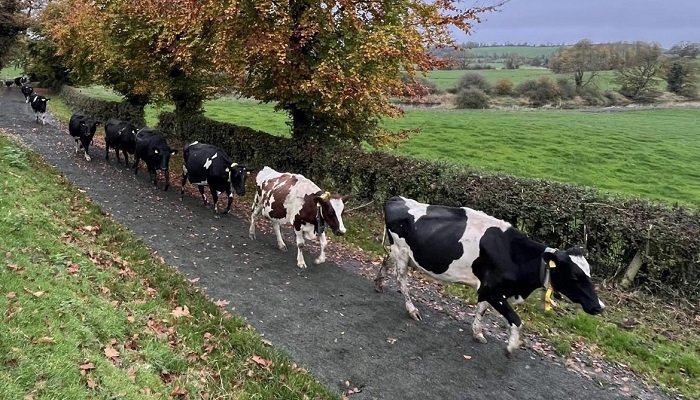
Alastair Pollock, College Teacher, discusses Ballyhaise College’s role of educating our future farmers on sustainability, while also exploring the measures delivering a reduction in carbon footprint on the college’s beef and dairy enterprises.
Sustainability is probably the most talked about topic in Agriculture at the moment. Ballyhaise College has the role of educating our future farmers on this.
The ongoing work of the dairy research team in Ballyhaise on incorporating white clover and reducing reliance on chemical nitrogen on the farm is well documented at this stage. However, in this article I am going to focus on other sustainability actions undertaken by the college.
When we talk about sustainability, environmental sustainability comes first to mind and will be the main focus of this article. Nevertheless, we also have to be conscious of both social and economic sustainability.
It has been a difficult year for farming, especially with the wet spring and difficult grass growing conditions this summer. The good end to the grazing season, along with rising prices this autumn has given us light at the end of the tunnel.
Although, ever-changing regulations has put an added extra mental stress on farmers, as we come close to Christmas, it is important farmers take a well-deserved break but also reflect on their farming practices and any changes they can make. I want to highlight the experiences of the Ballyhaise College farm in terms of improving environmental sustainability here.
Soil fertility
Let’s be clear, environmental sustainability really starts with the basics. Soil fertility is excellent on the farm with the majority of the farm optimal for pH, P and K.
Following results from soil samples taken in January and taking advantage of the excellent conditions this back end, lime has been recently spread on the farm. Any paddocks low in K, also received Muriate of Potash (MOP) in September.
To maintain P and K indices at target index 3, all slurry is spread using Low Emission Slurry Spreading (LESS) equipment, with slurry applications maximised in spring, when conditions allow and maintaining buffer zones from watercourses. There is six months slurry storage on the farm.

Grass
Grazed grass is the fundamental part of the diet for all enterprises. Grass is measured weekly with data inputted on PastureBase. Students complete grass walks as part of their Level 6 Grassland Management module.
There is also a key focus on making high-quality silage with first-cut silage testing at 76% DMD. A 14ha out block grows red clover silage and white clover is being incorporated in all enterprises. This has allowed chemical nitrogen to be reduced on the farm from 141kg N/ha to 114kg N/ha.
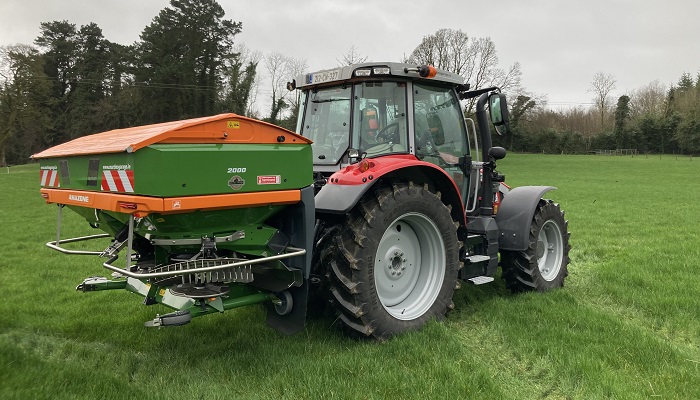
When nitrogen is spread, all straight chemical N is spread in the form of protected urea for the last number of years using a GPS system. Multi-species swards have been trialled on the sheep enterprises, with mixed results.
The correct genetics
A focus on all enterprises is breeding stock to suit a grass-based system.
The suckler herd has a Eurostar average of €125, a 362-day calving interval, 1.01 calves per cow per year, with a 6 week calving rate of 81%. Bulls, on average, are finished at 13.5 months and heifers at 19 months.
The dairy herd has an EBI €241, a 369-day calving interval, with a 77% 6 week calving interval. The herd produced 449kg of milk solids per cow in 2023. 98% of dairy heifers and 100% of beef heifers calve between 22-26 months of age.
Data recording is taking place on the sheep enterprise; monitoring the performance of ewes and lambs which allows for the selection of the best replacement genetics. A herd/flock health plan is followed, with a focus on vaccinations to prevent disease.
Improvements in carbon footprint
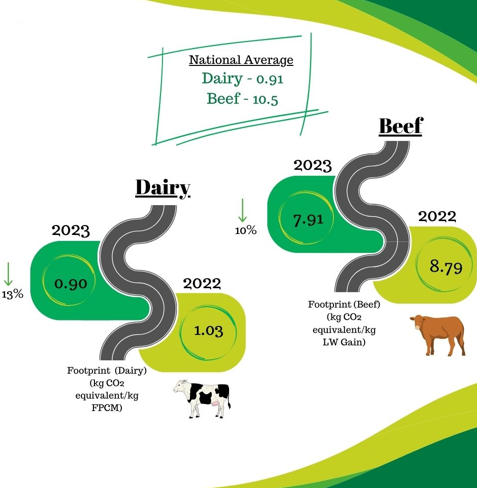
Due to the number of points I have discussed above, improvements have been made in reducing the carbon footprint of both the dairy and beef enterprises on the farm, as shown in Figure 1 below. A reduction of 10% has been seen in the beef enterprises most recent figure of 7.91 kg CO2 equivalent / kg LW gain, compared to the national average carbon footprint of beef farms to be 10.5. The dairy enterprise has seen a 10% reduction in the same period and is similar to the national average.
Figure 1: Carbon footprint for dairy and beef enterprise for 2023 and 2022
During winter 2023, a feed additive (Bovaer 3-NOP) was fed to dry dairy cows which reduces methane emissions. This was fed through the diet feeder. Teagasc research has shown a 3.4% reduction in methane over the entire year when Bovaer was fed for an 8 week dry period. This was not accounted for in the carbon footprint figure.
Other actions on the farm include the installation of solar panels, over 1km of hedgerows planted in the last year and also a Biodiversity and Water Quality plan in place.
You might be reading this article and thinking Ballyhaise is doing nothing to reinvent the wheel. Sustainability actions are not difficult and all actions implemented in Ballyhaise can be achieved by all farmers. Teagasc Education has a significant role in educating our future farmers who will lead the charge in meeting environmental targets. Sustainability has become a strong component in Teagasc courses, whether students are studying full-time or part-time. The Level 6 module ‘Sustainable Farming and the Environment’ covers all aspects of sustainability to students. The college farm demonstrates to students what is achievable. As with everything, a lot done, more to do!
For more information on Ballyhaise College, visit its webpage here.
Also read: The benefits of the Teagasc Green Cert in improving farm performance