
15 January 2024
CMT for peace of mind post calving
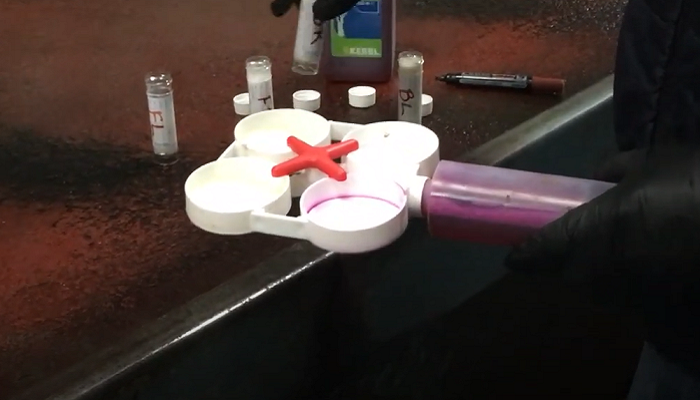
The risks around calving are great, with the management of cubicles and calving boxes of high importance. In this article, Stuart Childs, Teagasc Dairy Specialist, details how early Californian Milk Testing (CMT) will facilitate early identification of mastitis infections.
Having clean, dry cubicles, achieved through twice daily cleaning, as well as regular cleaning of calving boxes are important management factors to minimise the risk of mastitis infections occurring.
Similarly, parlour management at all stages but particularly in the early post-calving period should be of a high level.
Part of that parlour management should be to have freshly-calved cows in a group of their own. The Californian Milk Test (CMT) should be used on all freshly-calved cows at the last milking before joining the main herd. This follows their withdrawal period, which should be four days regardless of the dry cow strategy employed (tube + sealer or sealer only). This exclusion period should be greater than four days where dictated by antibiotic withdrawals.
This early CMT will facilitate early identification of mastitis infections and reduce risk of spread.
As somatic cell count (SCC) is associated with stress, calving will result in elevated SCC in the immediate post calving period. However, it should be back to normal levels after 3-4 days. If the SCC lift is stress related, it is not caused by an infection and will not spread.
However, if it is related to an infection, it can be very easily spread from cow to cow by clusters. Consequently, it is a huge step in breaking the chain of infection to identify this infection as early as possible.
Early milk recording is recommended for early identification of infection. However, even if recording takes place within the month of February, there will be a significant number of cows calved before the recording occurs.
With this in mind, the value of the CMT for the freshly-calved cow cannot be overstated. Therefore it is important that all dairy farmers and staff that will be working in the milking parlour this spring refresh their memories on how to interpret the CMT.
This can be done by watching Don Crowley speak about below:
Cows with normal paddle tests can go to the main group of cows and go to the bulk tank at the next milking. Cows that are high on the CMT on all four quarters are more than likely just still a little stressed post calving and should stay in the group for another few days. Alternatively, if space is limited, they should be marked and retested 2-3 days later with cluster disinfection post milking employed as a precaution.
Cows that have an issue in one or two quarters may need treatment (speak to your vet). These cows should again be held in the fresh group for closer monitoring or else marked to clearly identify them as risk animals so that cluster disinfection takes place post milking while awaiting direction in relation to treatment.
While this protocol might seem like a chore, for the vast majority of herds it only requires CMT testing a small number of cows each day. The return for this investment of time will be far greater than you can imagine if you stop the spread of subclinical mastitis in the herd and even greater if you stop a potential outbreak of clinical mastitis.
Also read: 10 tips for trouble-free calving
Also read: Risk to colostrum quality from poor-quality nutrition pre-calving
Also read: Last-minute adjustments to your calf shed