
27 January 2022
Calf Rearing & Computerised Feeding
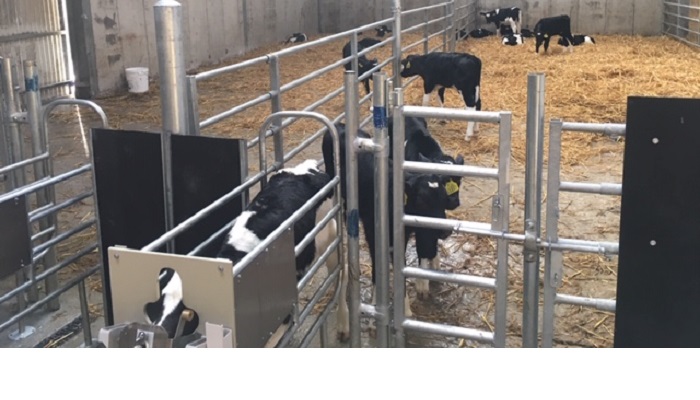
Irrespective of the calf feeding system adopting good hygiene practices especially for young calves will reduce calf rearing problems. For good results computerised calf feeders need to be properly managed. Tom Fallon, Teagasc Farm Buildings & Infrastructure Specialist outlines in detail here
The recent Teagasc/AHI Calfcare Webinar highlighted the importance of hygiene in feeding colostrum and the necessity to store colostrum in a fridge and use within 48 hours. This event can be viewed on the following link: Calf Rearing for Tomorrow’s Herd – Teagasc/AHI CalfCare Webinar
The AHI recommendation is at least 3 litres of colostrum within 2 hours of birth and it must be the first milking. Some farmers have found that feeding 4 litres to calves that are big enough (>45kgs or 8.5% of bodyweight) and willing to take it can work very well. These calves can be offered more colostrum at the next am or pm feed but there is no fuss if the calf does not drink because they may not be hungry until close to 24 hours after the first feed. It is hard to train a calf to drink that is not hungry. Containers for teat feeding or stomach tubing that hold 4 litres are available.
It is evident that if there is laxity in hygiene in calf rearing there will be problems. A systematic preventative approach is best in the same way that you would plan to have low TBC in your milk.
Young calves, up to about 3 weeks of age are monogastric animals and they should not be getting bloat. Hygiene seems to be a big factor. Clostridia and other bacteria enter the abomasum causing the bloat.
It is impossible to clean perished teats/equipment and these should be replaced.
In bucket or teat feeding ideally all milk feeding equipment would be washed thoroughly after each feed. Some farmers do the thorough wash on two set days during the week and they rinse the equipment after each feed. This can work well.
Correctly clean milk-feeding equipment
Poor cleaning practices can lead to the development of biofilms on feeding equipment. A biofilm is an invisible layer of protein and fat, which bacteria can bind to. The bacteria can multiply quickly leading to calf infection and scours.
In extreme cases, a biofilm may cause a yellow or white scum, but usually biofilms are not visible.
If feeders are not cleaned correctly and biofilms develop, the biofilms can release bacteria and contaminate the milk or milk replacer being fed to calves when the equipment is used.
There are five simple steps in cleaning milk feeding equipment:
- First rinse the equipment with warm water (32 – 38°C).
- Soak the equipment in hot water (>50°C) with detergent for 30 minutes (if feasible).
- Scrub the equipment well and re-wash with hot water.
- Rinse the equipment and spray with sanitiser.
- Leave the buckets to dry, preferably on a designated drying stand/rack.
Computerised Calf Feeders
Main brands: Forster Technik (Lely, Delaval and Volac except the Urban), Holm & Laue (Dairymaster), JFC and Urban (Volac).
Within these brands there are different models so every farmer should have specific cleaning and maintenance instructions from their supplier and these should take precedence to some issues that are briefly outlined below. Chlorine free detergents are not suitable for all feeders and indeed chlorine detergents are not recommended for some feeders. The use or mixing of detergents can be dangerous so wear appropriate personal protective equipment (PPE category III gloves and eye goggles) and follow label recommendations.
Rather like milk liners certain tubing in computerised calf feeders needs to be replaced after 6 months of use. Farmers should get a yearly service of their machine especially if they are relatively new to this method of calf feeding.
Some machines can spray a jet of water to the outside of the teats but it is generally necessary to have a spare set of teats so that they can be rotated two to three times a week to facilitate washing, sterilising with Milton or peracetic acid and then rinsed with cold water. It is important to keep all parts of the machine that are in contact with milk as clean as possible. Many feeders receive water from a specific storage tank, it is important that this tank is emptied and replaced with fresh water at the start of the season.
Forster Technik
These calf feeders are set to wash twice a day. The teats and the tubes leading to the teats are just rinsed with cold water. The other washes take 20 minutes each and need to be supervised by the farmer. A ‘circuit clean’ should be done at least once and preferably twice a week. This wash will apply detergent to the milk bearing tubes. A descaling wash is recommended once a week to be followed by a sterilising wash (with peracetic acid or similiar) or they could be done on alternate weeks in a soft water area.
JFC
The JFC calf feeder is unique in that there are stainless steel flasks at each feed station. These contain warm milk and despite the automatic washing system a dirty film or cloudiness can build up on the inner surface. Opening the thumb screw on top and cleaning with a bottle brush and washing up liquid added to warm water once or twice a week will help to keep these flasks clean. This manual cleaning could, for example be done before the routine weekly descaling. Otherwise rinsing with cold water will be needed.
In descaling choose the ‘acid wash cycle’, when the water temperature has reached the desired level add 20 to 30 mls of descaler to each mixing bowl on the machine using a syringe (the rate will depend on the degree of water hardness).
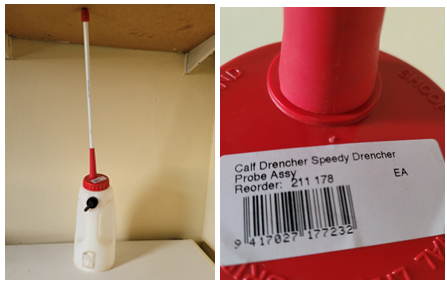
Colostrum feeder that holds 4 litres (we do not particularly recommend stomach tubing over teat feeding)

Read more from Teagasc here on Calf Rearing