
14 May 2025
7 tips for better quality silage on beef farms
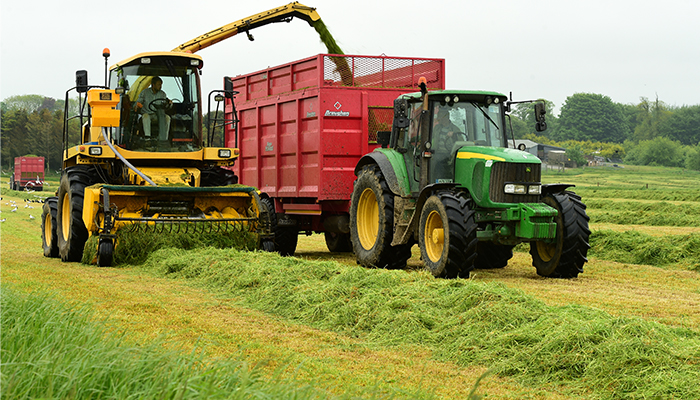
Are you tempted to take advantage of the good weather to save your first-cut silage? Teagasc Beef Specialist, David Argue shares key steps for making quality silage.
1). How much quality silage is required?
The first step is to decide how much and what type of silage is needed. For spring-calving suckler herds, dry cows will need about six bales of 68 DMD silage each over the winter. All remaining silage should be of a higher quality (72-74 DMD) for weanling/store cattle and calved cows.
2). Cut early at the right growth stage
Grass growth stage at harvest is the most important factor in deciding silage quality. Once seed heads appear, DMD will be around 70%. This will drop by one point every two to three days after that. Aim to cut from mid to late May before seed heads appear, rather than in mid-June.
3). Quality over bulk
Using a ‘one big first cut’ approach to make silage increases risk of fodder shortages because second-cut yields are reduced by pushing first cuts into mid-June.
4). Considerations if nitrogen (N) is in the crop
A useful guide for fertiliser N is that grass uses two units per day on average. Fertiliser should be applied 45-50 days before planned cutting date. If weather conditions are suitable for cutting before the planned cutting date, test the grass crop for sugars rather than sticking rigidly to the ‘two-unit rule’.
5). Test sugars
High sugar content allows the crop to ferment quickly in the pit or bale. Ideally, we want sugars at 3% to allow good preservation of the crop. If sugars are lower, the crop may need wilting for 24 hours. Mow in the evening when sugars are highest if possible.
6). Wilting
Wilting grass to increase dry matter is very beneficial to good preservation. Tedding out for 24 hours is recommended. Grass will not dry enough in large rows even if left for 36 hours.
7). Plan for a good second cut
With earlier cutting, there is a great opportunity to make a good second cut of silage in July. Speak to your advisor about a feed budget and proper fertiliser plan for second-cut silage.