
14 May 2025
Dairy calf to beef systems: What are the top performers doing?
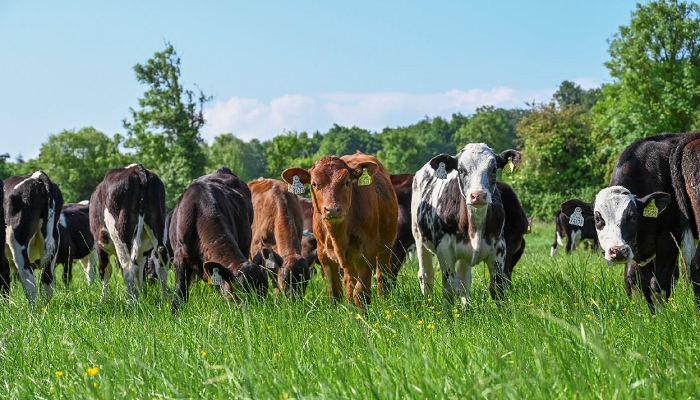
With over 60% of beef now produced from the dairy herd, there is growing interest in dairy calf to beef systems. Regardless of the production system you choose, there are key areas that must be recognised and implemented. DairyBeef 500 Advisor, Gordon Peppard tells us more.
Definite plan
When you buy your calves, you need to have a definite plan as to when these animals are going to be slaughtered and what your target weights are. If not, you may fall between two stools, with implications for housing facilities required, slurry storage, not enough silage, mixed age groups creating issues for dosing, feeding concentrates for finishing, and cash flow, etc.
Talk to your processor, know their requirements and ensure that all your animals meet the market specifications to achieve bonuses, quality assurance payments, etc., and attain numbers that you can supply at different times of the year to command the best price possible.
Produce high beef output
This is the kilos of beef produced per hectare. It is a combination of stocking rate and performance of each animal on the farm. As a target, >1250kgs beef/ha should be produced. This can be achieved from a minimum stocking rate of 2.3 livestock units per hectare and a performance of >550kgs per livestock unit. It is critical to get excellent performance from each individual animal correct first before increasing stocking rate. Housing facilities are generally the first limiting factor on most farms. Decide on a production system and stocking rate to suit your land type and housing facilities available. In calf to beef systems, these targets are very achievable and higher levels can be reached with excellent management.
Excellent calf rearing
Sourcing a good-quality, healthy calf is essential to profitable dairy calf to beef systems. Use the Commercial Beef Value to identify calves with increased genetic merit potential to grow faster and finish earlier. Buying an earlier-born calf (before 17th March) will help increase beef output, as these calves are generally from the cows with better fertility and performance. Also, these early-born calves will be weaned and at grass for a longer period in the first grazing season and will have the opportunity to finish with reduced time in the shed for the finishing period.
Feed high levels of milk replacer to increase growth rates to weaning. Ensure good hygiene at feeding and in the calf pen. Consistency is key: feed at the same time, rate and temperature each day to avoid stressing the young animal.
Appropriate calf rearing facilities
Calf housing should be fit for purpose. Ensure a clean, warm, dry, well-ventilated shed for calf rearing. Provide plenty of straw to ensure that the calf is kept warm at all times, especially in cold conditions. A one in 20 fall on the floor helps maintain a dry bed.
Pen size should provide 2.2m² per calf. Ensure that there is no draught at calf level. There should be an outlet (5–6m² per 100 calves), which needs to be covered to prevent rain entering and wetting the calf bed. The inlet should be two to four times the size of the outlet to provide good ventilation. Good ventilation removes bugs, respiration, moisture, smells and reduces the risk of disease and sick calves.
Animal health plan
Having a health plan in place in conjunction with your local vet is key. With calves coming from numerous sources, having a vaccination programme in place is critical. The top performers have a strong vaccination programme. Keeping the naïve calf healthy, alive and thriving is the first step to ensuring that you have good numbers of quality animals with good weight to sell.
Keep up to date and ensure that all booster vaccinations are given at the correct stages throughout the lifetime of the animal. A strategic dosing regime needs to be planned to control worms, fluke, lice, etc., throughout the grazing season and housing period to maximise thrive.
Correct soil fertility
To efficiently produce high beef output, significant weight gain from grazed grass is required. To ensure enough high-quality grass is available, soil fertility needs to be at its optimum. Ensure to correct the lime status first and then correct P and K levels to Index 3. Slurry and farmyard manure should be targeted at low-index fields and the remainder corrected with compound fertilisers.
Grassland management
Having a paddock system in place to supply high-quality leafy grass at all times, thereby maximising weight gain from grass, is essential. Target to have at least 240 days grazing in year two. To achieve this target, animals need to be out early in the spring. This will require excellent management in the autumn, where paddocks are closed up early to ensure an adequate supply of grass in the spring. Ensuring excellent grassland management in the spring to set the farm up for maximum productivity over the summer is critical to success.
Produce high-quality silage
In calf to beef systems, all animals are a priority. Therefore, producing high-quality silage to ensure all animals meet the minimum target average daily gain of 0.6kgs+ over the winter period is critical.
All silage produced on these farms should be greater than 70% DMD to help reduce the concentrate level required to meet target daily gains. The difference in feeding 100 weanlings over a 140-day winter could be €5,000 or €50 per head between a 67% and 72% DMD silage.
Regular weighing of cattle
To ensure that performance is not compromised at any stage from purchase to slaughter, it is recommended that regular weighing of animals takes place throughout the year. At a minimum, animals should be weighed at turnout, mid-season and at housing. Poor-performing animals can be detected, and a remedial action put in place early. Animals for finishing can be grouped together, thereby increasing efficiencies as only the stock close to target weights are fed.
Summary
All the top performers keep their system simple. They know their system, their target weights and when they plan to sell their finished animals. They buy a good-quality, healthy calf and rear them well. Soil fertility is a priority; a long grazing season with good grass management is achieved by having the correct grazing infrastructure in place. High-quality silage is made available to maintain animal performance over the winter period. As a performing animal needs to be healthy, a strong vaccination and dosing programme is planned out in advance with a vet and performance monitored throughout the lifetime of the animal to ensure that there is no reduction in average daily gain in the short time that the animal is on farm.