
23 April 2025
John Dunne’s dairy-beef and sustainability focus
Future Beef Advisor, Aisling Molloy fills us in on the latest happenings from John Dunne’s farm in Portarlington, Co. Offaly, detailing his reasoning behind expanding the dairy-beef enterprise, how animals are performing on farm, and the measures he’s implementing to protect water quality.
John Dunne farms 127ha in Portarlington, Co. Offaly. He operates an 85-cow spring calving suckler to beef herd, alongside a 130-dairy calf to beef system and grows 6ha of spring barley, which is kept for home feeding. He is a participant in Teagasc’s Future Beef Programme and continues to develop his beef system with a focus on performance, sustainability and innovation. As of spring 2025, his attention has turned to calf rearing, animal performance, and water quality improvements – despite facing a challenge with TB restrictions.
Expanding the dairy-beef enterprise
Due to TB restrictions on his herd, John needed a Department of Agriculture (DAFM) permit to purchase calves this spring. So far, he has bought 100 calves from four different farms, with plans to purchase up to 130. Calf prices have increased this year, ranging from €200 to €215 per head. These calves are mostly Angus and Hereford crosses, though a few Aubrac and Limousin crosses are also in the mix.
Figure 1: Pen of freshly-bedded calves on the farm
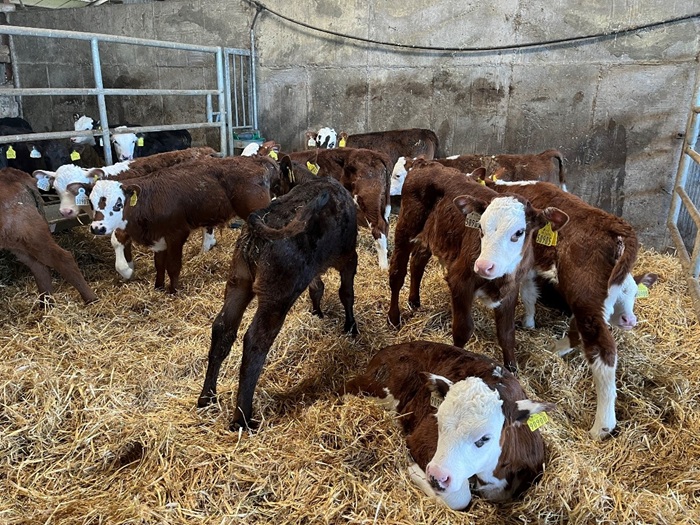
The calf group spans a birth range from January 31st to March 18th, including 46 heifers and 54 bull calves. Sixty-one of the calves were DNA-registered and genotyped on their farm of origin. Their average Commercial Beef Value (CBV) stands at €82 – equating to an average of three stars within their breed type. This CBV reflects strong docility and conformation with modest carbon scores and a slight reduction in age at finish.
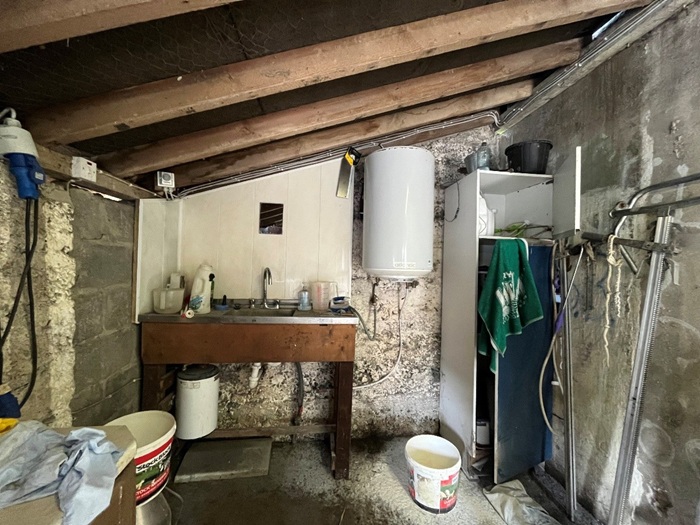
To give these young calves the best start, John is feeding them a whey-based milk replacer twice daily via a milk cart. This type of replacer is quickly digested and encourages early intake of meal. The calves also have ad-lib access to an 18% crude protein ration and fresh water. A small ‘kitchen’ area near the sheds provides hot water for mixing and hygiene, thanks to a gas boiler system.
Figure 2: Kitchen area on John Dunne’s farm
Performance across the herd
Animal weights taken on March 8th provided insights into performance across different age groups. The 2024-born suckler bullocks (37) averaged 293kg but gained only 0.2kg/day since late November. Similarly, the suckler heifers (31) averaged 271kg, with daily gains of just 0.29kg – below the target of 0.6kg/day. Despite feeding high-quality silage and ration, low weight gains hint at a suspected fluke burden. A treatment plan is underway to address this.
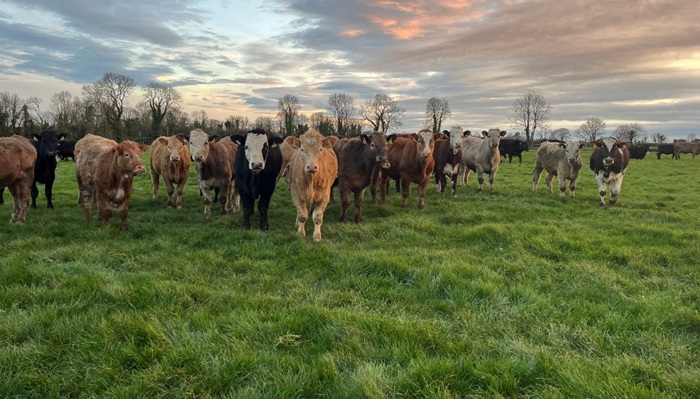
The 2024 dairy-beef group had slightly better results, particularly as they were outwintered on forage rape, red clover silage and fed ration to balance their diets. The 56 bullocks averaged 293kg, gaining 0.36kg/day, while the 60 heifers gained 0.46kg/day to reach an average of 284kg.
Figure 3: 2024 born bullocks at grass on the out farm in Rathfeston
Moving to older animals, the 2023-born suckler bullocks (25) averaged 559kg and gained 0.77kg/day over winter. Heifers from the same group (25) came in at 498kg, gaining 0.58kg/day. In contrast, the 2023 dairy-beef bullocks (60) averaged 510kg with daily gains of 0.7kg, while the smaller group of dairy-beef heifers (10) gained 0.4kg/day to reach an average of 429kg.
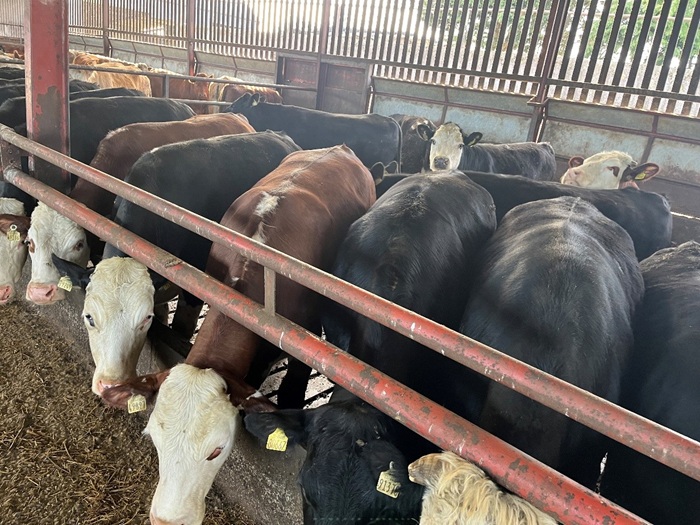
John has continued to sell cattle as they come fit. Recent sales from mid-March to early April included 18 dairy-beef heifers and 16 bullocks. The heifers averaged 236kg carcass weight at 24.7 months, grading O-4- and achieving €1,713/head. Bullocks averaged 289kg carcass weight at 26 months, grading O=3+ and returning €2,260/head.
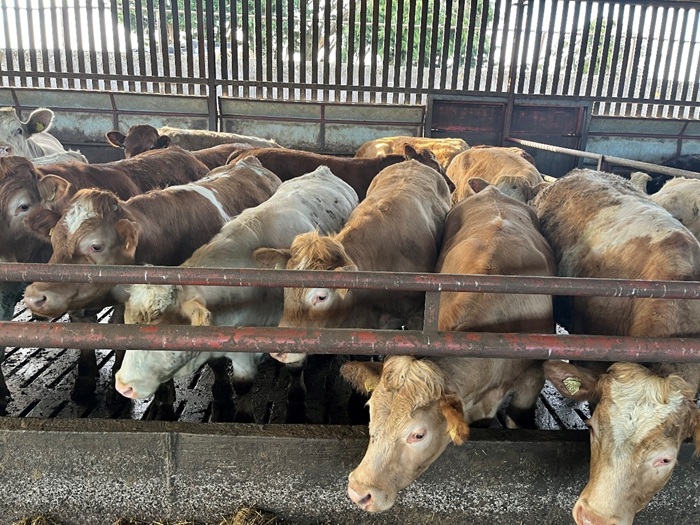
Figure 4: Dairy beef finishing cattle
To maintain performance as silage stocks decline, John is considering increasing daily ration from 5.3kg to over 6kg per head.
Figure 5: The suckler beef cattle being finished
Water quality and environmental actions
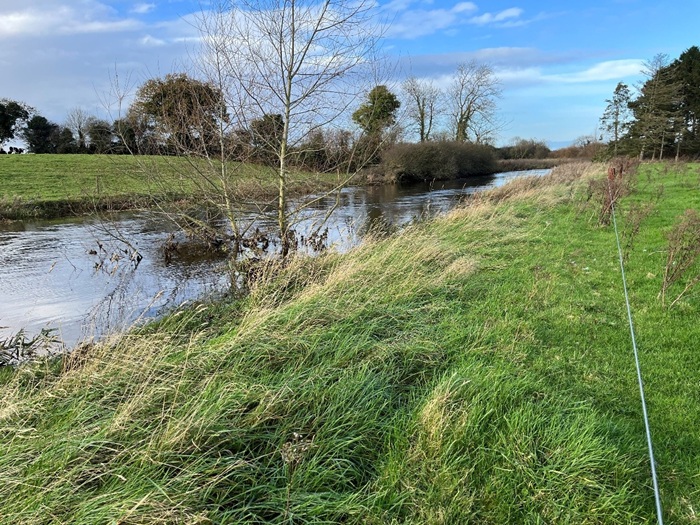
Sustainability remains a key pillar of John’s farm strategy. With support from local ASSAP advisor David Webster, John has submitted a comprehensive application to the “Farming for Water” European Innovation Partnership (EIP). Already active in water protection, John has fenced more than 1km of buffer strip along the River Barrow to prevent run-off.
Figure 6: John fenced over 1km for a buffer strip between his land and the River Barrow
The EIP application includes both practical and preventative measures. These include a rainwater management plan, slurry testing, a catch crops measure, and decommissioning an old sheep dip tub. Additional actions involve managing a critical source area, fencing watercourses on rented land, and installing water-saving infrastructure such as solar-powered pumps and electric fencing.
John’s farmyard will also benefit from tools like a yard brush and farm bucket to reduce nutrient loss via surface water. The entire set of actions totals €22,849.23, with approximately 90% of costs covered by the EIP. John has one year to complete the work and can submit claims as each element is completed.
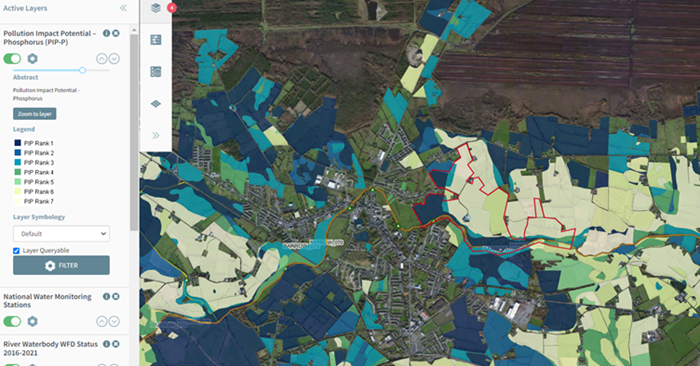
The phosphorus risk mapping, available via Catchments.ie, has been instrumental in identifying high-risk zones. The dark blue areas along the River Barrow show elevated phosphorus loss potential—making these areas the priority for interventions.
Figure 7: PIP(P) maps showing risk areas for phosphorus loss (Source: Catchments.ie)
You can keep up to date with John’s progress in the Future Beef Programme here.
Read more about the Farming for Water EIP here.