
18 April 2025
Buying a New Stockbull
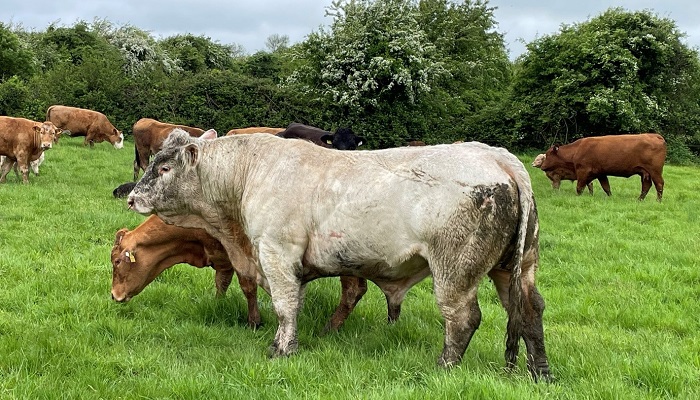
It has come to that time of year again when many farmers around the country will be looking to source new stock bulls for the fast approaching breeding season. Here are some of the key points to look out for before a purchase is made. Kevin O’Hara tells us more.
What to look for when purchasing a stock bull?
The purchase of a stock bull is a significant investment on any farm and will have a huge impact on the productivity and profitability of the farm for a period of time. Essentially a bull will contribute to 50% of the genetics on a farm, therefore a lot of thought and consideration needs to take place before you make the purchase to ensure the investment you make will have a positive impact. Nowadays the ICBF contains a wealth of information which can be used as an aid to farmers in their decision. Below is a list of few key things a farmer needs to consider before parting with hard earned money.
What Type a bull do I need?
- Terminal or Maternal – the question needs to be asked do I want a bull to breed heifers that will make good replacements or do I want a bull to breed terminal type animals which will be suitable for sale or slaughter or maybe a bull with a balance of both.
Visual appearance of the bull
Visual assessment is still the main method of choosing a stock bull for the majority of farmers. And the key areas to assess are.
- Conformation – length, depth and width are all desirable but bulls with excessive width in the front shoulders or back end could possibly indicate a difficult calver
- Legs– Ensure the bull has good straight back and front legs and walks with a free range of movement.
- Feet – check bulls hooves for evidence of pairing as generally this will be a practice that will have to be continued
- Testicles – check to ensure the bull has two even testicles free from any lumps. Bulls of over 15 months should have a scrotal circumference of greater than 30cm.
- Temperament – bulls that appear flighty or any way ill-tempered should be avoided
- Head- nice sweet small head is desirable
Myostatins
Myostatins have become somewhat of a new phenomenon in cattle breeding due to the advances in animal breeding and data recording from schemes such as SCEP and BDGP but they have been involved in animal breeding for centuries unbeknownst to many breeders.
Myostatins are essentially the mutation that causes double muscling in cattle. Many would associate this with breeds such as Belgium Blues but many breeds including traditional breeds like Irish Angus are now appearing with these genes, (generally this is happening as most pedigree cattle are now been genotyped).
A partial break in the gene, such as the F94L mutation, is commonly found in Limousin cattle. Animals with this mutation typically show improved carcass traits without any impact on calving difficulty. On the other hand, there are a number of full breaks in the myostatin gene, such as the Q204X mutation which are mainly found in Charolais but also in some harder calving limousins such as the well-known Elite Ice Cream, nt821 mutation mainly found in Belgian Blues and E226X mutation in Shorthorns. All these can lead to significant increases in muscle mass. While these mutations enhance carcass traits, the nt821 and Q204X mutations are also associated with increased calving difficulty so careful selection should be taken in order to not cross cows or heifers with bulls with matching myostatins as this will hugely increase the risk of calving difficulties.
Eurostar Index
- Ideally the bull should be 4 or 5 star on either the terminal or replacement index or both depending on what you require. For farmers participating in SCEP they must use a genotyped 4 or 5 star bull in order to comply with the scheme. For farmers who are not in the SCEP scheme they are not constrained by the star rating of the bull when buying.
- Reliability – The higher this figure is the less likely that a bull’s breeding values will change considerably over time. It is better still if bulls that have their genomic evaluation completed.
- Calving difficulty- this is one of the most important figures that needs to be looked at before any purchase is made. Regardless of what many will say regarding stars and the Eurostar index, the calving figures for bulls is generally fairly accurate and if the index suggests the bull is hard calving more often than not he will be. For first calving heifers ideally this figure should not go above 4% while mature suckler cows should be capable of calving difficulty figures of up to 9%.