
07 March 2025
Is my winter fluke control programme working?
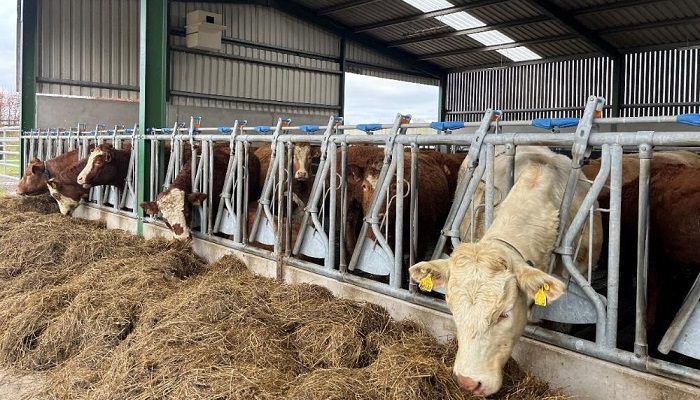
With most cattle now indoors for more than 12 weeks and turnout fast approaching, Beef Specialist at Teagasc, Catherine Egan explains why now is the time to check the effectiveness of your winter fluke control programme.
Last November, the Department of Agriculture, Food and the Marine (DAFM) in collaboration with Met Éireann, UCD, Teagasc and Animal Health Ireland (AHI) released the liver fluke forecast advising farmers of the predicted risk of disease caused by liver fluke (Fasciola hepatica) infection in livestock for the following winter. The forecast was based on meteorological data gathered between May and October 2024 by Met Éireann.
The disease forecast summary
The forecast predicted infection being most prevalent in the west and northern half of the country, with a somewhat lower disease risk in the southeast of the country.
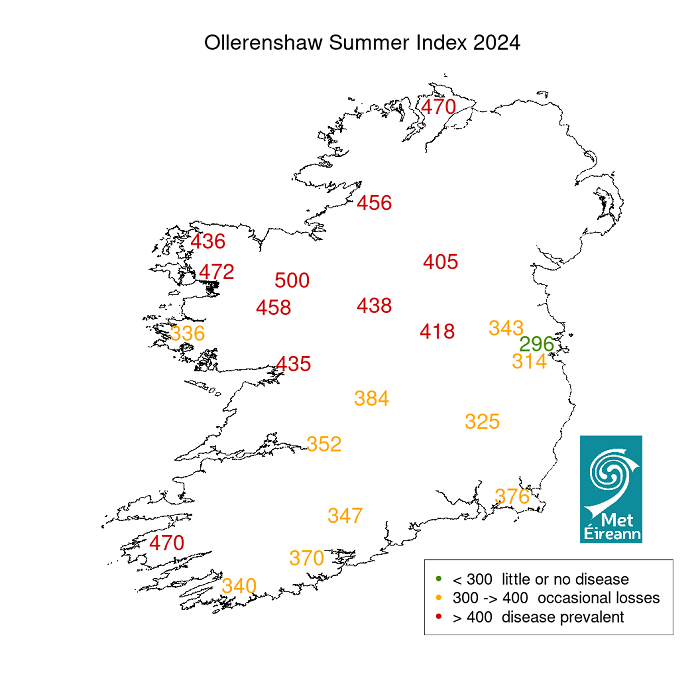
On the basis of this forecast, and in consultation with their local private veterinary practitioner (PVP), many farmers took steps on their farm to avoid liver fluke being an issue.
Farmers continued to be vigilant over the winter for any signs of illness or ill-thrift in their animals and consulted with their vet if they were concerned.
Higher numbers
The AHI Beef HealthCheck Programme, developed in collaboration with Meat Industry Ireland, collects and reports liver and lung disease information collected from cattle at slaughter from participating meat factories nationwide.
While liver fluke levels have generally remained low for the last few years. Natascha Meunier, Beef HealthCheck Programme Manager, stated: “In 2024, the Beef HealthCheck Programme collected data from 932,000 cattle. Of these, liver fluke damage was seen in 7.2% of animals, while live liver fluke parasites were present in 2% of animals – an increase on the previous year.
“This is the first increase seen in eight years of kill records. In the first eight weeks of 2025, we are seeing similar numbers of affected animals to 2024.
“For the 2024 year, slaughter records from 27,600 herds were part of the programme. 43% of these herds had at least one animal showing signs of liver fluke damage when sent to slaughter. Active infection in one or more animals was seen in 18% of herds, compared to only 13% in 2023,” she explained.
Farm-to-farm variation
In order to assess the risk of liver fluke disease on any particular farm, various environmental factors, particularly climate, landform and soil type (especially whether soils are heavy or free-draining) must be taken into account.
This is because the intermediate host of the parasite, which is a mud snail (Galba truncatula), occurs in soil that is slightly acidic and muddy. Thus, areas with rushes or wet patches (e.g., around gates, troughs) are particularly important with regard to liver fluke risk as they can help to maintain a population of the intermediate host of the parasite. In addition, livestock owners should factor in prior liver fluke history on the farm as this is an important indicator of future disease risks.
Monitoring of disease
On many farms, winter housing is an opportunity to treat cattle so they are free from liver fluke and are not shedding fluke eggs onto pasture when turned out in the spring. On most farms, cattle are housed for over 12 weeks at this stage. By taking a faecal sample and sending it to an approved laboratory, the fluke egg visualisation technique can be used to detect liver fluke eggs in dung using a microscope. The presence of liver fluke eggs at this time of year may be significant and indicates that the cattle will infect the pasture with liver fluke when turned out. If faecal samples are positive for fluke, veterinary advice should be sought on correct management and treatment.
For more information on effective dosing, Teagasc Researcher, Orla Keane is on this week’s Beef Edge podcast to discuss parasite control and anthelmintic resistance. Orla highlights the importance of reviewing your farm health plan at this time of year and she discusses the project that she is involved in called the, ‘Managing Anthelmintic Resistance in Cattle Sustainably’ (MARCS) project.
Listen in below: