
05 March 2025
Rearing dairy-beef calves this spring – have you done your sums?
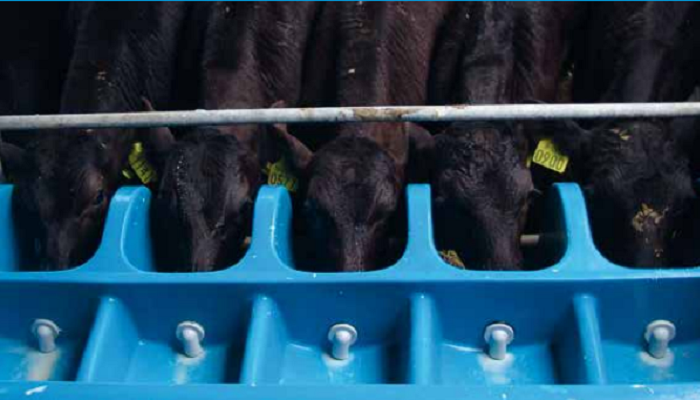
Did you know that at current costs, it will cost close to €60,000 to buy and rear 100, two-week old early-maturing calves to weaning at 10-12 weeks of age? Gordon Peppard, DairyBeef 500 Advisor, tells us how this is the case.
With current beef prices at an all-time high, many beef farmers are currently buying calves to rear in the hope that in two years’ time when they are finished that beef price will still be as positive and a margin can be made.
Calf trade is currently very strong with Angus/Hereford type calves easily making from €200-€300 per head and the cost of continental type calves even higher than these prices. With a lag period of up to two years or more before any monies are recouped from most calf to beef systems, beef farmers may well be starting to buy their third set of calves before any income has been received from the first and second groups of calves that they have reared!
To get dairy calf to beef animals fit for slaughter requires a lot of inputs and therefore huge costs are incurred in the process. For beef farmers rearing dairy calf to beef animals this spring, it is essential to complete a budget and to beware of the costs involved.
Have you done the sums?
So what are the main costs?
In order to have 100 animals fit to slaughter in the winter of 2026 / spring of 2027, at a lifetime mortality of 4%, you will need to buy 104 calves now. If calves are costing €300 per head, this will amount to €31,200.
Milk, meal and straw
Over the calf rearing period, we will average the number reared at 102 calves. We will also assume calves are bought at two to three weeks of age and will receive one and a half bags of milk replacer each up to weaning at 10 to 12 weeks of age.
There are many different types and quality of milk replacer available with prices ranging from anywhere from €50 to €70 per bag, at an average cost of €55 per bag that comes to €8,415.
Depending on the part of the country you are in, the cost of straw may vary slightly. 102 calves housed over a nine to ten week rearing period will use in and around 70, 4×4 round bales of straw for bedding and roughage. With transport included, we will put the average cost of a bale at €35, this comes to another €2,450.
Over the calf rearing period, calves should be encouraged to consume as much calf concentrate as possible in order to help develop the rumen and prepare them for turnout to grass. On average, calves up to weaning will eat somewhere in the order of 75kg of concentrate. Farmers may be using 20kg bags for convenience at the start followed by bulk feed. At an average cost of €500 per ton, this adds another €37.50 per calf or €3,825 for the group.
Veterinary costs
Veterinary costs on farms are hugely variable. Some farmers have a very strong vaccination policy whilst others use very little. With large numbers of calves possibly coming from numerous herds it may be prudent to discuss with your own vet the vaccination policy on our farm.
A top spec programme covering pneumonia, IBR, clostridial diseases, coccidiosis and allowing for call outs, treatments, etc. could easily reach €40 plus per head. With awareness that not every farmer will go to these lengths, we will use €30 per calf in our calculations here. There are many other cost items that farmers incur that could also be included here, for example, microbes, electrolytes, castration, dehorning, TB test etc. At an average of €30, that equates to €3,060 for 102 calves.
Fixed costs
Fixed costs are a substantial cost that are often overlooked on some farms. The average fixed costs across all the farmers participating in the DairyBeef 500 Programme for 2024 were €831, with a range from €500 to €1,100 per hectare. If we assume that there are approx. two to two and a half animals reared per hectare in a two year old system that averages out at a fixed cost of approx. €350 for an animal to get from a two week old calf to a slaughter age of two years.
So what fixed cost items are we attributing to the calf rearing phase? This period of the animal’s life would be quite strong on fixed costs with areas such as calf housing facilities, milk feeding equipment, water heating, lighting, repairs and maintenance of facilities, washing, cleaning out and disinfecting the shed, storing and spreading the dung, insurance, depreciation etc. all contributing highly. If we even put 25% of the total fixed costs (€350) to the calf rearing phase of the calf, we have another €87.50 per head or €8,925 for 102 calves.
Table 1: Assumed costs of bringing 102 dairy-beef calves to weaning
| Cost item | € |
|---|---|
| Calf cost | 31,200 |
| Milk replacer | 8,415 |
| Calf concentrate | 3,825 |
| Straw | 2,450 |
| Vet | 3,060 |
| Fixed costs | 8,925 |
| Total | 57,875 |
| Average cost per calf to weaning | €579 |
From the table above, based on current figures used in the article, the average cost of a calf reared to weaning stage is just shy of €600 based on paying €300 for the calf. Rearing dairy beef calves is not for the faint hearted and is a very costly system.
An interesting observation from ICBF is that for every 10 farmers that start rearing calves for beef from the dairy herd, in five years’ time there will only be four of them still rearing calves. With costs high, ensure that you have your figures done to ensure you can have a positive margin in two years’ time to justify your investment and labour involved.
Prices included in the article may vary depending on numerous scenarios, including age, breed and sex of the calf, regions of the country involved, quantities of milk replacer, straw and concentrate used etc., vaccination programme used and vet interventions required and the fixed costs can also vary largely from farm to farm.
Gordon Peppard is an advisor on the Teagasc DairyBeef 500 Programme.
More from Teagasc Daily: Increasing the profitability of dairy-beef using the Commercial Beef Value
More from Teagasc Daily: Aidan and Luke Maguires’ approach to calf rearing
More from Teagasc Daily: DairyBeef 500 tips on calf sourcing