
25 February 2025
Preparing for a successful calving season – Michael Biggins’ approach
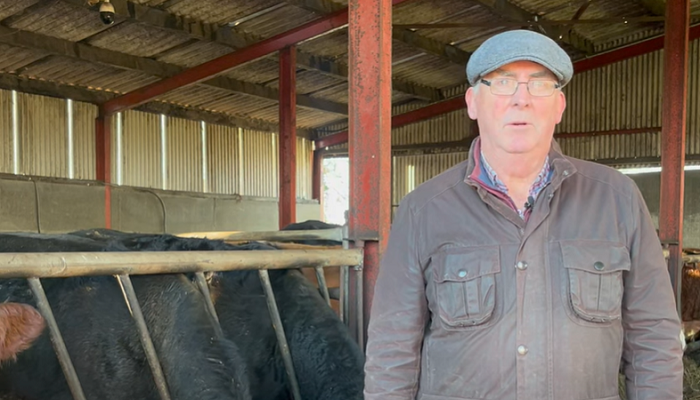
Michael and Niall Biggins, a father and son team from Glencorrib, Co. Mayo, have left no stone unturned in their preparations for the spring calving season ahead.
Participants in the Teagasc Future Beef Programme and carrying a herd of ~70 suckler cows, mid-February marks the start of calving for the Mayo-based herd, but preparations to ensure its success commenced months beforehand.
Along with regularly monitoring cow body condition score and offering a suitable diet over the winter months, Michael and Niall are believers in pre-calving vaccinations, viewing these as a vital tool in protecting calf health and reducing workload on the farm during the busy spring period.
Having already been vaccinating for leptospirosis and rotavirus, cryptosporidium vaccinations were added to the pre-calving checklist this year. Michael is hopeful that it will lessen the impact of the disease on the farm and the time consuming task of treating scouring calves with Halocur.
The results achieved from this vaccination programme hinge on the care taken with colostrum management, and this is something Michael and Niall pay particular attention to. All calves are closely monitored after birth to ensure they suckle. Where intervention is needed, the calf’s dam is milked and colostrum is fed to the newborn calf. Not an easy task, but a job helped by the excellent handling facilities available on the farm, allowing it to be done in a safe manner.
Care is also taken in terms of treating the calf’s navel, helping to prevent navel and joint ill in calves. Before the calving season commences, Michael and Niall gather their stock of calving essentials, included in this is 7-10% iodine, used to dip calves navels immediately after calving.
Also read: 6 steps to good navel care in calves
Along with colostrum management and navel care, Michael and Niall pay particular attention to the hygiene of their calving and calf creep areas. All are cleaned out and disinfected well in advance of calving, while adjustments have been made to the creep area to limit the impact on draughts on calf performance.
More insights into Michael and Niall Biggins’ preparations for calving are available in the below video:
The above steps give calves on the Biggins’ farm every chance, but the farm also values the importance of spring grass. As soon as the calves are hardy enough, and provided weather conditions allow, cow and calf pairs are turned to grass, something Michael views as important in aiding calf performance and allowing for a successful breeding season to follow.
Michael Biggins joined a recent Future Beef webinar on ‘Calving and Post Calving Management’, where he detailed the practical steps they are taken at farm level to allow for a successful calving season. For more insights from Michael Biggins on his preparations for the calving season, the Future Beef webinar is available to view here.