
31 December 2024
Staying resilient on the farm through stressful times of the year
Beef farming in Ireland brings unique and often seasonal stressors that impact both physical and mental health, making resilience an essential skill. Shane Pearson, Design Your Life Coaching, spoke about ways to manage these challenges at the National Beef Conference.
 Shane Pearson hails from a beef farming background, where he worked full-time on his family farm before following his passion for helping others achieve greater levels of health and wellbeing. With over 15 years of experience in facilitating positive change, Shane has spent the past decade focused on Health & Wellness coaching.
Beef farming in Ireland is high-risk, requiring long hours, physical stamina, and the ability to manage economic unpredictability. Studies reveal that farmers face elevated rates of work-related health issues, particularly cardiovascular disease and chronic stress, with growing concerns around mental health (Hammersley et al., 2021; Agriland.ie, 2024b). The pressure to produce, while managing variables like market fluctuations and regulatory demands, adds considerable strain, impacting both physical and mental resilience (Hammersley et al., 2021).
Key statistics and findings on mental health
Recent studies highlight the scope of these mental health challenges:
- Around 27% of Irish farmers report their well-being as “poor” or “below average,” identifying workload, financial pressures, and adverse weather as primary stressors (FarmSafely.ie, 2024).
- Over 25% of farmers experience burnout, with sleep issues commonly linked to prolonged stress and physical demands (O’Connor et , 2024; Dublin City University, 2024).
- Many farmers delay seeking mental health support due to social stigma and cultural norms that discourage help-seeking, often leading to critical stress levels before intervention (Firnhaber et , 2023; Agriland.ie, 2024b; Teagasc, 2024a).
Seasonal and specific stressors in beef farming
Beef farmers face specific stressors that fluctuate with the farming calendar. Calving season, regulatory inspections, and market uncertainties are high-stakes periods requiring both physical endurance and strategic planning. These demands often result in isolation, chronic fatigue, and heightened stress, reinforcing the need for resilience and effective stress management practices (Hammersley et al., 2021; FarmSafely.ie, 2024).
Current resources and supports
Initiatives like Teagasc’s Sowing the Seeds of Support leaflet and resilience programs offer practical guidance on recognizing and managing stress (Teagasc, 2024b; Agriland.ie, 2024a). These resources provide essential tools for beef farmers to navigate high-stress times, emphasizing resilience and mental health within the farming environment. Additionally, the Irish Farmers’ Association (IFA) offers free health check services at marts across the country, giving farmers easy access to basic health screenings and support in a familiar setting (Irish Farmers’ Association, 2024).
In summary, beef farmers face both ongoing and seasonal pressures that demand a solid foundation in resilience and mental health management. The following sections introduce the “5 Ps of Resilience” as a practical framework, providing specific strategies to help farmers prepare for and navigate high-stress times with composure and adaptability.
Identifying major stress points in beef farming
Throughout the year, farmers encounter predictable and unpredictable high-stress periods. These stress points can place unique pressures on health, productivity, and resilience.
Calving season
Calving season demands close attention to each cow, often at the expense of sleep, diet, socializing, and other farm tasks. Even with easy-calving genetics, a smooth season is never guaranteed. Unpredictable challenges during calving require patience, resilience, and a steady presence as the work demands long hours and focused attention, all while balancing other life responsibilities and farm duties that can’t be postponed.
Regulatory inspections and compliance
Inspections can be a significant stressor for farmers, requiring meticulous record-keeping and strict compliance with standards (Agriland.ie, 2023). For beef farmers, farm payments often hinge on passing these inspections, and a failed inspection can threaten financial stability. Many farmers remember the early days of inspections, which introduced a “new way of farming” focused on documentation and compliance. Even today, inspections add mental and emotional stress, as the risk of missed payments looms (Hammersley et al., 2021; FarmSafely.ie, 2024).
Market pressures and financial strain
Market volatility adds ongoing stress for beef farmers, as prices are often dictated by processing plants and beyond farmers’ control. This lack of control over selling prices makes financial planning challenging and adds pressure, as input costs remain steady while market prices fluctuate. The resulting uncertainty reinforces the reality that “Risk & Uncertainty = Stress,” making resilience essential for handling these financial challenges.
Other stressful factors and events
Additional challenges compound stress for farmers:
- Climatic conditions: Weather impacts livestock and crop health, requiring flexibility and adaptation (FarmSafely.ie, 2024).
- Time pressures and long hours: Long days during peak times contribute to exhaustion and the risk of burnout (FarmSafely.ie, 2024).
- Animal health and disease management: Disease outbreaks require constant vigilance and can lead to added stress and financial strain (FarmSafely.ie, 2024).
Together, these stressors highlight the need for resilience and proactive stress management. The following section introduces the “5 Ps of Resilience” as a practical framework to help farmers manage these pressures.
The Resilience Roadmap: Practical applications for stress management
In farming, stress is unavoidable. Each season brings its own challenges, deadlines, and unpredictable hurdles. Just as a farm vehicle needs shock absorbers to handle rough ground and unexpected potholes, farmers need resilience to absorb and manage the pressures they face. Building resilience enables farmers to tackle challenges with composure, strength, and perspective. The “5 Ps of Resilience” – Presence, Purpose, Power, People, and Preparation -offer practical tools for developing resilience.
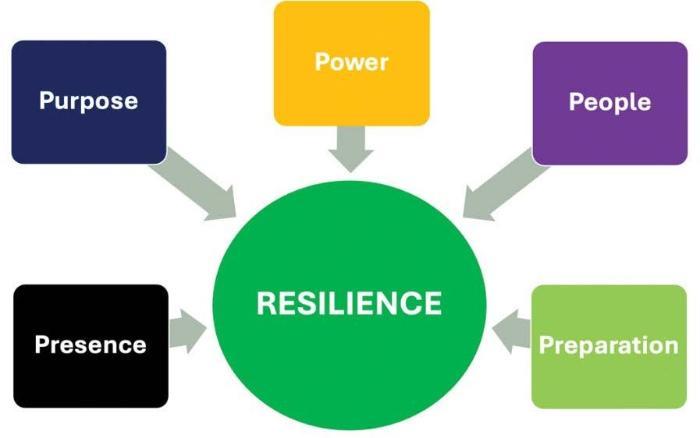
The 5 Ps of Resilience
Presence
Presence is about staying focused on the task in front of you, rather than feeling overwhelmed by everything waiting to be done. When stress builds, the mind often jumps ahead to the next tasks, increasing tension and pulling attention away from the present moment. Staying grounded in what’s happening right now keeps the mind calmer and helps prevent mistakes that could add to stress later. As a rule of thumb, the moment you recognize you’ve lost “presence” is your cue to return to the present moment.
Practical tips for building presence
- Take deep breaths: A few deep breaths with long, slow exhales at any time helps both calm and energize the mind and bring focus to the present.
- “Come to your senses”: Take a moment to watch the cattle grazing or enjoy taking in the landscape. Really feel the rain on your skin or the sun on your face. Listen curiously to the sounds around you. Engaging your senses grounds you in the present moment, helping the mind and body relax quickly.
- Tackle one task at a time: Break tasks into smaller steps and focus on each one individually to reduce overwhelm and stay centred.
Purpose
A clear sense of purpose acts as an anchor, helping farmers see each task as part of a larger goal. Whether providing for family, preserving the land, or honouring a legacy, connecting daily work to a deeper purpose makes challenges more manageable. Purpose offers direction and reframes stress as a meaningful part of the journey.
Practical tips to reconnect with purpose
- Reflect on your “why”: Take a moment each day to remind yourself why you farm and what you’re working Viewing unpleasant tasks as part of a bigger picture can make them feel more meaningful.
- Use visual reminders: Keep family photos or mementos around the farm as daily reminders of your purpose and motivation.
- Celebrate small wins: Recognize accomplishments as steps toward a larger Find healthy ways to reward yourself after completing a stressful task or period, reinforcing your progress and commitment.
Power
Resilience requires energy, which comes from quality sleep, nutrition, and hydration. When running on low fuel, the mind and body are more vulnerable to stress. Just as a machine needs fuel to function, the body needs proper rest and nourishment to build resilience. Staying ‘powered up’ is important at any time of the year but becomes especially important during busy times on the farm.
Practical tips to stay powered up
- Prioritize quality sleep: Aim for a consistent bedtime and improve sleep hygiene by keeping your room cool, dark, and free from screens an hour before During busy times, short naps can help recharge when a full night’s rest isn’t possible.
- Eat balanced, regular meals: Ensure sustained energy by adding more vegetables to your plate and reducing portion sizes of meat and heavy carbs like potatoes, pasta, and bread. Don’t skip meals— prepare quick snacks like soup and a sandwich to avoid energy dips during busy periods.
- Mind your minerals: Just as you ensure your cattle get essential minerals with a mineral lick, make sure you’re getting yours Consider swapping plain table salt for sea salt or Himalayan salt for added minerals like magnesium and potassium.
People
Support is essential for resilience. Farmers are typically skilled all-rounders, capable of handling a wide range of tasks – from fencing to fixing machinery and managing livestock. However, trying to “do it all yourself” can lead to burnout. During stressful times, adopting a different mindset is crucial: Think, “Who can I get to help me with this?” Seek assistance with routine tasks so you can focus on high-priority work.
Isolation is a common challenge for farmers, which can add to stress and mental fatigue. Joining discussion groups or farmer networks can help combat isolation, offering a space to share experiences, gain insights, and find emotional support from peers who understand the unique pressures of farming. Beyond practical help, connecting with others builds resilience, and sharing stress can be a powerful emotional release.
Practical tips for leveraging support
- Find help and delegate routine tasks: Look for jobs or tasks you can outsource during busy Consider options like farm relief services & contractors or finding help like casual labour to assist with daily operations.
- Build a support network: Share your challenges with someone you trust, whether it’s a family member, friend, or fellow farmer. Think of it like a slurry tanker left on suction mode – if the pressure keeps building without a release valve, something will eventually give. Talking things out helps prevent that buildup, acting as a release to avoid emotional overload.
- Consider professional support: Research shows that many farmers avoid professional help, but it can be A counsellor, wellness coach, therapist, or support group can provide new tools to handle stress effectively.
Preparation
Effective preparation can be the difference between a smooth operation and a stressful scramble. Planning ahead allows you to anticipate challenges and set up systems that will keep things running smoothly during high-stress times. Once you’re in the thick of a high-stress period, it’s often too late to address small inefficiencies or lingering issues that can quickly escalate into major setbacks or delays. As the saying goes, “a stitch in time saves nine,” so adopting a proactive approach means addressing minor but persistent challenges, like a badly hung gate, a leaking tap, a flat battery, missing tools, or untidy workspaces -before they escalate during busy times.
Good preparation isn’t about avoiding stress; it’s about managing it well in advance. Tackling these smaller issues early ensures that high-stakes periods, like calving or inspections, go as smoothly as possible, allowing you to stay focused on essential tasks rather than being distracted by preventable setbacks.
Practical tips for effective preparation
- Plan key tasks ahead: Map out significant events like calving, inspections, and market days on a seasonal calendar to allocate time and resources
- Tidy up and fix small issues: Address small annoyances, like poorly hung gates or a disorganized workshop, during quieter times and before they become big distractions.
- Set up backup support: Arrange for extra help during peak times, and have contingency plans for potential disruptions, such as machinery breakdowns or adverse weather conditions.
By applying the “5 Ps of Resilience” – Presence, Purpose, Power, People, and Preparation – farmers can build a solid foundation to handle stress, keep operations running smoothly, and sustain mental and physical well-being through each season. Resilience isn’t about eliminating stress; it’s about having the right “shock absorbers” to take each challenge in stride, allowing farmers to manage their unique demands with greater ease and balance.
Read more from the National Beef Conference
References
- Agriland.ie (2023). “Farmers’ charter must relieve stress and anxiety of inspections.” (Accessed: 22 October 2024).
- Agriland.ie (2024a). “Mental Health and Wellbeing Hub for Farmers Launched.” (Accessed: 23 October 2024).
- Agriland.ie (2024b). “Sowing the Seeds of Support for Mental Health in Farming.” (Accessed: 21 October 2024).
- Dublin City University (2024). “DCU research study finds that over 25% of Irish farmers are suffering from burnout.” (Accessed: 22 October 2024).
- FarmSafely.ie (2024). “27% of Farmers in Ireland Report Their Wellbeing as Poor or Below Average.” (Accessed: 21 October 2024).
- Firnhaber, J., O’Connor, S., Malone, S., O’Shaughnessy, B., McNamara, J. and Breslin, G. (2023). Mental health knowledge and help-seeking intention in Irish farmers. 16th European Public Health Conference 2023, ii559.
- Hammersley, C., Richardson, N., Meredith, D., Carroll, P. and McNamara, J. (2021). “That’s me, I am the farmer of the land”: exploring identities, masculinities, and health among male farmers in Ireland. American Journal of Men’s Health 15: 1-20.
- O’Connor, S., O’Hagan, A.D., Malone, S.M., O’Shaughnessy, B.R., McNamara, J. and Firnhaber, J. (2024).
- Sleep issues and burnout in Irish farmers: A cross-sectional survey. Safety Science 171: 106377.
- Teagasc (2024a). “Farm Health Study.” (Accessed: 23 October 2024).
- Teagasc (2024b). Sowing the Seeds of Support Leaflet. (Accessed: 25 October 2024).
- Irish Farmers’ Association (2024). “Free Health Check Service.” (Accessed: 28 October 2024).