
16 November 2024
Test your silage for better winter management
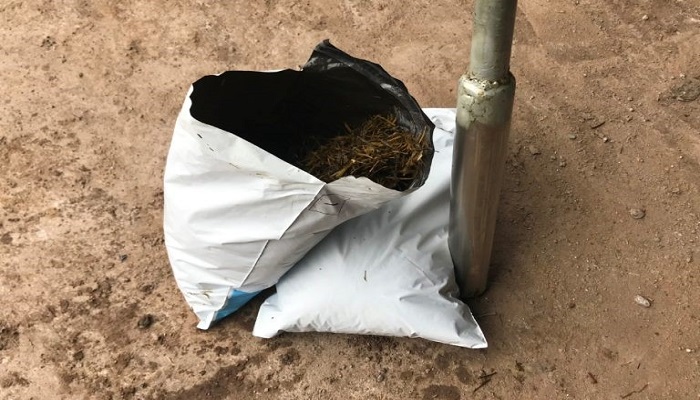
With housing taking place on farms across the country, it is the start of an expensive few months ahead. Silage quality should be tested, as this informs each farm of the correct amount of concentrates to feed to each animal group.
Dr. Peter Doyle, Research Officer at Teagasc Grange, explains: ‘‘Silage quality is key to good animal performance, reducing winter feed costs and increasing profitability during the housing period.
“Weanlings achieving the target live weight gain of 0.5kg/head/day is largely dependent on the adequate intake of good quality silage. Hence, knowing your silage quality must be the starting point in planning your winter feed when making cost effective decisions on concentrate supplementation.’’
Red and White Clover: Impact on Animal Performance
Dr. Peter Doyle will outline the impact of including red and white clover on animal performance in suckler calf-to-beef production systems at this year’s Teagasc National Beef Conference, which is taking place in the Landmark Hotel, Carrick on Shannon, Co. Leitrim on Tuesday 19th November at 5pm.
In 2023, Derrypatrick suckler-bred weanling grazing grass-white clover swards were 13kg heavier by the end of the first grazing season than their grass-only counterparts. During the first indoor winter, the ‘grass-clover weanlings’ offered the grass-red clover silage gained an additional 13kg live weight (+0.08kg/day) indoors compared to their counterparts offered grass-only silage. Consequently, by the start of the second grazing season (13.5 months old), the grass-clover cattle were 27kg heavier.
During the second grazing season, there was no difference in daily live weight gain between the two pasture systems (grass-only vs. grass-clover). This meant that the cattle on the grass-clover system were still 27kg heavier at the end of the grazing season, leading to an 18kg heavier carcass weight at the same age. While carcass fat scores were similar, the grass-clover cattle had better carcass conformation scores than those on the grass-only system.
Research at Teagasc, Grange as part of Dr. Nicky Byrne’s work, shows that dairy-beef weanling steers fed second-cut grass-red clover silage (87% red clover) had a 0.12 kg greater daily live weight gain (0.68kg vs. 0.56kg) over the first winter compared to those fed grass-only silage (again both groups were supplemented with concentrates). However, in this study the animals grazed the same pasture type in the second grazing season (grass-only) and, by the end of the grazing season, the weight difference (9kg) between the two groups had disappeared. Thus, steers previously fed grass-only silage exhibited compensatory growth after achieving 0.56kg/day over the first winter.
Dr. Peter Doyle observes: “The findings suggest that grass-red clover silage could be used to reduce the amount of concentrates fed over the first winter, rather than increasing weanling performance beyond the recommended growth target of 0.5kg/day for suckler-bred cattle. Alternatively, grass-red clover silage could be targeted towards priority animal groups with limited opportunity for subsequent compensatory growth (e.g. finishing cattle).”
Some farms are finding it difficult to manage and maintain red clover in the swards, and this will also be discussed at the Teagasc National Beef Conference which is taking place in the Landmark Hotel, Carrick on Shannon, Co. Leitrim on Tuesday 19th November at 5pm.
Other speakers on the night include:
- John Donlon, Research Officer, Teagasc Grange will out outline ways to control pneumonia in suckler weanlings.
- Dr. Patrick Forrestal, Senior Research Officer at Teagasc Johnstown Castle, will present a range of research based practical nutrient management solutions
- Eoin Ryan, Department of Agriculture, Food and the Marine, will discuss the risks for Irish cattle farmers in relation bluetongue
- Martina Harrington, Programme Manager, Future Beef Programme, Teagasc will outline Innovations on the participants of Future Beef Suckler Farms
- Shane Pearson, Design Your Life Coaching, will outline ways for farmers to stay resilient on farms through stressful times of the year.
Additionally, there will be an opportunity for farmers to meet with members of the Teagasc Organic team, Agricultural Sustainability Support and Advisory Programme (ASSAP) and Signpost Programme to discuss any queries you may have. The Teagasc Future Beef and DairyBeef 500 teams will also be in attendance at the conference with updates from both programmes. There will be a focus on farmer health and wellbeing with a number of health professionals with information stands on the night also.
As November 19 is ‘International Men’s Day’ there will also be a focus on the night on farmer health and wellbeing. There will be a number of health professionals with information stands on the night also.
The Teagasc National Beef Conference is a free event and all are welcome to attend.
Find out more about the Teagasc National Beef Conference here.
Also read: Setting the scene for the Teagasc National Beef Conference
Also read: Bluetongue: What are the risks for Irish cattle farmers?