
24 April 2024
Getting turnout right with dairy-beef calves
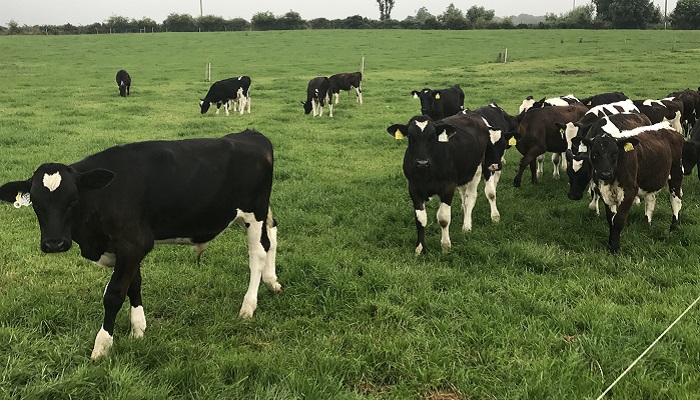
Fergal Maguire, DairyBeef 500 Advisor, flags the importance of ensuring the successful transition of dairy-beef calves to grass, noting why it’s critical for performance until housing.
In the next month, calf to beef producers will start letting calves out to grass. In most cases, if the transition from an indoor environment to an outdoor setting is done correctly, the transition will go smoothly and the calf will have good performance in their first season at grass.
Every year, however, we see numerous cases where animals are transitioned poorly to grass. Consequently, the animal fails to thrive and, in some cases, it may lead to the rehousing of individual or batches of calves.
Developing the rumen
The main aim of the milk rearing phase is to sufficiently develop the calf’s rumen, to ensure that once turned out they are able to digest and utilise grazed grass.
Much of the skill in calf rearing is making this diet transition from milk to solid foods as smooth as possible, without setbacks to the calf’s performance. To reduce the calf’s reliance on milk and help to reduce potential stress, concentrates should be introduced to calves from a few days of age, to encourage intake.
It is extremely important to have fresh water with calves at all times. Milk is a feed and not a drink, and concentration intake will be low for calves if fresh water is not available. A fibre source, preferably good quality straw, should be available to calves.
Weaning
Calves should only be weaned after they have been eating at least 1.5kg/day of starter concentrates for at least three consecutive days prior to weaning. Generally this level of intake should be obtained by eight weeks of age.
Before weaning, calves should be healthy and not stressed. If there are any issues with them, the milk feeding period should be prolonged. Any stressful events such as castration, disbudding or vaccination should be avoided at this time, as it will cause upsets and could potentially cause a growth check after weaning.
Calves can be either abruptly or step weaned. Stepped weaning is when the amount of milk being fed and the number of feeds/day are gradually reduced over time. This is also referred to as gradual weaning.
Both step weaning and abrupt weaning can be performed successfully provided the calf’s rumen is adequately developed and sufficient levels of concentrates are been consumed. Stepped weaning does reduce the stress at weaning and can avoid temporary setbacks in growth rate. Generally, stepped or gradual weaning is achieved by reducing the volume of milk fed over a period of seven to 10 days. If calves are being fed milk twice a day, weaning can be achieved by cutting down to once-a-day feeding
Managing turnout
Concentrate supplementation should be maintained post turnout for at least 5-6 weeks to aid in the transition to grass, at a recommended feeding rate of 1.5-2kg/head/day – depending on weather conditions.
If grassland management is good and weather is favourable, then calves can be taken off meal from mid-June before being re-introduced in September. Weak or late-born calves should be kept on meal throughout the summer.
Key tips on turnout:
- A well sheltered paddock should be targeted to acclimatise calves to the outdoor setting;
- Turning calves out in unfavourable weather conditions – in extremes of warm, wet or cold – should be avoided as potential upsets could result;
- If calves are turned out to the same field year after year, altering this field to avoid the build-up of pathogens and diseases should be considered. However, this may not always be practical;
- Paddocks that have had high levels of nitrogen applied or have very lush covers should be avoided immediately post turnout to prevent any digestive upsets;
- Once calves become acclimatised to the outdoors, grass pre-grazing covers of <1,000kg DM/ha should be targeted to encourage intakes;
- Offering calves straw for 5-6 weeks post turnout can also beneficial, as it will provide a source of fibre – especially where grass covers are lush – but this is not near as fundamental as concentrate feeding;
- In some cases, farmers that had issues with summer scour in the past will strip graze calves to ensure adequate levels of fibre in the calves’ diet. Calves are selective grazers and will avoid eating stem if allowed too.
Farmer Focus
Located outside Castledermot, Co. Kildare, approximately 160 calves were reared on the farm of DairyBeef 500 participant Peter Byrne. The calves are a mix of Holstein Friesian, early maturing and continental male and female calves. Peter has already let a batch of these calves out to grass and the plan is to let another of 30 calves out in the next week or so.
Calves arrive on the farm at approximately three weeks of age calves and are fed on an automatic milk feeder until they reach their targeted weaning weight of 85-90kg at generally 60-70 days. From arrival, calves are introduced to a blend of home-grown grain plus maize meal, soya bean and molasses.
Generally at weaning, calves would be consuming over 2kg/head/day of concentrates and they are kept on this level until turnout. Peter feels keeping the troughs clean and feed fresh from the start is important to get calves to start consuming reasonable levels. Straw is used as a fibre source and calves have access to clean, fresh water at all times.
Post turnout, calves are offered straw to provide extra fibre and concentrate supplementation is continued for the first 5-6 weeks. Calves are moved out on to paddocks with a cover of about 1,100 kg DM/ha. They are also moved daily which helps to ensure the calf is getting enough fibre.
In mid-June, the strongest batch of calves will be removed off concentrates, which will be re-introduced in mid-September. If weather permits, the middle batch of calves will be taken off meal, with only the lightest calves receiving meal throughout the summer. In 2023, Peter’s calves gained an average of 0.65kg/day between turnout to grass and housing last year.
Peter Byrne will host a DairyBeef 500 farm walk on May 7 at 6pm. This walk will focus on grass management, growing red clover silage, transitioning the calf to grass and controlling parasites.
Learn more about the Teagasc DairyBeef 500 Campaign here.