
08 March 2023
Why test colostrum on suckler farms?
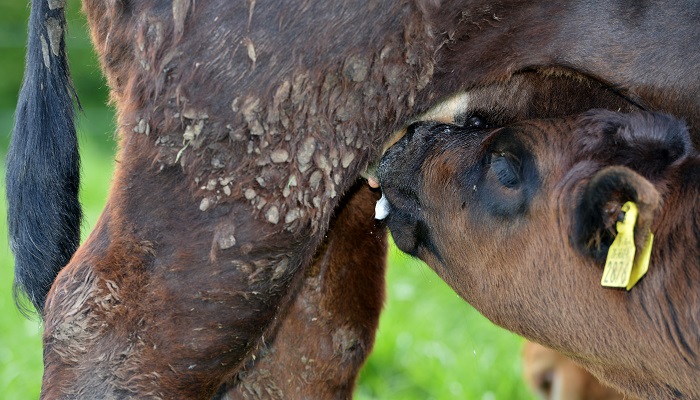
From the minute a calf is born it is in life-threatening danger, Martina Harrington, Future Beef Programme Manager, explains why.
Unlike in humans and many other animals, the structure of the placenta in ruminants does not allow antibodies to transfer from the cow to the calf before birth. Therefore, the calf is born with no circulating antibodies to fight off disease.
For calves, these lifesaving antibodies pass through the colostrum, so then it becomes obvious that the colostrum needs to get into the calf as soon as possible after birth to protect that animal from any diseases in the environment. The other time bomb is that the cells lining the gut of the newborn animal are only able to absorb IgG antibodies for a short period after birth. This transfer mechanism peaks at about six hours of age and then begins to decline rapidly from 12 hours. It is completely lost by 24 hours of age. Therefore, to get any antibody transfer you must act fast.
Then we finally get to the question, why test your colostrum?
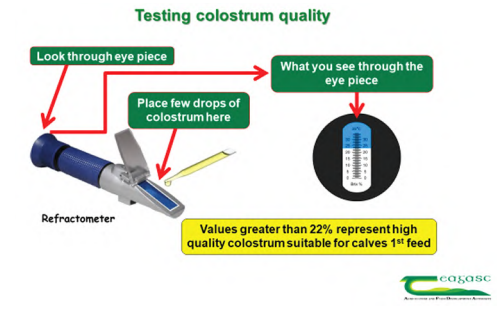
The quality of colostrum is measured by the concentration of antibodies. This is because calves must consume a high level of these in the first hours of life. Good quality colostrum has an IgG concentration of greater than 50g/L. Can you tell this by looking at it? The answer is no, the quality is not dependant on colour or thickness. A Brix refractometer (with a scale of 0–30 %) can be used to indirectly test the quality of colostrum – a reading of 22% or more indicates high quality colostrum (i.e. > 50 g/L).
Figure 1: Testing colostrum using a Brix refractometer
What affects the quality of colostrum?
- Mature cows tend to have higher quality colostrum. Although farmers do argue that heifers fed 250g of soya for 2-3 weeks pre calving have good quality colostrum, but are they measuring the colostrum quality?
- Time calved. The quality of the colostrum itself decreases from calving, so if you feed at two hours you will have much better colostrum than if you feed at six hours post calving. A lot of this is due to dilution.
- Cows calving later in the year tend to have poorer quality colostrum.
- Dry period length. If the dry period is less than three weeks then colostrum quality tends to be poorer.
- Vaccinated cows have higher immunity against pneumonia, scours etc. once the vaccines are given correctly and in time for the antibodies to build.
- Frozen colostrum holds its quality.
- Colostrum should be stored in a fridge immediately. As bacteria levels grow, they inhibit the absorption of antibodies by the calf. Do not use colostrum from a fridge after 48 hours.
- Ensure all buckets, teats, stomach tubes etc. are spotless. You do not want to be the source of infection.
- New Teagasc research shows that antibody absorption in reduced when colostrum from multiple cows are pooled.
Feeding and heating colostrum
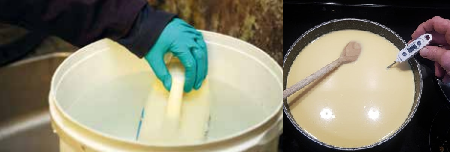
Feed all colostrum warm to increase the absorption of antibodies. If heating, ensure it is a slow and steady process. Do not use a microwave and do not heat above body temperature 38OC. Immunoglobulins are a protein and so heat will denature them and make them useless.
Figure 2: Colostrum should be thawed (if necessary) and warmed to body temperature (38OC) in warm (maximum 50OC) water
This is information that we know, however if you are continuously testing colostrum on your own farm you will begin to notice trends. Maybe if diet changes, for example, if you feed soya does it actually improve colostrum quality? If silages are higher in protein is your colostrum better? How late in the season does the quality of your colostrum fall off, etc.
You can watch a short video on testing and assessing colostrum below.
Testing colostrum on a Future Beef Farm
In terms of colostrum management, following the 1,2,3 rule is best practice on dairy farms. However, in a suckler context this is not practical, so the focus must be placed on colostrum management practices in terms of quality and feeding.
Farming in Milstreet, Co. Cork, Ger McSweeney is a participant in Teagasc’s Future Beef Programme, who started to test his colostrum quality this year. Ger has witnessed numerous benefits from testing colostrum on his farm, as real figures are provided on its quality. Of the samples tested this year, readings of 19-33% Brix have been recorded, with all bar one being above 22%. When readings below 22% are recorded (an indication of poor quality colostrum), it means that corrective action can be taken quickly and the calf can be supplemented with good quality stored biestings from another cow.
As mentioned above, the calf’s immune system in the first period of life is dependent on the quality and quantity of antibodies absorbed from colostrum feeding. When the calf is offered high quality colostrum, it means that Ger’s calves are healthier and are hopefully more immune to diseases that they may encounter in the early stage of their life. It also provides Ger with peace of mind that his calves are getting the best start they can get.
Although testing colostrum brings benefits for Ger, safety in obtaining the sample is paramount and always comes first.
“Stalling the cow is the safest and easiest way to get the samples,” Ger explained. “This coincides with the calf getting its first suck, so the cow doesn’t notice anything. If the cow is too wary or can’t be stalled, then no sample will be obtained.”
For more information on the Future Beef Programme, click here. To keep up to date with regular updates from Ger’s farm, click here. More information on colostrum management is also available on the Animal Health Ireland website.