
22 February 2023
Nutrition of the dairy-beef calf during the milk feeding stage
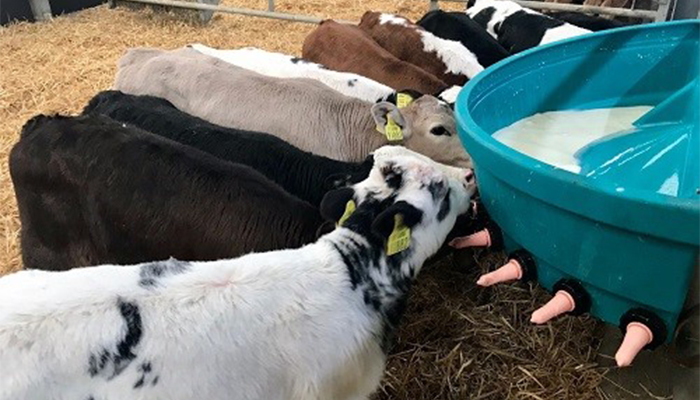
February and March mark the traditional months for calf rearing on the majority of dairy-beef farms nationally. Feeding the calf correctly from arrival to weaning is critical to achieve the desired levels of liveweight gain and to ensure a successful calf rearing period.
Farmers engaged in calf to beef systems need to keep a couple of key targets in their minds. To achieve the desired levels of performance – not just in the calf rearing stage but throughout the entire cycle – it’s critical that birth weight is doubled by eight weeks of age and that calves reach at least 100kg by 12 weeks of age. For this target to be achieved at farm level, daily gains of 700-800g/day are required during the liquid feeding stage. Remember, the amount of milk fed and concentrate consumed determines calf growth rate in the period up to 12 weeks of age.
Selecting a milk replacer
Although a significant cost to the system, the focus should be placed on the constituents and nutritive value of a milk replacer rather than solely on its economic cost. By focusing your milk replacer purchasing choices solely on cost, you may end up with a product that fails to provide the calf with the adequate levels of nutrition to achieve its daily liveweight gain targets.
Along with being easily dissolvable, a suitable calf milk replacer for dairy-beef systems should have a protein content of >20%, oil content of 18-20%; ash content of <8% and a fibre content of <0.15%. In terms of the calf’s ability to consume the product, milk replacers formulated from milk-derived proteins (skim milk powder or when protein concentrate) are preferred.
Milk replacer feeding levels and mixing
Milk replacer should be considered as a feed; clean, fresh water should be available at all times. When moving calves in, always allow calves 2-3 hours rest after arrival before feeding a good rehydration electrolyte as a first feed. Where calves are purchased at 2 weeks old, each calf should receive at least 13-15% of its birth weight in a good quality milk replacer – typically 6L/day for a Friesian calf, with this level of feeding reduced in the period immediately before weaning to encourage concentrate intake.
Mixing rates may vary between products – always adhere to the manufacturer’s instructions – but typically you are looking for a concentration of 12.5% solids (mix 125g of milk powder to 875ml of water). A high level of hygiene should be maintained throughout the mixing and feeding programme and consistency is key in terms of milk replacer volume. When formulating milk replacer, water below 40°C should be used, as boiling water damages the milk proteins and aim to feed calves milk replacer at their body temperature (37-39°C).
Concentrate feeding
Concentrate supplementation is the single most important factor for rumen development and a high-quality, palatable starter concentrate should be available to calves freely, as soon as they arrive on farm, and offered fresh daily. Calf concentrate should contain 17-18% crude protein and have an energy value of at least 12 MJ/kg (greater than 0.95 UFV/kg). Calves fed a coarse starter mix initially eat more and have higher weight gains than calves fed pelleted starters; finely ground, dusty feeds should be avoided.
Forage supplementation
Forage supplementation is beneficial to rumen development, but not as fundamental as concentrates. Calves only need small amounts of roughage; straw is easier to digest and is preferred to hay. A high consumption of hay in young calves will decrease the intake of concentrates, and the calves will often develop ‘pot bellies’. However, the over consumption of straw should be avoided as this reduces the overall energy density of the diet. Research recommends a concentrate to roughage ratio by weight of 8:1 or 200g/head/day to pre-weaned calves.
This article was adapted from a DairyBeef500 factsheet. For more information on the DairyBeef 500 Campaign, click here.
Also read: New technologies and animal performance to the fore in west Cork