
31 January 2025
Reducing the number of thin ewes makes management easier
For a small investment in time, sheep farmers can make considerable improvements to the performance of their flock.
That’s according to Dr. Frank Campion, pictured below, a Research Officer in the Teagasc, Animal & Grassland Research and Innovation Centre, Mellows Campus, Athenry, who explored the many benefits that arise by optimising ewe body condition score at the Teagasc National Sheep Conference this week.

“Body condition score is a key measure of nutritional status, and it is essentially a source or reserve of energy during the production cycle. By assessing ewe body condition score at key times during the production cycle – such as mating, scanning, lambing and weaning – and acting on the results, sheep farmers can ensure better production outcomes from their flock,” Dr. Campion told the farmers in attendance.
Table 1: Body condition score targets
| Time | Target Average | Target Minimum |
|---|---|---|
| Mating | 3.5 | 3.0 |
| Scanning | 3.25 | 3.0 |
| Lambing | 3.25 | 3.0 |
| Weaning | 2.5 | 2.25 |
Although outlining the target body condition scores for each period of time, Dr. Campion noted that significant variation in body condition score within each flock can be witnessed. Instead, farmers should focus on managing the body condition score of thin ewes, ewes not meeting the minimum target in table 1 above.
“Focusing on the average body condition score alone can be misleading. As body condition score drives a number of elements of flock performance, including pregnancy rate, litter size, feed intake and milk production, minimising the number of thin ewes should be a priority.
“Thin ewes are usually the ones with the most potential to cause issues and one way to reduce these issues is focusing on reducing thin ewe numbers through management.”
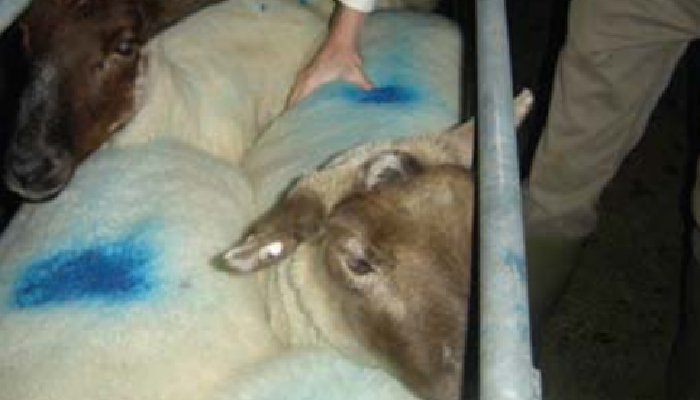
The starting point in implementing these management practices, he explained, is handling ewes to assess their body condition score. During this process, thin ewes can be marked and checked for any obvious signs for poor body condition score, such as teeth. At this time, it is also advisable to separate out the thin ewes into a different group to ensure they are managed properly.
Where thin ewes are a re-occurring problem, Dr. Campion encouraged farmers to assess their nutritional and grassland strategies, dosing and lameness control policies, and breeding programmes.
“The earlier you act on thin ewes, the easier it is to address the issue. Reducing the number of thin ewes makes management easier. You will achieve better lamb performance, lower mortality rates and have less cull ewes when your ewes are fit. Overall it will result in easier flock management,” Dr. Campion concluded.