
31 December 2024
Housing ewes – practical aspects to consider
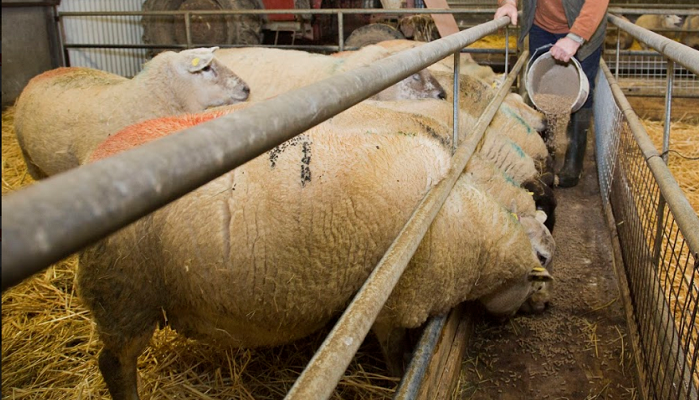
Largely dependent on grass supply, ewe condition, lambing date and ground and weather conditions, many sheep farmers will be preparing to house their ewe flock in the not too distant future.
In order to ensure that the housed period is a success and to prevent issues arising, Sheep Specialist at Teagasc, Damian Costello shared a number of practical tips on the recent Let’s Talk Sheep webinar on housing, feed management and planning.
Ewe condition
Starting off, Costello stressed the importance of examining and monitoring ewe body condition score to identify thinner ewes that may require preferential treatment. At a minimum, he noted, that ewes should be in a body condition score of 3, with 3.25 being targeted at scanning.
Ewes falling below this threshold of 3 will require extra feeding now to prevent further body condition loss as pregnancy progresses from mid stage to late, and to ensure that ewes are at the optimum body condition score (3.25) come lambing – a factor linked to the birthing of vigorous lambs, adequate colostrum production and the starting point for a successful year in 2025.
Once identified and drafted, outdoor feeding strategies for this group of thin ewes will largely depend on grass availability and ground conditions. Where grass supplies are tight, excellent quality silage will allow thin ewes to build body reserves. However, where silage quality is sub-optimum, concentrate supplementation may be necessary.
“Concentrate supplementation for that small group of thin ewes can be an option at this stage. At a rate of 300-500g/head/day over a 40-50 day period, it is a modest enough cost of €5-8/head and you will reap a lot of rewards from this when it comes to lambing, when you have less ewes in very low body condition score,” he explained.
When to house and housing requirements
The decision on when to house should be made on basis of grass supply, Costello explained, and he discouraged farmers from re-grazing paddocks that have already been closed to supply grass next spring.
Where grass supplies are beginning to run tight or there are concerns regarding the availability of silage or straw, he recommended implementing staged housing; targeting thinner and older ewes first pre-scanning before moving onto triplet and early lambing ewes (based on raddle colour) post scanning.
Housing checklist:
- Do ewes have enough floor space?
- Where space is inadequate, it is difficult to keep bedding clean, bullying can occur and thin ewes will fail to gain condition in overcrowded pens.
- Have ewes adequate feed space and can all ewes comfortably eat concentrates at the one time?
- Where inadequate feed space is available, shy feeders will not compete and will suffer from inadequate nutrition and issues such as prolapse and metabolic diseases can increase.
Before housing takes place, Costello reminded farmers to check both the floor space and feed space available. Department of Agriculture, Food and the Marine specifications for conventional flocks on both are available in table 1 and 2 below. Where farmers have converted to organics, Costello noted that the floor space allowance is higher at 1.5m2 per ewe and at least 50% of the area must be a solid lie back.
Table 1: Minimum floor space requirements (conventional flocks) – DAFM S146 (2016)
| Type of ewe | Slats m2 | Bedded m2 |
|---|---|---|
| Large (body weight 90kg) | 1.2 | 1.4 |
| Medium (body weight 70kg) | 1.1 | 1.2 |
| Small (body weight 50kg) | 1.0 | 1.1 |
Table 2: Feeding space requirements – DAFM S146 (2016)
| Type of ewe | Meal feeding mm | Roughage (hay rack) mm | Easy feed silage mm |
|---|---|---|---|
| Large (90kg) | 600 | 200 | 200 |
| Medium (70kg) | 500 | 200 | 200 |
| Small (50kg) | 400 | 175 | 175 |
Other important elements covered as part of the webinar included:
- The management of lame ewes – foot bathing all ewes prior to housing is recommended;
- Where ewes present with lameness, they should be treated prior to housing;
- Avoid penning lame and non-lame sheep in the same pen, as this significantly increases the risk of infection spread;
- Avoid housing sheep with wet fleeces. It can take up to a week for their fleece to dry and it creates dampness and the potential for respiratory challenges in the shed;
- Hygiene is critical – have sheds washed and disinfected prior to housing and use adequate volumes of straw to keep the environment clean and dry.
For more detailed information, watch a recording of the Let’s Talk Sheep webinar below, which also features Michael Gottstein, who discussed feed management: