
17 December 2024
Methane emission on sheep farms
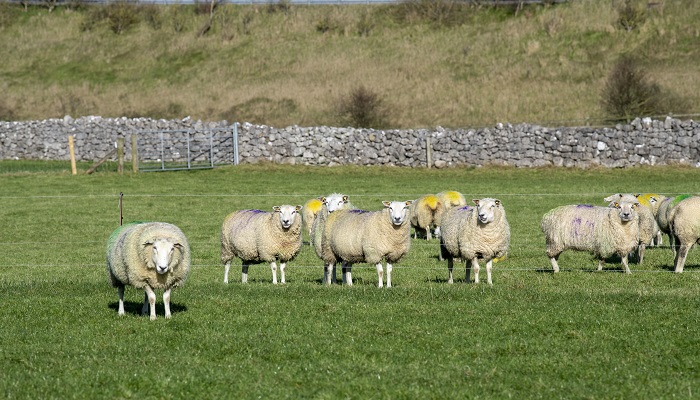
Sustainable sheep systems are being researched at Teagasc, Athenry. Eoin Dunne tells us more on this interesting research which can help reach future emission targets, while still focusing on breeding animals that increase profitability in a sustainable manner.
Methane (CH₄) is a potent greenhouse gas (GHG), and significant amounts are produced during the digestion process of ruminants through the breakdown of feed by microbes in the rumen. In Ireland, agriculture accounts for 38% of our national GHG emissions and enteric CH₄ accounts for just over 60% of agricultural GHG emissions. Given this substantial contribution, reducing methane emissions at the farm level will play a crucial role in determining whether Ireland can achieve its target, a 25% reduction by 2030.
Measuring methane
A significant amount of research has focused on CH₄ emissions from the dairy and beef sectors; however, little is known about the Irish sheep industry. To better understand the emission factor, Teagasc, in partnership with Sheep Ireland, has recently conducted studies to measure methane emissions from pedigree and commercial sheep farms across Ireland using a portable methane measurement device called Portable Accumulation Chambers (PAC). This research aims to identify high and low emitters within each flock and across different breeds.
Approximately 90–95% of the methane produced by a ruminant during digestion is emitted through eructation (burping) via the mouth and nostrils. By enclosing an animal in a PAC, we can record its gas displacement within the sealed chamber over a set time period to calculate the amount of CH₄ emitted, represented as grams of CH₄ per day for each animal. To date, 14,000 individual CH₄ measurements have been taken, with 56% from pedigree flocks and 44% from commercial flocks across Ireland.
From the large dataset already collected, we can see that there is very little variation between different breeds, but a large variation within the same breed. When looking at different production stages, lactating ewes produce the most CH₄ per day while lambs produce the least, this is in correlation to the animal’s weight, feed intake and rumen size.
Selective breeding
Selective breeding for animals with lower methane emissions is becoming a focus in livestock management. Some sheep are genetically predisposed to produce less methane, potentially due to differences in rumen microbial populations or their digestive efficiency. Teagasc, in partnership with Sheep Ireland, has developed breeding values for methane, meaning farmers can select genetic lines to breed for low CH₄ emitting sheep with high levels of performance. In doing so, we can help reach future emission targets while focusing on breeding animals that increase profitability in a sustainable manner.
Also read: Sustain Sheep: Breeding for lower-emitting animals