
13 February 2024
Planning to reduce lamb mortality in 2024
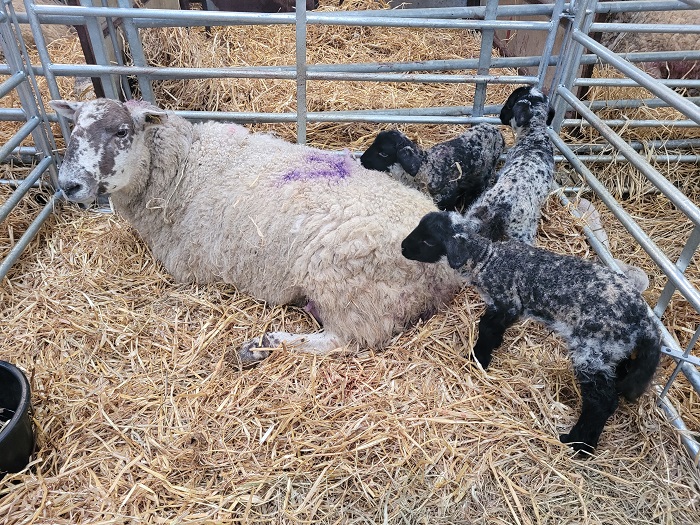
The single greatest factor influencing profitability on sheep farms is the number of lambs available for sale, writes Michael Gottstein, Head of Sheep KT Programme. That is a combination of litter size, stocking rate and lamb survival.
At this stage, the 2024 lamb crop has been sown, and at scanning time most farmers will have identified the number of lambs that the ewes are carrying. This is so to say the maximum number of lambs that could possibly be available for sale/replacements. It is not possible to keep every lamb alive, but there certainly are lots of steps that farmers can take to keep as many lambs as possible alive. There are a number of steps that can be taken on all sheep farms to improve lamb survival.
Body Condition
Research has shown that ewes that are in poor body condition at lambing time or ewes that lose a lot of body condition in the run up to lambing have poorer outcomes in terms of successfully rearing their lambs. Therefore, it is important to minimise body condition loss in late pregnancy by adequately feeding ewes.
Nutrition
Thin ewes are more likely to lose their lambs than ewes that are in good body condition. Apart from body condition, proper nutrition and feeding management also reduces the risk of metabolic diseases, such as twin lamb disease, milk fever and prolapse, which also have an adverse effect on lamb survival. Below are some key points to keep in mind:
- Pen ewes according to litter size and expected lambing date;
- Thin ewes need additional nutrition in the last 6-8 weeks pre lambing. (Thin single bearing ewes should be penned with twin bearing ewes. Thin twin bearing ewes should be penned with triplet bearing ewes.);
- Ensure that ewes have enough trough space. For most lowland flocks, 600mm (2 feet) per ewe is required. Measure the amount of space you have, in my experience the vast amount of sheep farms do not have enough trough space;
- Keep an eye on ewe body condition during late pregnancy and if ewes start losing condition increase feed levels;
- Feed a balanced diet with appropriate vitamin and mineral supplementation;
- Split concentrate feeding to twice a day once the feeding level increases above 0.5kg per head per day. This is essential to reduce the risk of prolapse;
- Feed adequate rumen undegradable protein to ewes to maximise colostrum quality. In practice 100grams of Soyabean meal per day per lamb carried will do the trick. Where the concentrate or feeding rate will not supply sufficient Soya then additional Soyabean meal can be fed separately.
Watch a short video relating to the topic of nutrition below:
Preventing disease
The two main causes of mortality in new born lambs are infection and hypothermia/starvation. Preventing mortality/illness from these is basically down to managing colostrum intake in newborn lambs. It is particularly important to pay attention to hygiene during lambing and in the environment of the new born lamb post lambing.
Colostrum – Nature’s magic
Colostrum or Beestings is the first milk produced by the ewe. It is a product that has three very important characteristics which every new born lamb needs.
- It provides antibodies against disease which the lamb may encounter in early life (before it has a chance to develop its own immune system).
- It acts as a laxative cleaning out the digestive tract of the newborn lamb
- It supplies the lamb with a complete feed to meet all of its nutritional needs.
Key points regarding the management and feeding of colostrum to lambs are:
- Ensure that each lamb gets 5% of its body weight (50ml/kg) of ewe’s colostrum in the first four hours of life is critical to getting the lamb off to a good start. 5% of a lamb’s bodyweight for the average 5kg lamb is 250ml. Many farmers will give two or three 60ml syringes per lamb, which is totally inadequate for all but the smallest of lambs. Remember that giving a small feed stimulates the gut of the lamb to start closing, thus preventing immunoglobulin transfer later on.
- Make sure that all lambs get at least some ewe colostrum. Colostrum substitutes, while useful, are not an effective substitute for ewe’s colostrum in terms of supplying lambs with relevant immunoglobulins to diseases for which your ewes have been vaccinated. Where a ewe has insufficient colostrum to meet the needs of her lambs, divide the colostrum available equally between her lambs and make up the short fall with colostrum from another ewe in the flock (best case scenario) or failing that make up the shortfall with a colostrum substitute or cows colostrum.
- Be careful if using cow’s colostrum. It is important to mix the colostrum from two or more cows because certain cows have antibodies in their colostrum with will cause death in lambs. Also be aware that Johnes disease in cows is transmissible to sheep in the colostrum. As cow’s colostrum is less concentrate you also need to increase the feeding rate by 30%.
- If the lambs are not able to suck then the colostrum should be administered using a stomach tube.
Watch the video below on the correct procedure for stomach tubing lambs:
Hygiene
Lambs are born with little immunity, the cleanliness of the environment that they are born into is very important. The environment is not just the pens, gates etc. but also any items used by the shepherd when assisting in the birth, feeding or handling lambs and also the clothing worn by the farmer.
In particular, care needs to be taken to thoroughly disinfect the navel of the newborn lamb. The navel provides bugs with direct access to the stomach and liver of the lamb. That is why it is very important that it is disinfected properly to prevent bugs from entering into it while it is drying and shrivelling up. The navel of the lamb should be disinfected as soon as is practical after birth and again four to six hours later. Immersing the navel in the disinfection fluid is preferable to spraying.
In the below video, Michael details the correct procedure for sterilising equipment for lambing:
Additionally, Michael outlines various methods that can be implemented on your farm to create a more hygienic environment for lambing. Check out the video to find out more:
Conclusion
Keeping extra lambs alive is in everyone’s interest. Reducing mortality and illness in the flock will pay huge dividends in terms of better lamb survival, better animal performance and reduced labour associated with dealing with sick sheep. As well as keeping your sheep safe, it is also important to keep the people working with the sheep safe from disease and reducing stress and workloads. It is very important to remember that when things go wrong, as the often do, reach out to people who can help you. Your vet, advisor and staff in the regional vet laboratories have a huge amount of knowledge and advice to help you to reduce the impact of disease when things don’t go according to plan.
Also read: Feeding ewes to maximise lamb survival this spring
Also read: Pregnancy nutrition – the foundation of flock profitability