
30 July 2023
Guide to Flock Biosecurity
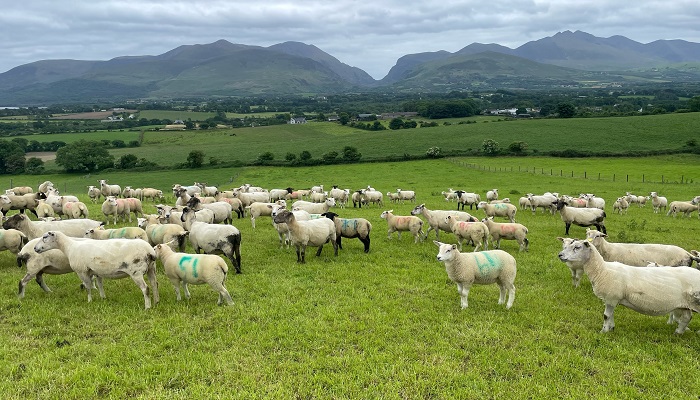
Eamonn Dempsey, Teagasc Advisor, tells us that good flock biosecurity protocol is important for the overall improvement in health, welfare and productivity of animals, and will reduce the incidence of disease on farms.
There is a lot of movement of sheep between farms, and marts this time of year so it is important for farmers to be aware of the key health risks of bringing in new livestock onto the farm.
Once a farmer purchases and introduces sheep to the existing flock there is a risk of introducing disease, parasites or anthelmintic resistance. Diseases such as Footrot, Contagious Ovine Digital Dermatitis (CODD), and Iceberg diseases, are highly infectious and can spread rapidly. ]The big concern for farmers is the introduction of abortive agents e.g. Enzootic Abortion. The sheep carrying this infective agent can look perfectly healthy but will abort at a later date and spread this disease to other sheep in the flock.
It is advisable for farmers to vaccinate purchased sheep against enzootic abortion and have an enzootic abortion vaccination programme if regularly buying in replacements. Some diseases have long incubation periods and symptoms will not appear until 6 months – 2 years later e.g. Scrapie, or Johnes Disease. We know the risks of the introduction of infective diseases, so how do we minimise the risk.
For lameness, farmers must quarantine all purchased animals for a period of around 4 weeks and observe for any issues. For internal parasites, purchased sheep should be treated with a Monepantel (group 4 – AD) and either Levamisole (Group 2 – LV) or Macrocyclic Lactone (Group 3 – ML), housed after dosing for 48 hours and turned out to contaminated pasture which is pasture recently grazed by sheep. Purchased sheep should be plunge dipped with an approved sheep dip for the control of scab, lice, keds and tick and vaccinated with clostridial and pasteurella vaccine. Diseases such as Sheep Scab, Scrapie or other notifiable diseases, if suspected or confirmed, must be notified to the Department of Agriculture, Food and the Marine in accordance with the Regulations.
Ideally farmers should aim to keep their own replacements and reduce the number of flocks they buy from. Rams go through a rigourous selection process checking teeth, feet, Eurostar index etc, so they should be fit and healthy upon introduction to the flock, but quarantine and further observation is advisable. Farmers must take responsibility for selling sheep that are healthy, disease free and be open and honest about the health status of their flock. Sheep which are treated should not be sold until back to full health, and always obey the withdrawal periods on treatment products.
All farmers purchasing sheep must have a good biosecurity programme which is aimed at minimising the risk of buying in a disease and operate a closed flock if possible. A closed flock will need effective boundary fences for biosecurity to prevent contact with neighbouring or straying stock that may have disease. A flock health plan is central to a good biosecurity programme for the management of sheep over the year, bringing health issues and parasites to the farmer’s attention.