
13 June 2023
Is an animal’s scrapie genotype associated with performance?
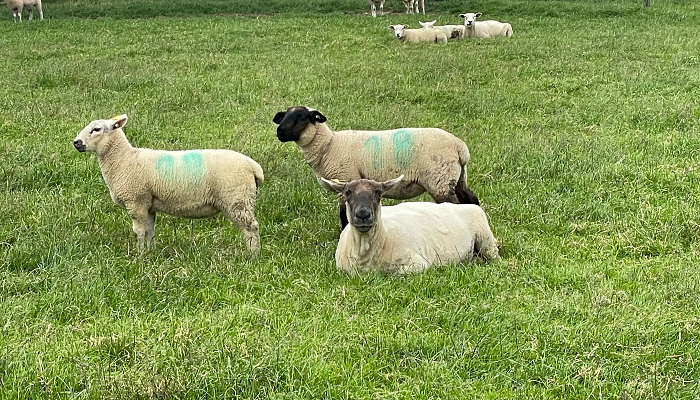
Genetic susceptibility to scrapie, a fatal disease of sheep and goats, is controlled by differences in one specific gene – the prion protein.
The resulting scrapie genotype has been shown to be associated with an animal’s susceptibility to scrapie, with the ARR variant associated with resistance, while the ARQ, ARH, VRQ variants are associated with a reduced level of resistance.
Although a national scrapie programme was introduced in Ireland in 2002, the scheme ceased prior to the complete eradication of the most susceptible scrapie genotypes in Ireland. Since then, the frequency of the scrapie genotypes in the national population remains relatively unknown.
Scrapie genotypes are now readily available as part of the Sheep Ireland genotyping programme. Therefore a large dataset is now available to assess: 1) the frequency of the various scrapie genotypes in the Irish population; and 2) if there is a relationship between an animal’s scrapie genotype and subsequent performance.
Data
Scrapie genotypes were available on 16,416 animals originating from 252 lowland flocks born between the years 2004 and 2019, inclusive. The breeds represented included: 733 Belclare; 333 Charollais; 739 Suffolk; 1,857 Texel; 191 Vendeen; as well as 12,563 animals from other breeds or crossbreds.
Performance data on a range of animal-specific events, including date of birth, lambing data, lamb liveweight records, as well as ewe performance metrics such as ewe live-weight, body condition score and litter size were also available from the national sheep database – Sheep Ireland. The association between the 15 scrapie genotypes and animal performance was investigated.
Results
All 15 of the possible scrapie genotypes were detected across the population, although the frequency differed by breed. The frequency of Type 1 scrapie class was 70.85% across the entire population, but ranged from 44.70% in Texels to 85.93% in Suffolks (Table 1). The most susceptible Type 5 scrapie was only detected in purebred Texels, Beclares and crossbreds (Table 1). The scrapie genotype of either the lamb or ewe did not associate with any of the lambing traits investigated, including lambing difficulty score, lamb mortality and lamb birth weight.
Table 1: Number of animals (n) and percentage of purebred Belclare, Charollais, Suffolk, Texel, Vendeen or other animals with each scrapie genotype and scrapie type
| Scrapie type | Scrapie genotype | Belclare | Charollais | Suffolk | Texel | Vendeen | Other |
|---|---|---|---|---|---|---|---|
| n | 733 | 333 | 739 | 1,857 | 191 | 12,563 | |
| 1 | ARR/ARR | 69.6 | 81.1 | 85.9 | 44.7 | 79.6 | 62.6 |
| 2 | ARR/AHQ | 1.5 | – | 0.3 | 2.5 | – | 2.7 |
| ARR/ARH | 5.9 | 0.6 | 0.1 | 26.3 | – | 11.4 | |
| ARR/ARQ | 17.9 | 17.1 | 13.3 | 14.5 | 19.9 | 17.1 | |
| 3 | AHQ/AHQ | – | – | – | 0.1 | – | 0.1 |
| AHQ/ARH | 0.1 | – | – | 0.8 | – | 0.3 | |
| AHQ/ARQ | 0.1 | – | – | 0.5 | – | 0.3 | |
| ARH/ARH | 0.7 | – | – | 4.4 | – | 0.5 | |
| ARH/ARQ | 1.5 | – | – | 4.1 | – | 1.7 | |
| ARQ/ARQ | 1.9 | 0.6 | 0.4 | 1.4 | 0.5 | 1.2 | |
| 4 | ARR/VRQ | 0.7 | 0.6 | – | 0.5 | – | 1.5 |
| 5 | AHQ/VRQ | – | – | – | – | – | 0.1 |
| ARH/VRQ | – | – | – | 0.2 | – | 0.2 | |
| ARQ/VRQ | 0.1 | – | – | – | – | 0.2 | |
| VRQ/VRQ | – | – | – | – | – | 0.1 |
With the exception of ultrasound muscle depth, the scrapie genotype did not associate with any of the lamb performance traits investigated including lamb live-weight pre-weaning to slaughter and any of the lamb carcass traits.
Lambs carrying the type 4 scrapie genotype (i.e. ARR/VRQ) had 1.20 mm, 1.38 mm, and 1.47 mm shallower ultrasound muscle depth relative to lambs of the less susceptible scrapie types of 1, 2, 3, respectively. Nonetheless, a lamb’s scrapie genotype did not associate with the lamb’s eventual carcass conformation, the ultimate end goal of farmers.
Ewe litter size, body condition score or lameness did not differ by scrapie genotype of the ewe. For ewe mature live-weight, ARH/VRQ ewes were, on average, 3.79 kg heavier than ARR/ARR genotype ewes. Lamb dag score differed by the scrapie genotype of the ewe, although the differences were small.
Conclusions
Results from this study show that the all scrapie genotypes exist within the Irish sheep population albeit the frequency differed by breed. The scrapie genotype of either the lamb or the ewe, however, had a weak to no association with several animal performance metrics and, where associations were detected, the biological significance was small.
This paper by Noirin McHugh, Aine C. O’Brien, Thierry Pabiou, Kevin McDermott and Donagh Berry was first published in the Teagasc Sheep Open Day 2022 booklet. The authors wished to acknowledge funding from the Department of Agriculture, Food and Marine Competitive Research Stimulus Fund MultiRepro (14/S/849).
Also read: How maternal genetic merit influences reproductive traits in ewes