
10 April 2025
Pig slurry – a solution to improve soil fertility on tillage farms
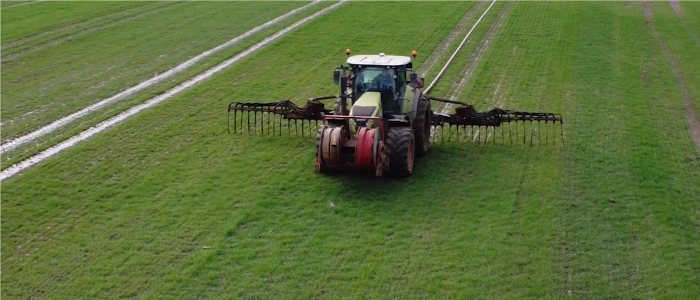
Greater linkage between pig farmers and tillage growers could yield positive benefits for the soil fertility status on Irish tillage farms.
As confirmed by soil tests analysed by Teagasc, the results of which were published in the Teagasc Soil Fertility Report 2024 (PDF), just 20% of tillage soils have optimum pH, phosphorus (P) and potassium (K) levels.
Correcting soil pH through lime applications is always the starting point in making soil fertility improvements. In this regard, tillage farmers have considerable scope for improvement, as just 62% of soils have a pH >6.5. Additionally, from a P and K perspective, 55% of soils are at P index 1 and 2, and 33% of soils are at K index 1 and 2.
So where does pig slurry fit into this equation?
Well, at 4% dry matter levels, 1,000 gallons of pig slurry is the equivalent of a 50kg bag of 19:7:20 – an ideal P to K ratio to support growth in tillage crops but also serving to boost soil fertility levels when targeted to lower index soils.
Given its nutrient content and current fertiliser prices, 1,000 gallons of pig slurry, excluding the costs associated with haulage and spreading, is worth €30-35/1,000 gallons, providing tillage farmers looking to build up soil P and K levels a cost saving in comparison to chemical fertiliser alternatives.
As part of a recent Tillage Edge podcast, Crops Specialist at Teagasc, Ciaran Collins explained that “targeting low P and K sites is really the best way to approach” using pig slurry on tillage farms.
“Pig slurry is ideal in that scenario if you have index 1 and index 2 and to use that pig slurry for build-up. I think it’s a very productive way of using pig slurry.”
However, to ensure that pig slurry is used effectively and efficiently on tillage farms, Ciaran Collins encouraged farmers to complete a Nutrient Management Plan prior to importing. This will provide guidance on the potential quantity of slurry that may be imported to adhere to maximum P allowances contained within the Nitrates Directive, while also allowing farmers to target pig slurry application rates and reduce chemical fertiliser inputs on growing crops.
Away from the P and K benefits, Ciaran Collins also touched on the importance of retaining as much of the nitrogen contained within the pig slurry as possible. For applications prior to crop establishments, incorporation with 3-6 hours of applications was strongly advised; for in-crop applications, the use of low emission slurry spreading (LESS) is a must.
Additionally, to ensure the consistency of the nutrients contained within, tillage farmers were encouraged to test the quality of pig slurry coming into their holdings. Although laboratory testing is the gold standard, providing a detailed breakdown of N, P and K content, assessing the dry matter using a hydrometer test, and then referring to the Teagasc Green box can also be used to provide guidance on its nutrient content.
For further insights on using pig slurry in tillage systems, listen to the full episode of the Tillage Edge podcast below:
More from Teagasc Daily: Advancements to maximise the value of nutrients in slurry for cereal crops
More from Teagasc Daily: In-crop slurry application to cereal crops – timely tips
More from Teagasc Daily: Getting the most from your slurry