
06 March 2025
Time of Beans
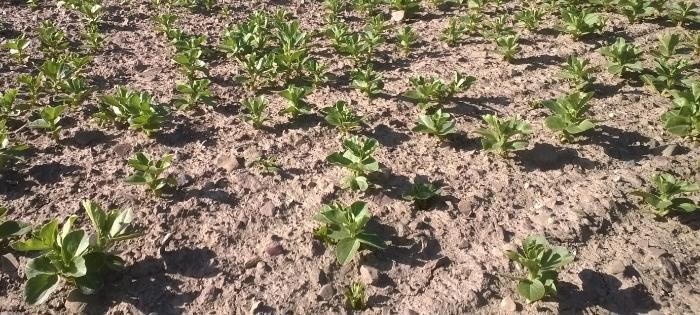
The recent dry weather has provided an opportunity for tillage farmers to begin preparing land for sowing spring beans. Ciaran Collins notes that many farmers, mindful of last year’s delayed harvest, are making a conscious effort to get crops in the ground earlier this season.
In 2024, the area planted with spring beans reached a record level of 17,500 hectares. However, due to the high levels of autumn planting, most in the industry do not expect spring bean acreage to reach similar levels in 2025. Despite this, there is still significant interest in spring beans, mainly driven by the protein payment, which offers up to €600/ha, and strong forward prices of €240/t from both Dairygold and Tirlán and €250/t from Quinns of Baltinglass.
The financial outlook for spring beans remains attractive. Based on an average yield of 5.4t/ha (10 year national average), farmers could expect a gross output of almost €2,000/ha. Costs from the Teagasc costs and returns come in at €1,067/ha leaving a gross profit of almost €900/ha. Given these figures and current cereal prices, record-breaking cereal yields would be needed to match the profitability of beans this spring.
Beware of large Thousand Grain Weight (TGW)
When sowing beans this season, it is crucial to check the TGW, which is usually printed on the seed bag. Some bean varieties this year have exceptionally high TGWs, requiring significantly higher seed rates to achieve optimal plant populations. To establish 30 plants at 85% establishment;
- TGW of 650g – seed rate of 230 kg/ha.
- TGW of 500g – seed rate of 175 kg/ha.
Don’t’ forget about lime
Lime is often overlooked when sowing beans, especially early in the season. However, it is crucial to maintain a target pH of 6.8 for optimal yield. If lime is required, it should be applied onto the ploughing and incorporated into the seedbed before sowing.
Similarly, phosphorus (P) and potassium (K) should be incorporated into the seedbed on Index 1 and 2 soils to optimise yield potential. Combine drilling works well for P if that is an option.
Pre-emergence herbicide
Pre-emergence herbicide application is the only reliable method for controlling broadleaf weeds in spring beans. Common herbicide mixes include:
- Nirvana 4 L/ha
- Nirvana 2.5L/ha + Defy 4 L/ha
- Stallion 3 L/ha
Grass weeds can be managed post-emergence with graminicides.