
30 August 2024
Good seedbed conditions is the most important factor for a successful crop of oilseed rape
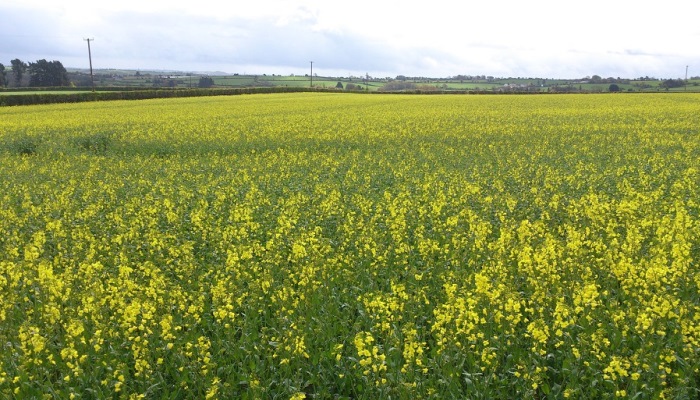
Ciaran Collins discusses the challenges and considerations for planting winter oilseed rape, particularly focusing on the impact of delayed spring barley harvests, optimal sowing dates, seedbed conditions, and pest control.
Oilseed rape has taken a back seat in recent days, as grower’s avail of every opportunity to harvest crops and gather straw. In many cases this year, the entry crop is spring barley, rather than winter barley so this has further delayed the planting of oilseed rape.
Another complication is that the majority of this year spring barley harvest is later than normal, as most crops were not planted until late April. This raises the question for growers: when is it too late to plant winter oilseed rape?
Optimum sowing date for oilseed rape is from mid-August (north) to early September (south), however later sowing dates can still produce good yields. The aim is to establish a target population of 25 – 35 plants/m² next spring.
Advice often focuses on getting eight leaves before the end of autumn growth. Backward crops in the spring will have an inadequate number of leaves and branching sites to fulfil yield potential.
Location and aspect are critical factors if sowing later than normal, sheltered sites further south have an advantage and high yielding crops have been achieved from mid-September sowing dates.
However good seedbed conditions is the most important factor regardless of sowing date. Research has shown that all establishment methods can be successful but seedbed conditions must be good to get good establishment of the crop. Achieving an adequate seedling population ensures the crop forms an effective canopy to capture light and compete with weeds, and an effective root system for uptake of water and nutrients.
It is advisable to increase seed rate from 50 seeds/m² to 60 – 70 seed/m² if sowing is delayed. Make use of organic manures. Oilseed rape is very efficient in the utilisation of autumn nitrogen and organic manures are an ideal source and will help establishment.
The best broad-leaved weed control comes from pre-emergence use of products containing Metazachlor (Katamaran Turbo, Butisan, Legion etc.). Post emergence options are available if needed however, it is crucial to control volunteer cereals as they are highly competitive and will reduce plant population if present.
Finally, beware of slugs. Slug populations are high this year so avoid fields with a history of slug damage and monitor all crops post sowing.