
15 May 2024
Management advice for late-sown spring barley
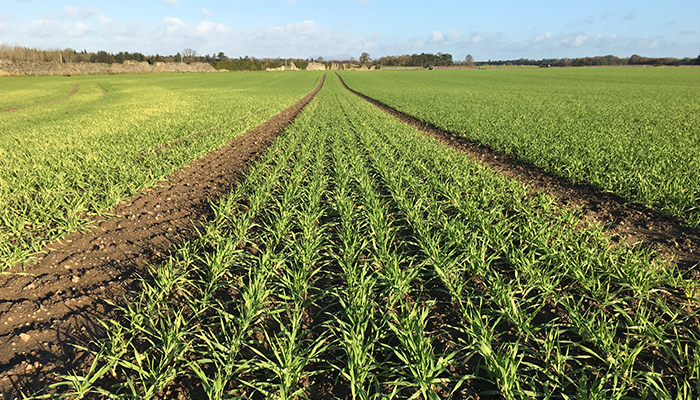
The majority of spring barley will emerge in May. This brings different management challenges compared to barley emerging in March/April, writes Ciaran Collins, Teagasc Crops Specialist.
Disease levels in late-sown barley tend to be lower. Nitrogen (N) rate needs to be managed in line with yield expectations and the risk of barley yellow dwarf virus (BYDV) is higher.
BYDV management in spring cereals
BYDV is a major challenge on late-sown cereal crops. Aphid numbers increase with temperatures, so cereals emerging in May are at a high risk. Grain aphids, a major vector of BYDV, have developed partial resistance (knock down resistance – KDR) to pyrethroid insecticides (Karate Zeon, Decis Protech, etc.). Therefore, insecticide use needs to be planned and targeted for best effect.
Barley sown after mid-April has a high probability of becoming infected with BYDV. The percentage of tillers with symptoms can exceed 30%, and a yield reduction of the order of 1.3t/ha is likely. Teagasc research on late April sown spring barley has shown that one application of a pyrethroid insecticide at the 4 leaf stage will give the best control of aphids from a single spray. Multiple applications do not increase the level of control and will exacerbate the problem at local level.
Dr Louise McNamara joined the latest episode of the Tillage Edge podcast to chat about the current BYDV levels in winter crops and how to minimise BYDV in spring crops.
Listen in below:
Weed control
Late-sown crops present an opportunity to make savings on weed control due to faster development. Low rates of herbicides can be effective, but successful control is dependent on applying herbicides to small weeds which are actively growing. For later-sown crops, this can be done with the aphicide following a period of good growth.
Fertiliser
Any remaining N needs to be applied as soon as conditions allow. Where lower yield potential is expected, reduce the total N applied. A 6.5t/ha crop has a requirement for 135kg/ha (108 units). Increase N by 20kg/ha for every tonne expected over 6.5t/ha.
Disease control
The average yield response from a two spray fungicide programme in Teagasc trials is 1.3t/ha, but can range from 0.5-2.75t/ha, depending on the season. The expected response will be lower on late-sown crops, so the fungicide spend can be reduced. Oak Park trials have shown two half-rate fungicides (combined product) will give the maximum economic return. The first fungicide should be timed before GS30.
This article first appeared in the Teagasc Tillage Advisory Newsletter for May. Click here to access the full publication.
Also read: NBPT Urea on late-sown barley – the opportunities