
10 May 2024
Growing beans and peas in combination – Wexford farmer tests the water
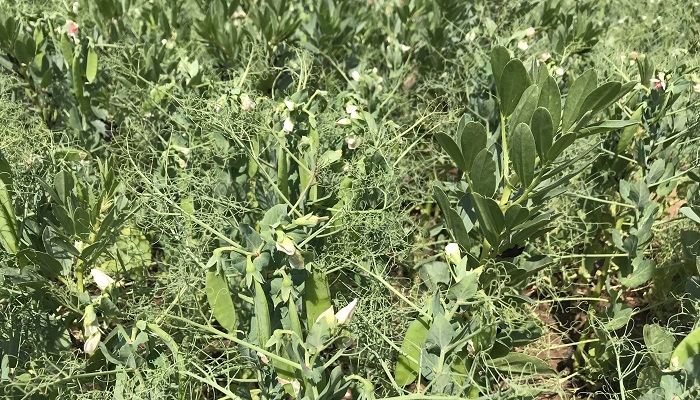
Don Somers is a tillage farmer from Enniscorthy, Co. Wexford. In this update, Don speaks about the challenges of a late spring, experimentation with a combination crop of peas and beans and why he’s making strategic adjustments in agronomy, tailored to accommodate the delayed planting schedule.
With only a small area of winter crops drilled and a late spring, there is a substantial workload on the farm – and decisions to be made.
The recent improvement in the weather enabled me to start spring drilling. I have been conscious of not working soils until they are fit. There was a strong temptation to start, but I was conscious of the implications for soils at depth and the adverse effects that it may have on the rooting potential and subsequent yield potential of crops.
As the season dragged on with nothing drilled, I considered changing my cropping options and drilling more spring barley, but I needed to make sure I had enough break crops drilled to facilitate winter wheat this autumn.
Spring malt barley is very attractive in terms of margin this season but if it does not meet the malt specifications, it becomes spring feed barley.
The margins of spring beans are favourable compared to spring feed barley, even with later drilling dates in the south-east, so I have drilled some.
Spring oats can also leave a more favourable margin in particular circumstances and soil types. I have acquired land with a very low pH, so this will be drilled with seed oats acquiring a premium price while adjusting the pH for future crops.

Combination cropping
In recent years, Teagasc has completed research work on the combination cropping of peas and beans. Cullen Mills, based in Ballymurn, Co. Wexford, who are keen to see peas grown locally, requested me to drill a combination crop of peas and beans to try the concept.
Based on having some very light soils, the profitability of cropping options in such soils and having access to Teagasc research results, I decided to drill a combination crop of peas and beans.
The bean is used to scaffold the pea, reducing the level of lodging, which has always been an issue with peas. If the option materialises to be viable, it will offer an alternative crop in lighter soils which currently have more limited cropping options.
Adjustments
Given that crops are drilled later, I plan on making a number of adjustments to crop agronomy. I will adjust nitrogen application rates based on drilling date and the yield potential in individual fields. Later-drilled spring barley will have a lower tillering capacity, so I have adjusted seed rates upwards to ensure that I have sufficient tillers to maximise yield potential. Later-drilled crops of spring barley will also have lower disease pressure, so I plan to adjust fungicide inputs accordingly while also factoring in variety and weather.
Petal fall has started in winter oilseed rape, but with current weather conditions I will delay applying a fungicide to control sclerotinia; this means I will only need one fungicide application – and a cost saving.
This article first appeared in the Farming Independent as part of a Signpost Update. More information on the Signpost Programme is available here.
Find out more about Don Somers’ farm here.
Also read: A solution to the pea crop’s Achilles’ heel?