
02 May 2024
Crucial fungicide timing approaching for winter barley
October sown winter barley is approaching the crucial final fungicide timing of awn emergence. Teagasc Crops Specialist, Ciaran Collins has some key advice as broken weather is increasing disease pressure and may also hamper correct spray timings.
The objective of the final fungicide in winter barley is to protect yield by keeping the upper canopy disease free. Despite the wet weather they have endured since last October, typical winter barley diseases like rhynchosporium and net blotch are at low levels this season. Susceptible varieties like Cassia have some rhynchosporium, but it has largely been well controlled.
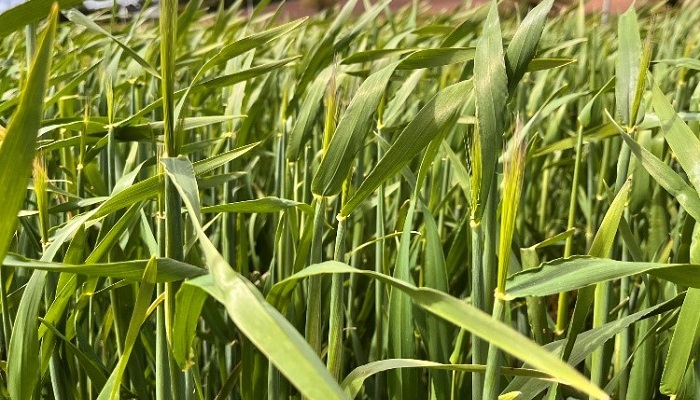
Early October sown Integral in Cork ready for final fungicide. Picture taken on May 1.
Septoria nodorum has also been present in a range of crops, especially in the variety Tardis, but it doesn’t normally cause any issues at the latter end of the season.
Ramularia is the target disease for the final fungicide timing. Wet weather and crop stress are key triggers for the disease. All varieties will succumb to the disease in favourable conditions for the disease, so the objective of the final fungicide is to delay onset of ramularia for as long as possible.
Choosing the correct product and applying that product at the correct time is crucial to delaying the onset of ramularia.
Research has repeatedly shown that the best control of ramularia comes from a preventative fungicide application during booting (growth stages 45–49). Later applications, up to ear fully emerged (growth stage 59), are less effective and often result in a yield penalty.
Ramularia is resistant to Strobilurins and SDHIs, but they can be included where other barley disease are present. Control of ramularia comes from azoles and folpet. Folpet has been effective against ramularia in Teagasc trials as a preventative fungicide and should be included in the final spray at awn emergence.
Azoles also contribute to control. Mefentrifluconazole (Revystar) and prothioconazole (Proline) have shown good efficacy against the disease. Recent trials have shown that Mefentrifluconazole (Revystar) is more effective than both prothioconazole and folpet.
Options for the final fungicide on winter barley include: Folpet (Arizona/Stavento/Mirror/Freedom/Kingman) 1.5L/ha + Balaya + Imperis 0.8–1.0L/ha + 0.8–1.0L/ha; Elatus Era 0.6–0.8L/ha; Siltra Xpro / Mandarin Xpro 0.5–0.7L/ha or similar.
Each week, the Teagasc Tillage Specialist team offer key advice and tips as part of the Tillage Edge podcast. Visit the Tillage Edge podcast show page here.
Upcoming events
Teagasc will hold a series of Spring Crop Walks across the country over the month of May, with the first event scheduled for May 7. The discussion at the walks will centre on adapting crop management for late-sown crops this spring. Adjusted strategies for fertilisers and disease management are needed to ensure positive crop margins this year.
Find a full list of these events here.