
18 April 2024
An update from Tom Barry, Signpost Tillage Farmer
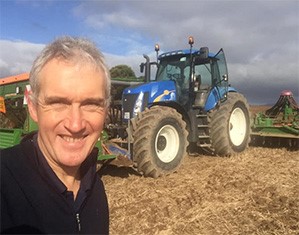
Tom Barry, who farms in Killavullen, outside Mallow, Co. Cork, gives an update on his winter crops, spring work and fertiliser plans.
Tillage farming in 2024 is proving challenging on all fronts. Firstly, the weather has been very broken and with few opportunities to get crops set. The weather also is making driving conditions through winter cereals difficult.
The second item in the back of every tillage farmers mind is the poor cereal prices and low demand for Irish grain at present. The coming harvest prices are not encouraging.
Finally, the high costs of inputs – such as seed, fertiliser and diesel – are a worrying factor given grain price is low. This coupled with high land leasing cost driven inadvertently by the nitrates regulations is threatening the whole viability of the tillage sector.
Winter crop establishments
I was fortunate to get a good acreage of winter crops set in early October. I set winter wheat, barley, oats, rye and beans. The strong rotation which I use has been valuable this year in helping the emergence and growth of my winter crops – even in wet and cold conditions.
I sprayed all the cereal crops once in late November for weeds and aphids. I also broadcast and rolled in a cover crops, which consisted of a simple two way mix of leafy turnip and fodder rape in September. I once again planted my winter beans by broadcasting the seed at 200kg/ha on the stubble and ploughing down on November 15, 2023.
The weather was the dominant factor since setting. No crops were rolled due to seedbeds being damp. Establishment of winter barley and winter oats was good to excellent. Winter wheat crops displayed slug damage from wet, loose seedbeds but in general came out of the winter well.
Winter rye was the problem crop, as establishment was patchy with headlands and any wetter ground simply not growing. It put up no fight to wet weather and a quarter of the crop has failed.
Winter beans once again are a fabulous crop, even though I was nervous reducing my seed rate to 200kg/ha. The lower rate is my attempt to reduce the crop density to allow for increased pod formation per plant. The worry was that the crows would attack and reduce the plant count resulting in a yield penalty.
Spring work
My first trip into the fields was on January 26 to spray off the cover crops, which established really well and gathered up all the available nutrients over the winter; these will be available for this year’s crop. I was going to set early spring barley following the cover crop, but conditions never allowed. Given the poor grain price, I have opted to plant Caprice spring beans instead.
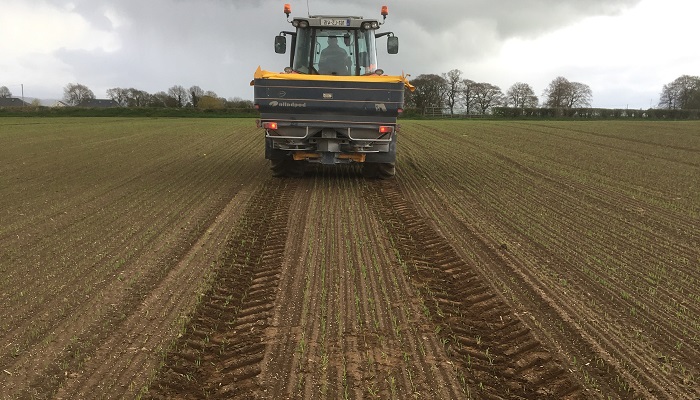
I kept an eye on the grass growth rates each week from Met Eireann and, as I saw an improvement, I got out and spread one bag per acre of urea 46% on February 19. This proved a good decision as it helped the crops grow and get healthy, along with protecting plant tillers. The weather was very wet in the following weeks post application, but the fertilised crops were resilient and performed well. I will follow with a second fertiliser application of 24-2-10 shortly.
I soil sampled every field on all farms this winter and, with this information, I will apply the minimum required phosphorus and potassium. Due to the repeated annual application of organic manures from pig and dairy, the fertility indices are increasing and only base levels of artificial phosphorus and potassium will be used. Teagasc through the Signpost Programme also deep soil carbon sampled several fields and used a drone to map biomass on field boundaries. I am awaiting these results.
Normally, I would be started applying slurry to the growing crops, but ground conditions will not allow us to travel without damaging the crop, so we will just have to wait.
On a positive note, when the weather does arrive, we will be well prepared and ready to go. I have often seen years where crops were sown late, and the following weather was ideal for crops resulting in good yields.
I hope the promised funding for the tillage sector materialises and that last year’s protein payment is retained. These supports are very important to the tillage sector and especially to promote home-grown protein. Considering the delays due to weather and the huge workload ahead on tillage farms, it is very important to prioritise safety while getting the work done.
This article was first published as part of the Signpost Programme newsletter. Click here for more information and to sign up to future publications.