
10 April 2024
The farm-to-farm trading of organic feed regulations
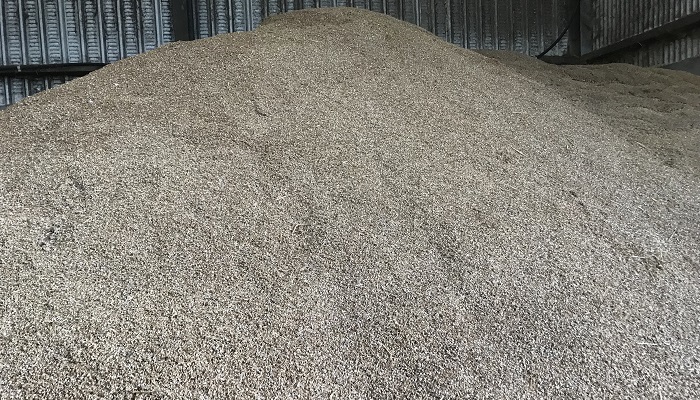
With over 5,000 farmers now enrolled in the Organic Farming Scheme, inter-farm trading of organic crops is seen as an effective solution for organic livestock farmers to secure part of their winter feed supply, while also providing organic tillage farmers with a suitable market for their crops.
A recent survey completed by the Department of Agriculture, Food and the Marine (DAFM) estimated that organic concentrate demand could be in the region of 33,000t in the winter of 2024/2025. Demand for straights is expected to be 20,000t, while 6,000t of protein crops – such as a pea/barley mix, often referred to as combi-crop – along with 50,000 bales of fodder could be required this coming winter.
As part of the 200th episode of the Signpost Series Webinar, Teagasc Organic Specialist, Joe Kelleher explained: “We have seen a big surge in [organic] farmer numbers. We had 2,000 new farmers converted to organics at the beginning of 2023 and we had a further 1,000 at the beginning of this year. So that’s 3,000 farmers that are in conversion.”
He added: “As a result of that, we are going to see a significant increase in the amount of organic produce that is going to be available for sale in Ireland from 2025 onwards.”
This increase has presented opportunities, with Joe adding: “We have seen a significant increase in the trade of grain in particular between organic tillage farmers and organic livestock farmers. This does present significant opportunities, especially for those tillage farmers where there is a significant premium to be got on that grain, but there are some rules that farmers need to be aware of on that trade.”
Dr Bridget Little, Agricultural Inspector with the Feedingstuffs, Fertilisers, Grain and Poultry Division of DAFM, detailed the various regulations in play for farmers engaged in farm-to-farm trading of feedstuffs.
Under the feedingstuffs regulations, Dr Little explained, farmers holding a valid herd number, as issued by the Regional Veterinary Office, are classified as being “primary producers” and are registered as the primary producer of feed, food or livestock, as appropriate to the activities carried out on the farm.
Under the regulations, Dr Little said: “Farmers can sell all or some surplus of their feed produce or crops grown on their farm – grains, combi crops, silage, hay etc. – to other farmers or merchants.
“There is no requirement for a docket or feed label to accompany any of these consignments and they do not require any other registration to do this activity once they are registered as a primary producer and have their herd number.”
However, she added: “Farmers are not permitted to sell mixtures of different feed materials. Farmers cannot mix different feed materials because, if they do so, they are now producing compound feed.
“In addition, farmers can only sell their own produce so they cannot sell feed materials or compound feed for re-selling to other farmers.
“If farmers are mixing different feed materials or buying in feed materials for the purpose of re-selling them back out again, they are gone beyond the scope of a primary producer and they need to register with DAFM as a commercial Feed Business Operator.”
In addition, she noted: “Every farmer has a responsibility that the feed being sold is safe.” To ensure this, the feed must be stored correctly to include:
- Animal feed must be stored separately from chemicals and other products prohibited for animal feed;
- Storage areas and containers must be kept clean and dry;
- Appropriate pest control measures implemented where necessary to control activity of rodents, birds and insects;
- Storage areas cleaned regularly. Commercial Feed Business Operators must keep cleaning records and full traceability for the animal feed contained in each bin/bay;
- Commercial Feed Business Operators must have a sign above each bay clearly stating the name of the feed material or compound feed contained in that bay.
For further details, watch a recording of Dr Little’s presentation to the Signpost Series Webinar below: