
21 March 2024
Field work to bring winter crops up to date
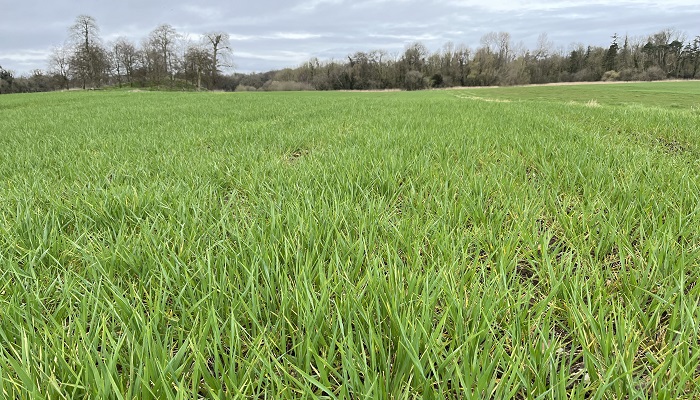
With ground conditions preventing drilling of spring crops, now is a good time to get the winter crop up to date with all the necessary jobs that need to be done, Teagasc Crops Specialist, Shay Phelan has some key advice.
Winter barley
The main split of nitrogen is due on winter barley crops over the coming week. Apply approximately 60-70% of the total amount of the crop requirement with the final amount due in 2-3 weeks’ time. Trace element deficiencies such as manganese should be addressed, if present, in crops as soon as possible to try to protect as many tillers as possible
Despite all the wet weather, disease levels appear to be low across all varieties. However, dirty varieties such as Cassia need constant monitoring. Tardis has some septoria nodorum present at low levels, although this is unlikely to cause significant damage it still needs to be watched. Use a strobilurin, Comet for example, to treat if needed.
Crops range GS30 and so PGRs will soon need to be applied. Many growers opt for the CCC 1L/ha + Moddus 0.2L/ha mix, which works well at this time of year with a second split at GS 31. Meddax Max can be used instead of Moddus. Where CCC is being applied on its own include an adjuvant if temperatures are below 80C.
There are still a few barley crops with no herbicides applied at this stage, use a SU 66-75% rate e.g. Ally Max, Cameo Max with a mixer e.g. Galaxy. If wild oat control is needed, include Axial Pro 0.6L/ha.
Winter wheat
If not already done, apply compound fertiliser to crops as soon as possible for most crops that will be a blend of N, P and K, but consult soil samples before starting.
Crops are not at GS 30 yet so it is too early for PGRs. However, where weed control is needed, now is a good time to get this done. Product choice will depend on the weeds that need to be controlled. Many will opt for Pacifica Plus or Broadway Star, as these will control bromes and wild oats. If annual meadow grass is a problem, Pacfica Plus will give better control.
Winter oats
Crops are growing well with most receiving their compound fertiliser at the moment. Early sown crops are approaching GS 30 and so will receive a PGR in the next week or so. Again the CCC/Moddus mix is popular at GS 30/31 and will be followed at GS32. Other options include Ceraide/K2 which are popular on oats, a split dose of 1.15 L/ha followed by 1.15 l/ha but beware not to exceed the total dose of 2.3 L/ha.
Weed control can also be carried out now. Again the options include a SU e.g. Cameo Max, Ally Max + a mixer e.g. Galaxy, but be aware that not all SU products are approved for oats.
Oilseed rape
Early crops are starting to flower in recent days, so the time for applying the main split of nitrogen is coming to a close. Depending on the GAI of the crops, many will receive typically 75-100kg of nitrogen. It is now too late in many of these early crops for a fungicide to control light leaf spot or a growth regulator e.g. Caryx. However, some of the later drilled crops may still be at the yellow bud stage which is the latest timing.
Spring crops
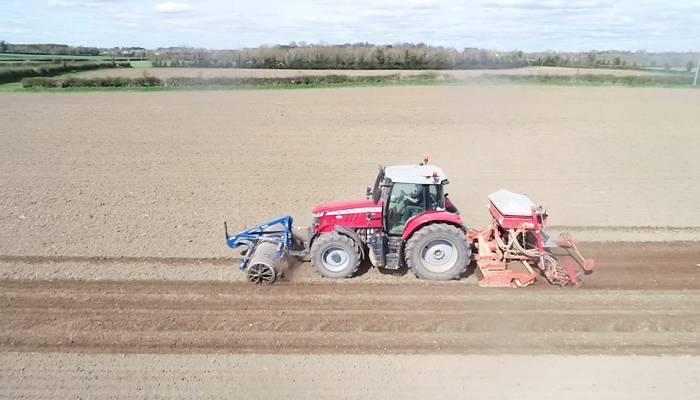
When the chance arises, prioritise the drilling of spring beans, wheat and oats. These crops ideally need to be drilled in March to give them the best chance of giving decent yields and having a reasonably early harvest. Incorporate all compound fertiliser into the seed bed and, while beans will need to be rolled and a pre-emergence herbicide applied e.g. Nirvana, only roll the wheat and oats if ground conditions are suitable. Where crops are not rolled, increase seed rates by 5-10 % to allow for crow damage and reduced tillering.