
22 February 2024
Research verifies low carbon footprint of Irish grain
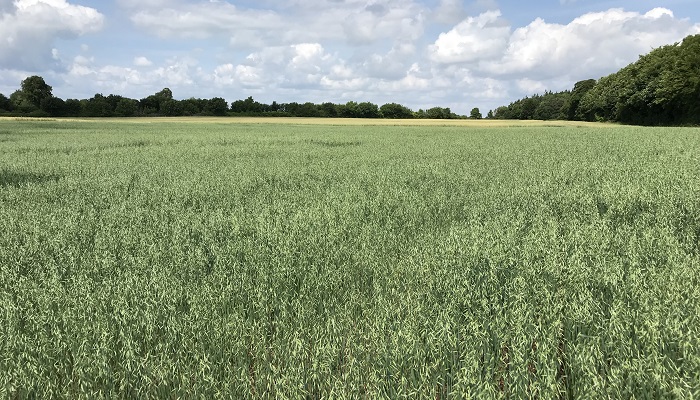
New Teagasc research on the Tirlán grain pool has shown that Irish grain has one of the lowest carbon footprints in the world.
Tirlán, in conjunction with Teagasc, invested in developing a new LCA model which was used to complete Ireland’s first carbon footprint analysis of commercially-grown Irish cereals. Teagasc carried out the research and data collection for individual growers, with the assistance of the Tirlán agronomy team, using information from 48 Tirlán grain suppliers, covering 11,500ha of land in what was an above average year for yields in 2022.
The research, unveiled at the Tirlán Quality Grain Awards this week, is the first of its kind using a Life Cycle Assessment (LCA) methodology specifically developed for Irish grain on a wide range of commercially-grown Irish cereals. Accounting for straw incorporation, the study showed the net carbon footprint could be close to net zero.
The study found the carbon footprint of Irish grain is very low compared to grains produced in other grain producing regions in Europe and North America.
John Spink, Teagasc Head of Crops, Environment and Land Use Programme, stated: “The recently developed Tillage LCA has been used to assess the carbon footprint of oats from Tirlán suppliers. The gross carbon footprint was 207kg CO2/t, or 232kg CO2/t including drying, which is low by international standards. In warmer countries like Italy and Spain, the figure would be closer to 1,000kg CO2/t.
“When the carbon sequestered by straw incorporation was included in the calculations the figure dropped dramatically, giving an average net carbon footprint of 38kg CO2/t, with a number of the crops at or below net zero.
“Irish growers generally have a very low carbon footprint and the results of this study support it. The most influential factors impacting the carbon footprint of the grain pool are good crop nutrition and high yields.”
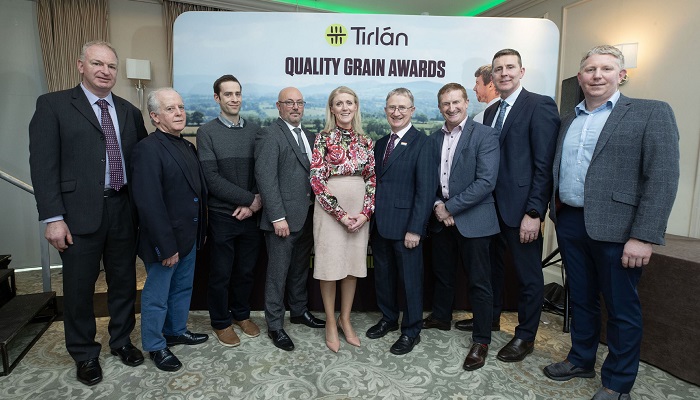
The team working on the project includes from L to R: Tirlán Grain Development and Sales Manager, Donal Moloney; Teagasc project data collector, John Hogan; Teagasc analyst, Donal O’Brien; Teagasc Head of Crops, Environment and Land Use Programme, John Spink; Tirlán Director of Agribusiness, Ailish Byrne; Teagasc Director, Professor Frank O’Mara; Tirlán’s Senior Projects Manager, Pat Ryan; Head of Grains, John Kealy; and Agronomy Area Manager, Fintan Treacy.
Straw incorporation improves carbon sequestration and has become more popular with the support of the Department of Agriculture, Food and the Marine’s National Straw Incorporation Measure.
John Kealy, Tirlán Head of Grains, said: “The results for Irish grain shown in the Life Cycle Analysis are a strong endorsement of the sector’s sustainability credentials and highlight the important role of Irish grains within the agricultural sector and along the value chain.
“The winner of the Sustainability Award in the Tirlán Quality Grain Awards, Mark Sheridan from Navan, Co. Meath, had three crops in the Top Five of the lowest carbon footprint results from the study. He adopted widespread use of straw incorporation and his winter oats were carbon neutral. It was an exceptional performance amid some really high standards and a sign of the quality of our Irish grain.”