
08 February 2024
Managing winter oilseed rape and evaluating the potential of spring beans
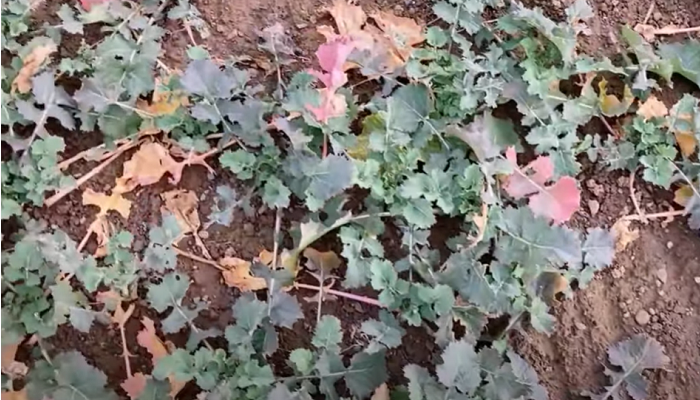
Teagasc Crops Specialist, Shay Phelan writes on the important management tasks to complete for winter oilseed rape crops, while also evaluating the potential of spring beans as a crop option this year.
Oilseed rape crops mostly look fine but February can be frustrating, as pigeons will continue to graze crops. All efforts to stop this should be deployed. Otherwise, they can cause a lot of damage. The effect of pigeon grazing will determine how much nitrogen (N) is needed for the crop in the coming weeks. The size of the canopy can be measured with the green area index (GAI) app on your iPhone. For Android smartphones, you can use the BASF GAI website. Over the coming weeks, assess your canopy size before deciding on a fertiliser regime. Table 1 shows the N requirement and strategies at different GAIs.
Table 1: Nitrogen requirement for crops with different GAIs
| Crop GAI | Total N |
Early split (late February or early March) |
Main split (Mid March) |
Seed fill (late March / early April) |
|---|---|---|---|---|
| 2.0 | 130kg/ha | 0 | 70kg/ha | 60kg/ha |
| 1.5 | 190kg/ha | 40kg/ha (March) | 90kg/ha | 60kg/ha |
| 1.0 | 210kg/ha | 50kg/ha (March) | 100kg/ha | 60kg/ha |
| <1.0 | 225kg/ha | 70kg/ha (February) | 120kg/ha | 35kg/ha |
Note: Can add 30kg/ha for target yield of 5.0t/ha where farm fertiliser plans allow
Sulphur and fungicide
Oilseed rape crops have a relatively high sulphur (S) requirement of 30-35kg/ha. Use fertilisers with relatively high levels of S in the first two splits if possible. Few crops received a fungicide before winter, so it is highly likely that light leaf spot is present in most. Take leaves and put them in a plastic bag. Put the bag in a warm place, e.g., a hot press, for 24-48 hours. You should then see the little white salt-like lesions on the leaves. Where you see light leaf spot lesions use a fungicide containing prothioconazole (e.g., Proline), metconazole (Sirena) or tebuconazole (Fezan). Prothioconazole-based products will not have a growth regulator effect on the crop, whereas the other two actives will have some level of effect.
Beans
The Protein Payment Scheme 2024 is worth €7m. If a similar area of protein crops are planted this year, payment will be much lower that what was paid in 2023 (€584/ha). Beans are still a good economic alternative to spring cereals. Table 2 shows the estimated gross margins of different crops. Only winter wheat performs better than beans at target yields.
Table 2: 2024 Teagasc estimated gross margin per hectare at target yields (€/ha)
| Crop | Winter wheat | Winter barley | Spring barley | Malting | Winter oats | Winter oilseed rape | Beans | Peas |
|---|---|---|---|---|---|---|---|---|
| Gross margin at target yields | 849 | 671 | 283 | 721 | 558 | 375 | 836 | 679 |
Performance 2023
The performance of beans in 2023 was variable due to late drilling and some planting in unsuitable sites. Beans like moisture-retentive soils or soils that don’t dry out during spring or summer. Drought-prone soils rarely perform well.
In lighter soils, peas often perform better but harvest is risky. Beans perform well where the soil indices for P and K are high. Oak Park trials show where beans are sown in P and K index 1 or 2 soils, they never yield as well as those sown in index 3 soils. Drill as early as conditions allow. However, soil conditions are as important as planting date, especially in a direct drill or min-till system. Drilling into wet soils can reduce root development and nutrient uptake. Aim to establish 30 plants/m². Try to complete drilling by early to mid-March.
This article first appeared in the Teagasc Tillage Advisory Newsletter for February. Access the full publication here.
Also read: Value your rotations carefully
Also read: Avoiding the resistance risk with glyphosate